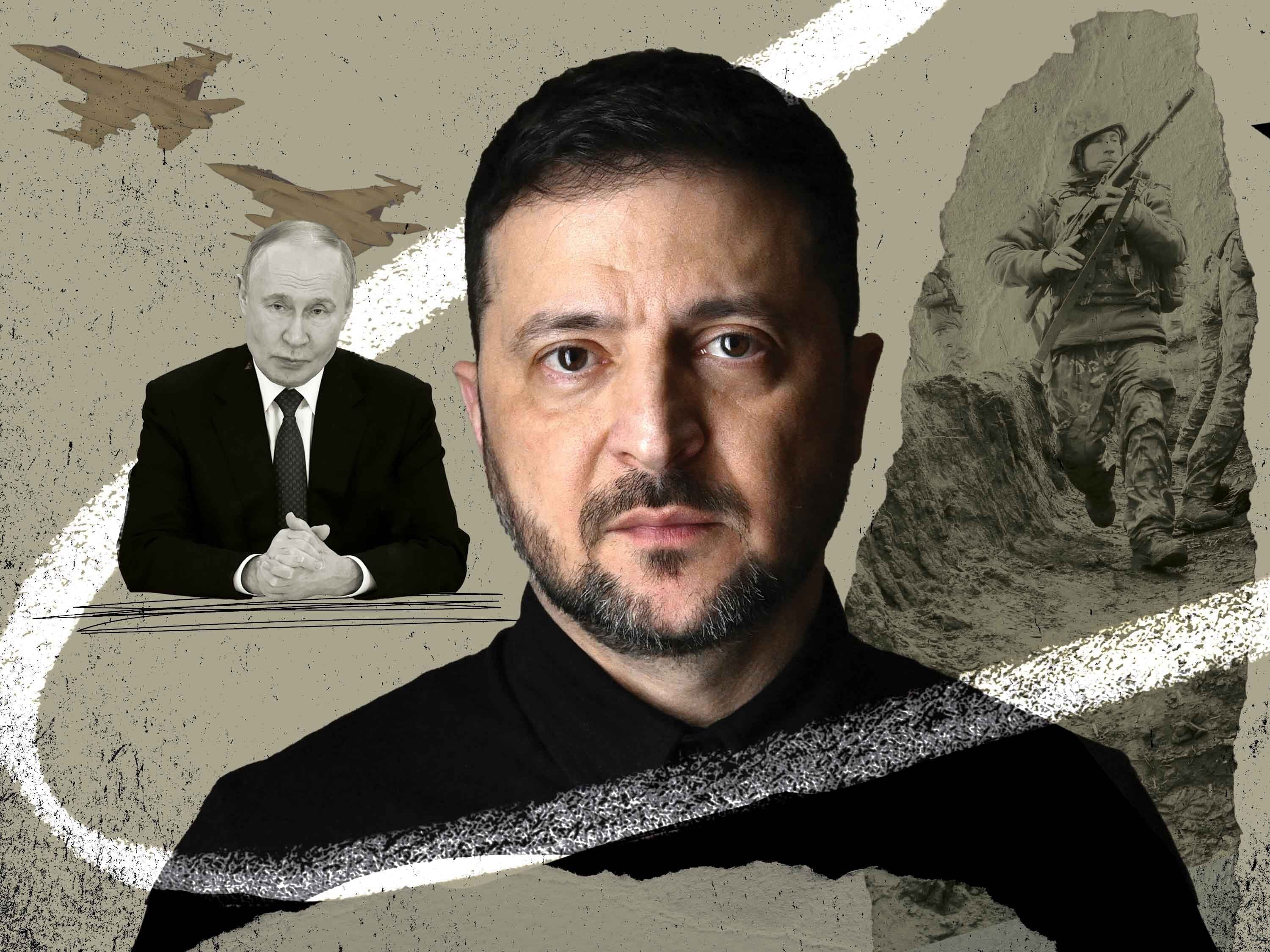
(Photo illustration by The Bulwark; Photos: Getty, Shutterstock)THERE ARE SOME WHO TALK ABOUT military power as if it can be counted. Troops, aircraft, ships, budgets—these are the metrics that often dominate headlines and shape early judgments about who will win and who will lose in a war. When Russia invaded Ukraine in 2022, those measures drove a near-consensus among analysts: a larger, better-equipped force would quickly overwhelm a smaller neighbor.
Russia, after all, had the fourth-largest military in the world—which many people assumed meant it had the fourth-best.But war is not an accounting exercise. It is a contest of human, political, and material forces interacting over time. And one of the most enduring truths—often overlooked in the early phases of conflict—is that power is best understood not as a static inventory, but as a relationship.A useful way to think about that relationship is something I learned, long ago, from a senior officer who was a mentor to me: Power = Will × Resources.This is a dynamic interaction, constantly shifting as wars unfold.
“Watch the transitions,” my mentor told me, “because nations and armies rarely operate at maximum capacity in either variable.” I soon learned that will rises and falls with leadership, legitimacy, and public support. Resources expand, degrade, or are misused depending on industrial capacity, alliances, and battlefield effectiveness. The outcome of war is shaped not by either factor alone, but by how they combine—and how they evolve and are shaped over time.That dynamic has always been on full display in Ukraine.
From the start, many analysts believed Russia would achieve a quick and decisive victory. I was not one of them. Having spent time working with Ukrainian forces, I had seen firsthand the quality, professionalism, and—most importantly—the will of their soldiers and their society to defend their sovereignty.
I had also seen the Russian military and its society closely enough to understand that both often lacked the quality, leadership, and cohesion necessary to translate their quantity of people and things into effective combat power.Get sharp analysis and expert commentary that helps you see around corners and truly understand the news. Join Bulwark+.A recent analysis by Brynn Tannehill reinforces how that early misjudgment is being corrected. Ukraine has not only held—it has adapted, innovated, and in key areas gained the advantage, especially in drone warfare and deep-strike capability.
Their spine of their military and governmental will has also stiffened over the last few years. Its recent successes—apparently blunting Russia’s spring offensive without losing significant territory (and perhaps recovering some on net) while striking military and economic targets ever deeper inside Russia—are the results of a nation aligning its will with the resources available and continuously adjusting both as the war progresses.Russia, meanwhile, despite entering the conflict with significant material resources, is suffering a depletion of that force and a deterioration of the will necessary to employ them effectively.
Recruiting shortfalls, coercive mobilization, and staggering casualty rates are not just indicators of battlefield losses—they are signs of a system under strain, where the human element is failing to keep pace with material demands.Ukraine’s advantage is also not just internal. While Russia has antagonized many of its formerly friendly neighbors, occasionally strained relations with India, mortgaged its future to China, and created open hostility with Europe, Ukraine has successfully leveraged the will of its people, and its leadership—under Volodymyr Zelensky—has galvanized external support, not just from Europe and NATO allies but from at least forty countries.
That external will has translated into added resources: weapons, funding, training, and political backing. The result is a multiplication effect that has allowed Ukraine to offset Russia’s initial advantages and, in some areas, surpass them.In modern war, no nation fights alone. Even in wars between individual states, like Russia and Ukraine, when both sides bring to bear all the elements of national power—military, economic, informational, and diplomatic—their allies, trading partners, security partners, and soft power all make a difference in the outcome of the war.
Alliances, whether formal or informal, are not optional; they are essential amplifiers of both will and resources. Ukraine understood this from the outset and has nurtured those relationships carefully.Join nowTHE UNITED STATES, BY CONTRAST, appears to be ignoring this critical factor of modern war. In Ukraine and in other global crises, the current administration’s approach—publicly questioning alliances, dismissing their value, and at times openly insulting and threatening long-standing partners—has begun to erode one of America’s greatest strategic advantages. Allies are not just contributors of material sup