Hong Kong has issued 42 fixed penalty notices of HK$2,000 since the first phase of the single-use plastic ban was implemented two years ago. However, with Earth Day on Wednesday marking the second anniversary of the ban, there is no word on when the next phase will be rolled out. It was originally meant to be implemented last year.
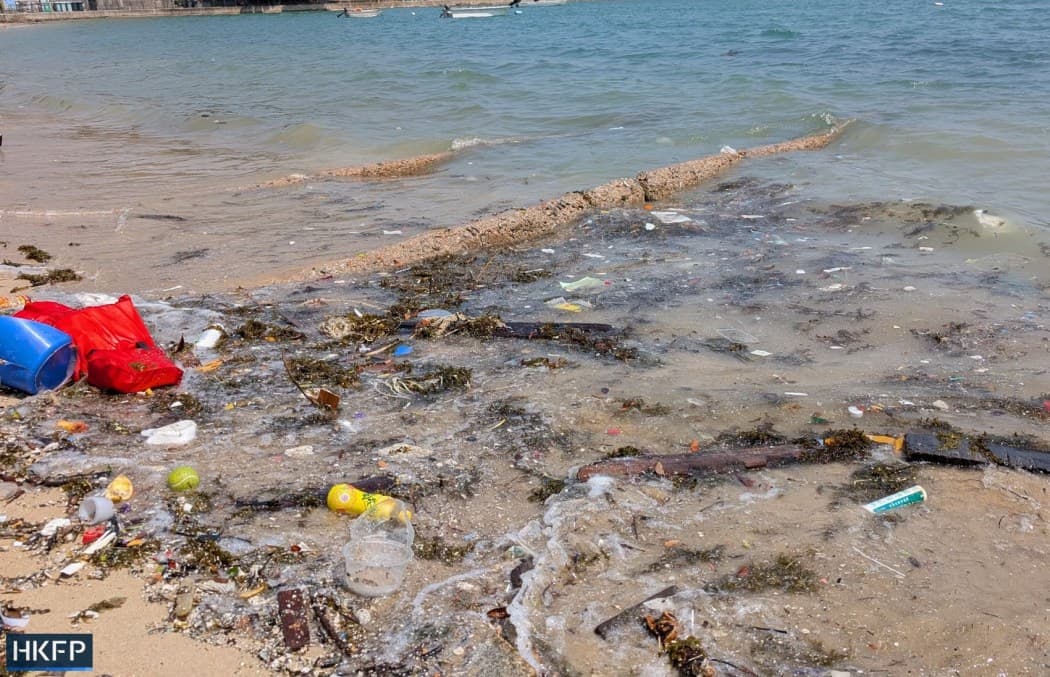
Plastic waste washed up on Lamma Island’s Lo Tik Wan beach on December 8, 2024. Photo: Tom Grundy/HKFP. A spokesperson for the Environmental Protection Department (EPD) told HKFP that from April 22, 2024, until the end of March this year, it had received 282 complaints relating to the regulation.
“Among the 282 complaints received, 244 were related to the regulated disposable plastic tableware, 36 were related to other regulated plastic products, and 2 of them involved both,” the EPD said on April 10. The Legislative Council passed the Product Eco-responsibility (Amendment) Bill 2023 in October 2023, with the law coming into effect on April 22 the following year. It bans styrofoam tableware, as well as plastic straws, stirrers, forks, knives, spoons and plates.
Plastic cups and food containers may still be sold and used for takeaway, but cannot be distributed for dine-in purposes. Control measuresDisposable plastic productsPhase 1, 2024Phase 2, originally set for 2025Ban sale and freedistribution– cotton buds– balloon sticks– inflatable cheer sticks– glow sticks– party hats– oxo-degradable plastic products (regardless of disposability)– umbrella bags– food sticks– plastic toothpicks– multipack rings– table cloths– plastic stemmed dental flossBan freedistribution– hotel and guesthouse toiletries (including plastic-handled toothbrushes, plastic-packed toothpaste, shower caps, razors, nail files, combs, as well as shampoo, body wash, conditioners, body lotions and hand sanitisers packed in disposable plastic containers) and plastic-bottled water provided in hotel rooms– plastic-packaged tissue paper for promotional use– non-medical use transparent gloves– earplugsBanmanufacturing– oxo-degradable plastic products (regardless of disposability) If a restaurant or hotel breaches the rules, they are warned in writing to make improvements within 10 days.
If the business fails to comply after the 10-day period, it is issued a HK$2,000 penalty. The EPD also said, “Over the same period, written warnings were issued in respect of 475 suspected non-compliant cases, and the persons-in-charge of 42 premises were issued fixed penalty notices of $2,000 each for failing to take specific remedial actions despite prior warnings.” It added that irregularities were subsequently rectified by the premises concerned. A restaurant in Kennedy Town, on December 5, 2023.
Photo: Kyle Lam/HKFP. Plastic is harmful as it degrades into toxic microplastics, which damage ecosystems, enter the food chain and leach chemicals linked to cancer. Plastics, derived from fossil fuels, are tough to manufacture and recycle in an environmentally friendly way and often impact wildlife.
Animals and marine life often mistake plastics for food or become entangled in plastic waste. No sign of Phase 2 Phase two of the law was meant to roll out last year, with single-use table cloths, multipack rings and plastic-stemmed dental floss set to be banned from sale and free distribution. Meanwhile, hotels would have been banned from distributing earplugs for free.
However, the EPD told HKFP that they are still gathering information on the performance of non-plastic alternatives. Samuel Chui, director of the Environmental Protection Department, speaks at a briefing session about the plastic ban policy on April 12, 2024. File photo: GovHK.
“In considering the implementation of the second phase of the Regulation, the EPD will carefully assess the maturity, availability, and affordability of relevant non-plastic alternatives, with a view to striking a balance between environmental protection and the sustainable development of the trades,” the spokesperson said. They said that the department launched a “Non-Plastic Container Trial Programme” in mid-August 2025 to openly invite eateries to participate in the trial use of various types of non-plastic containers and provide feedback. Plastic pollution on a Lamma Island beach in July 2025.
Photo: Tom Grundy/HKFP. “The feedback received so far reflected that takeaway containers used for serving items like sauces, soups and beverages require a higher standard of safety and sealing performance,” the EPD said, adding that further improvement of alternative products is needed. It is not the first time the authorities have hesitated over their own green initiatives.
Last year, the government indefinitely suspended its Municipal Solid Waste Charging amid public backlash. A legal framework for designated, paid-for waste bags had been set out – after decades of debate – as part of a “pay as you throw” system. But, in July, the environment chief said the public did not want the scheme “for now.”