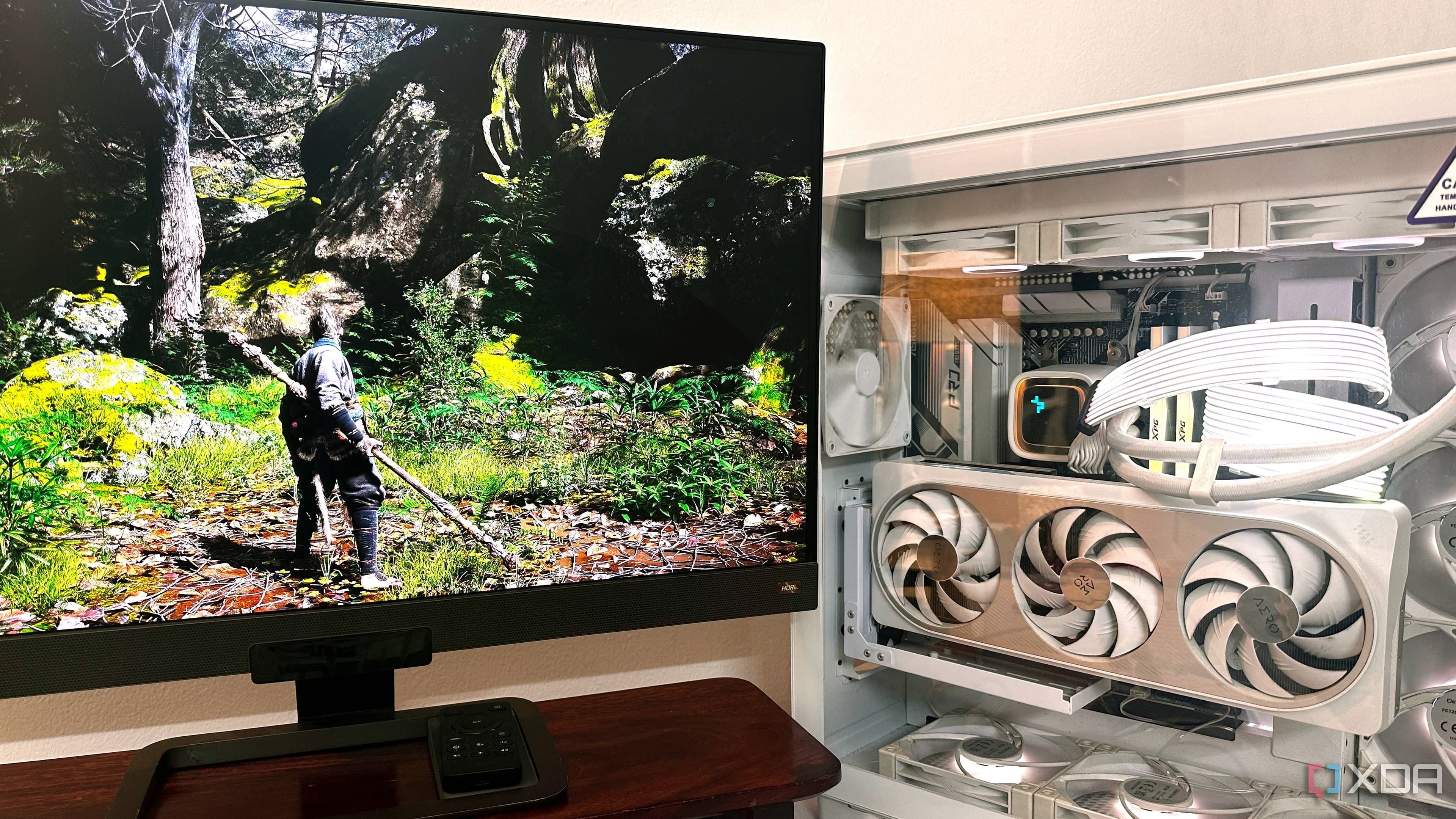
Modern graphics cards and gaming CPUs have gotten to the point that achieving high framerates in most titles isn't as challenging as it used to be. Even on budget GPUs, assists like upscaling and frame generation ensure your average FPS remains well above 60, and often above 100. The problem with using average FPS as the sole metric of performance is that it doesn't truly reflect what makes a smooth gaming experience.
A game running at 90–120 FPS can still be riddled with microstutters, ruining your immersion despite a "good average FPS." The crucial metric you need to keep an eye on is the frame time. It represents the consistency of your gaming experience.
A huge variance in frame time can result in terrible frame pacing, even if the FPS counter shows no apparent problems. Fortunately, you can detect poor frame pacing and fix it to a large degree.