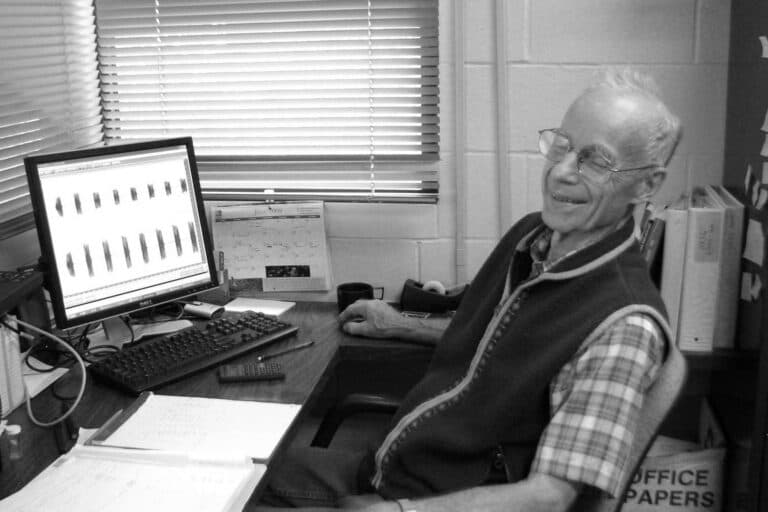
Late summer evenings in much of North America carry a particular kind of insistence. It comes not from anything visible, but from a steady, patterned sound: a rasp, a pulse, a sequence that seems at once mechanical and expressive. For generations it was treated as background, a seasonal accompaniment to heat and dusk. Yet for […]
Late summer evenings in much of North America carry a particular kind of insistence. It comes not from anything visible, but from a steady, patterned sound: a rasp, a pulse, a sequence that seems at once mechanical and expressive. For generations it was treated as background, a seasonal accompaniment to heat and dusk.
Yet for those who listened more closely, the sound suggested something else—a system, perhaps even a language, shaped by anatomy but not wholly explained by it. Understanding that gap—between structure and performance, between what could be seen and what had to be heard—became a life’s work for Thomas J. Walker, an entomologist who approached insects not simply as specimens but as part of an acoustic world.
He died on April 8th 2026, aged 94. He was born in 1931 in Dyersburg, Tennessee, and raised on a farm during the Depression. The setting was unremarkable in one sense; many naturalists trace their beginnings to such places.
But the combination of agricultural routine and long hours outdoors left him attentive to patterns that others ignored. Boy Scouts and farm work provided structure, though not direction. That came later, through formal study, first at the University of Tennessee and then at Ohio State University, where he completed a doctorate in entomology.
Walker joined the University of Florida in 1957 and remained there for more than four decades. His academic titles changed—assistant professor, then professor, and eventually professor emeritus—but his interests remained consistent. He focused on insect ecology, behavior and systematics,…This article was originally published on Mongabay