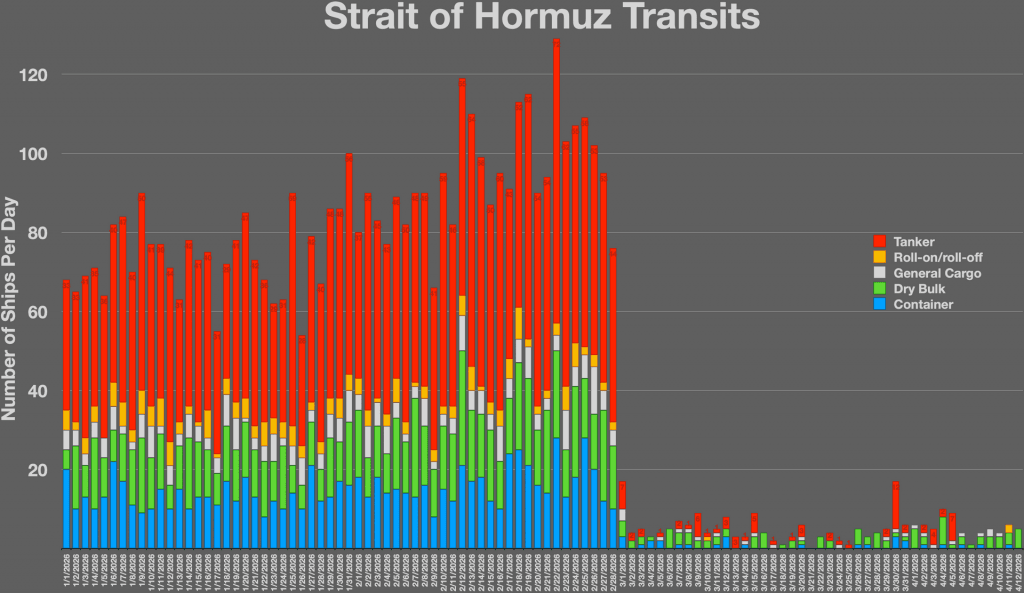
A long read on the consequences of the current Strait of Hormuz crisis. Michael Hudson’s Killing the Host, The Collapse of Antiquity and The Destiny of Civilization are published by CounterPunch Books. Cross-posted from Counterpunch Announcing that “A whole civilization [...] The post Michael Hudson – Postponing the World’s Financial Winter, But For How Long? appeared first on Brave New Europe.
A long read on the consequences of the current Strait of Hormuz crisis. Michael Hudson’s Killing the Host, The Collapse of Antiquity and The Destiny of Civilization are published by CounterPunch Books. Cross-posted from Counterpunch Announcing that “A whole civilization will die tonight,” Donald Trump threatened on April 7, 2026, to destroy “every bridge in Iran” and “every power plant … burning, exploding, and never to be used again.” His intention to continue committing war crimes is driving the world toward a Financial Winter as devastating as the Great Depression.
Iran’s April 8 response called his bluff, laying down the terms for ending the conflict and opening the Strait of Hormuz. Oil-importing countries will need to compel U.S. and Israeli compliance with these terms in order to avoid an economic crisis. We are seeing the economic version of what the 1960s called Mutually Assured Destruction (MAD).[1] The term referred to the military standoff that avoided the global Nuclear Winter that would have occurred if the world’s leading powers had used atomic weapons against each other.
The possession of atomic bombs by both the United States and Soviet Union assured that they would not attack each other as long as the arms race maintained nuclear parity. The resulting balance of terror made the U.S.-Soviet Cold War relatively peaceful as far as fighting among the world’s most heavily armed adversaries was concerned. Their mutual restraint enabled America to wage its wars in Southeast Asia and Latin America without threatening world conflagration.
Today’s world is threatened with an economic kind of global collapse. Iran is defending itself against the prospect of U.S. and Israeli military attack by threatening to destroy OPEC’s oil and gas trade if its survival as a sovereign country is endangered. This threat is confronting the world with a fateful choice: Either countries will suffer a deep depression if Trump follows through on his threat to destroy Iran and seize its oil – in which case Iran’s retaliation will destroy OPEC’s energy trade on which many countries have become dependent – or they must actively move to prevent the U.S. attack.
In the 1960s, it was understood that an atomic attack by either of the major powers would not be survivable by them in meaningful terms. But today’s economic version of MAD has no such restraint on America’s floundering attempts to reverse the loss of its economic power that has left it with few major levers to exert control over other countries. Its main leverage is its ability to threaten countries with economic and financial chaos, by closing off the U.S. market to their exports and by blocking their access to oil and gas from Russia, Iran and (until just recently) Venezuela in its drive to force reliance on its own energy supplies and Arab OPEC oil under its control.
This threat of trade disruption has worked best against America’s closest allies. President Trump’s “Liberation Day” tariffs of April 2, 2025 imposed exorbitant levies that Trump offered to relax on the condition that other countries sign “giveback” agreements in the form of agreeing to impose trade and financial sanctions on America’s designated enemies, headed by Russia and Iran, and to shift their oil purchases to the United States. This is not the first time that U.S. strategists have broken the rules of international relations that America itself had put in place in 1945 to shape the post-World War II economic order.
Controlling 75% of the world’s monetary gold, it dictated creditor-oriented rules of international finance, and also rules of free trade as a means of breaking up Britain’s imperial preference trade restrictions. These rules prevented other countries from following protectionist policies to protect their agriculture and industry as the U.S. itself was doing. The United States also created a global military presence, promising to protect the world against the specter of Soviet military attack and to prevent countries enacting strong government controls or socialist policies that would pose an alternative to the U.S.-backed system of international finance, trade and private investments.
But now that the United States has de-industrialized and become debt-ridden, it has abandoned and indeed reversed these rules that served it eighty years ago. What U.S. officials call national security strategy is how to recover and maintain America’s control over other countries by weaponizing the dollar-centered financial system and its foreign trade. And instead of protecting other countries and their economic sovereignty, its attempt to enforce its dominance disruptively and militarily has become a threat to the entire world’s security.
And unlike the balance of power that Mutually Assured Destruction had established, most other countries have not mounted any symmetrical check to U.S. bullying by isolating themselves from America’s weaponization of its trade and financial relations. In the present c