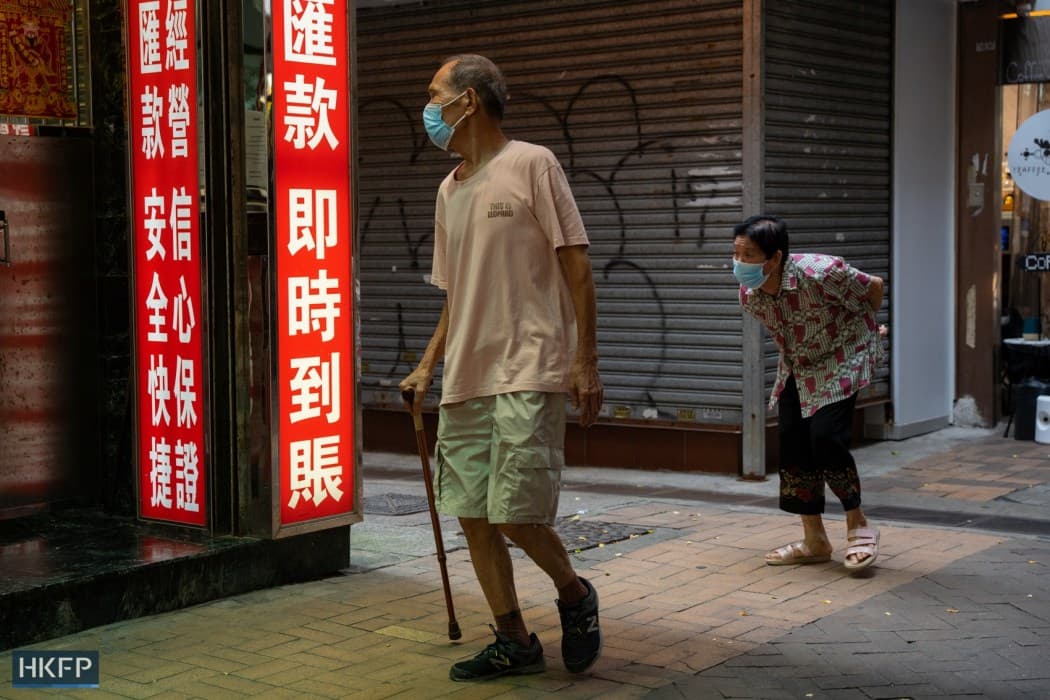
A Hong Kong government pilot scheme to relocate elderly social security recipients to care homes in Guangdong province has seen 10 beneficiaries since its launch in October. Elderly residents in Hong Kong. File photo: Kyle Lam/HKFP.
Secretary for Labour and Welfare Chris Sun revealed the figure in a written reply to a lawmaker last month, saying that the 10 elderly residents had moved to eight care homes across Guangdong as of early March. A Legislative Council (LegCo) panel examined the pilot scheme on Tuesday. A government document submitted to the panel stated that only five applicants had been relocated to Guangdong as of February, with a total cost of HK$625,000.
The HK$128 million pilot programme, financed by the Community Care Fund, was launched in October to subsidise elderly recipients of the Comprehensive Social Security Assistance (CSSA) to reside in care homes in Guangdong. Lawmaker Maggie Chan expressed concern over the low number of recipients. Speaking at the LegCo panel on Tuesday, Sun said that the actual number of beneficiaries under the pilot scheme could be more than the February figures, without mentioning the more updated figures from March.
Nonetheless, he acknowledged that the number of successful relocations was “less than expected,” saying the government faced difficulties in persuading elderly residents to move to a new and unfamiliar place. Sun said the scheme is designed to improve the lives of elderly residents, particularly those residing in private care homes with poor conditions or in substandard housing in the city. Hong Kong Secretary for Labour and Welfare Chris Sun attends the first meeting of the eighth Legislative Council (LegCo) on January 14, 2026.
File photo: Kyle Lam/HKFP. It targets elderly residents who rely on social security but are not entitled to publicly funded care homes in the city. However, they may be reluctant to change to a new environment despite the possible improvement in quality of life, Sun said.
“They know that the environment [in Guangdong] is really good… but it takes time for elderly people to change their habits,” he said in Cantonese. “Their living conditions could improve significantly, but they still choose to stay in Hong Kong instead of moving there.” Sun said the pilot scheme was still in its early stages and that authorities would review its efficacy again in six months. Elderly residents in Hong Kong.
File photo: Kyle Lam/HKFP. Annisa Ma, assistant director of social security at the Social Welfare Department, said the government would organise more activities, such as day trips, for elderly residents to get a taste of life in Guangdong and to dispel their doubts. She added that the February cost of HK$625,000 covered “administrative fees” given to an agency responsible for assisting elderly residents interested in or benefited from the pilot scheme.
The pilot scheme has a quota of 1,000 elderly recipients, with each receiving a monthly subsidy of HK$5,000. Sun also told the LegCo panel that the HK$6.9 billion Community Care Fund could operate for four more years without additional funding.