There is a conversation happening in boardrooms across Singapore, Sydney, and Tokyo that almost never makes it into a marketing report. Senior B2B marketers — the ones with the budgets, the data, and the track record — are quietly pulling spend away from digital channels. Not because digital doesn’t work. But because of their specific […] The post The quiet exodus: Why APAC’s B2B marketers are dit
There is a conversation happening in boardrooms across Singapore, Sydney, and Tokyo that almost never makes it into a marketing report. Senior B2B marketers — the ones with the budgets, the data, and the track record — are quietly pulling spend away from digital channels. Not because digital doesn’t work.
But because of their specific goal — getting in front of a CFO, a CTO, or a Chief Revenue Officer who actually controls the budget — it has become nearly impossible to break through. I hear this every week. I run The Ortus Club, a B2B executive event agency that has hosted more than 2,500 invitation-only roundtable dinners, masterclasses, and summits across 40+ countries since 2015.
Our clients are companies like Google, Visa, Meta, IBM, and Airwallex. And in the past 18 months, almost every single one of them has said a version of the same thing: digital is saturated at the top of the funnel. The executives we need to reach have stopped responding.
Our 2026 Event Marketer’s Playbook — which surveyed 295 senior B2B marketers across 30 cities — confirms what we are seeing on the ground. The shift is real, it is accelerating, and it is reshaping how the most sophisticated B2B brands in APAC are thinking about pipeline. The executive attention problem is not going away Let me give you the honest picture.
A senior decision-maker at an enterprise company in Singapore receives, on average, somewhere between 100 and 200 unsolicited outreach messages per week across email, LinkedIn, and WhatsApp. Their EA screens calls. Their LinkedIn inbox is a graveyard of unanswered connection requests.
Their email filters have become extraordinarily sophisticated. The traditional B2B playbook — awareness campaign, gated content, MQL handoff to sales, SDR follow-up sequence — was designed for a world where digital channels were still relatively low-noise. That world is gone.
What has replaced it is a senior executive who has essentially become unreachable through conventional means, and a generation of marketing teams who are still measuring success by the number of form fills. What the data from 295 marketers actually shows Across the 295 senior B2B marketers we surveyed for the 2026 Event Marketer’s Playbook, three findings stood out. First, in-person executive events now rank as the single highest-ROI channel for pipeline generation at the enterprise level, ahead of paid social, content marketing, and outbound SDR programmes.
This is not a soft preference — it is a commercial finding based on deal velocity and average contract value. Second, the most cited reason for increasing event budgets in 2026 is not brand awareness. It is trust acceleration.
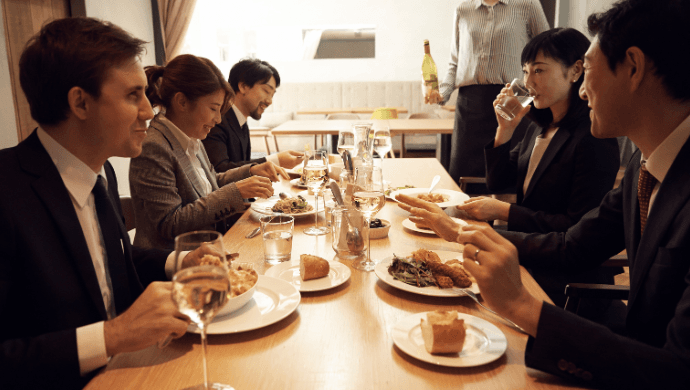
Marketers told us repeatedly that a 90-minute dinner conversation compresses a sales cycle that would otherwise take six to nine months of digital nurturing. The decision-maker who sat across the table from your CEO at a roundtable last Tuesday is not the same prospect as the one who downloaded your whitepaper. Also Read: Pre-launch marketing is a tease that works, how to get it right?
Third, the format matters enormously. Traditional conferences and trade shows are losing share to smaller, curated, invitation-only formats. The reason is simple: executives will not give up three hours of their time for a room of 500 people, but they will clear their calendar for a dinner of twelve where everyone in the room is relevant to them.
Why is this particularly true in APAC Southeast Asia is not a monolith, and any B2B marketer who treats it as one will struggle. The relationship dynamics that govern enterprise purchasing decisions in Singapore are fundamentally different from those in Jakarta, Bangkok, or Kuala Lumpur. In most of this region, business does not happen between companies — it happens between people who have met in person, established trust, and decided they want to work together.
This is not a cultural observation. It is a commercial one. The B2B brands that have built the deepest enterprise pipelines in APAC over the past decade are almost universally the ones that have invested in face-to-face executive relationships — not the ones with the most sophisticated marketing automation stacks.
Digital channels are absolutely necessary for awareness and reach. But in APAC’s enterprise market, they are not sufficient for conversion. The gap between a warm digital lead and a signed contract is filled by human interaction, and the most efficient way to create that interaction at scale is through curated executive events.
What to actually do about it If you are a B2B marketing leader reading this and your pipeline is heavily dependent on digital channels, here is what I would look at first. Map your top 50 target accounts and ask honestly: which of those decision-makers have we had a real conversation with in the last six months — not a demo, not a webinar, an actual conversation about a problem they have? If the answer is fewer than ten, you have a relationship gap that no amount of