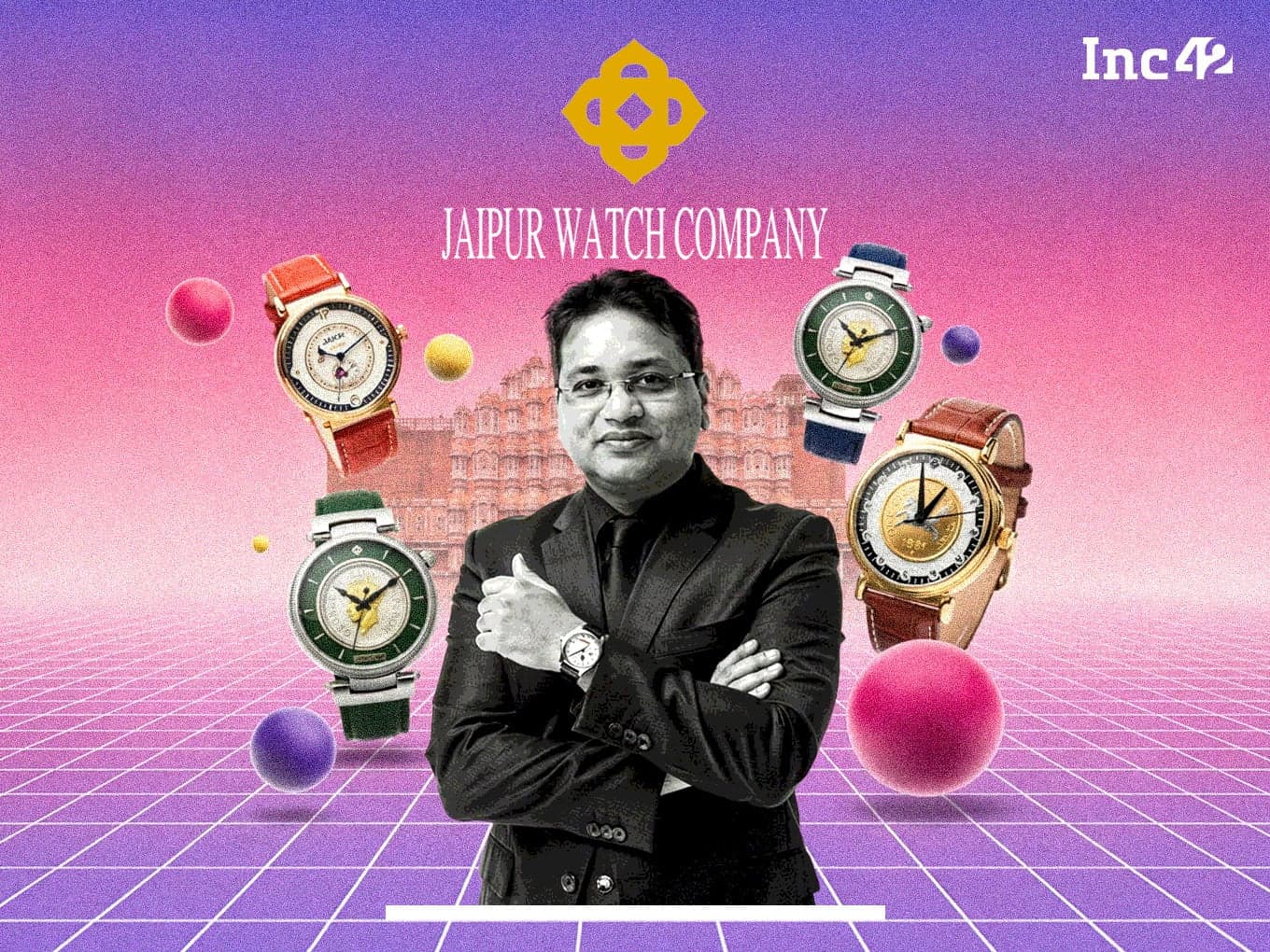
PM Narendra Modi and his sartorial choices never cease to make headlines. Be it his occasional turbans or the chic jackets or his ethnic kurta-pyjama, PM’s matey selfies with lawmakers around the world have made him the a-la-mode Indian premier with an undeniable global charm despite being deeply local. On April 10, the Prime Minister was seen sporting a wristwatch with a tiger motif.
Horologists quickly traced its origin. It was not from a premium global brand, nor was it an invaluable custom creation. It was made by Jaipur Watch Company (JWC), an Indian company making mechanical timepieces rooted in the nation’s heritage.
But, Modi wasn’t alone with a JWC tied to the wrist. From Bollywood actress Raveena Tandon to singer-songwriter Ed Sheeran, the watchmaker boasts of a long list of high-profile patrons. For Gaurav Mehta, the vision was to build an Indian watch brand that would outlast him and tell India’s very own tales.
“The idea is to bring India back onto the horological map, but do it in a way that reflects our own culture and aesthetic,” said Mehta. Founded in 2013, Jaipur Watch Company was created to fill the gap left by the lack of a homegrown brand that would draw on the country’s rich heritage. The idea took shape as Mehta noticed a change in how people were buying.
Some consumers began seeking more than just a product, something meaningful and distinctive. “When a watch carries a coin, a stamp, miniature art, or a craft form rooted in India, it creates an emotional connection that a standard catalogue luxury watch often fails to offer,” Mehta said. Today, Jaipur Watch Company is known for its coin watches, stamp watches, hand-painted dials, and archived watches, available in more than 20 variants.
Some of its flagship collections include the Baagh Collection, built around a 1947 one-rupee coin bearing a tiger; the Eternal Watch Collection, featuring dials made from the first coin minted in independent India; the Pichwai Art Collection, with dials hand-painted by miniature artists from Rajasthan; and the Imperial IV Automatic, designed using a King George VI half-a-rupee silver coin from the period between 1938 and 1945. With an average order value of around ₹45,000, the brand sits above fashion and mass-premium watches, but at a more accessible entry point than global luxury maisons. The roughly $600 Mn luxury watch market in India is expected to grow at a 1.2% rate, reaching $685 Mn by 2035.
But, are there enough takers for an Indian marque that matches roughly the price tag of a global repeater? Rising disposable incomes, growing concentration of discerning HNIs, an aspiring middle class, and a younger population craving to make a style statement are fostering a bullish demand for luxury watches. Mehta’s JWC, too, succeeded in broadening its customer base from niche collectors and bespoke buyers to entrepreneurs, professionals, legacy-minded families, and young consumers.
For FY26, according to the founder, Jaipur Watch Company is on track to reach ₹40 Cr in revenue on the back of an omnichannel growth, faster inventory turns, and an expanding retail presence. There are 14 outlets across the country, while five more are set to open by June this year. In fact, Mehta targets a store count of 25 by the end of FY27.
The brand is also open to raising strategic capital and building partnerships that can accelerate scale, global distribution, and institutional capabilities, he said. From Riding Time Machines To Crafting Timepieces As a boy, Mehta was fond of collecting old coins. He would hitch a ride on the time machine to learn the history and the stories each one carried.
His first watch, an HMT, came as a gift from his father when he turned 12. That’s when his love for the history of coins resonated with horology. The idea of a watch brand from Jaipur came in 2013, but it encountered a unique set of challenges.
The first key hurdle was that of perception. “Customers were conditioned to believe that luxury watches had to come from Switzerland or from globally established names. So, as an Indian brand, we first had to earn their trust before we could fit into their aspiration,” he said.
The second challenge, more structural, was that India lacked a strong ecosystem for high-precision watchmaking. Vendors familiar with luxury-grade tolerances, finishing standards, and consistency were very few. Mehta spent years working with suppliers, raising quality benchmarks and gradually building a more reliable value chain that could support the brand.
Over the years, Jaipur Watch Company has developed a hybrid sourcing approach. It sources precision movements from established international makers, while design, product architecture, case development, dial work, and overall storytelling are developed in India. With time, this balance has become central to how the brand positions itself as a design and narrative-led watchmaker. “The worth of a watch from JWC is not about the cost of the components – it is desi