Eric Swalwell's downfall is driving a renewed focus on sexual misconduct and abuse in Washington
This story was originally reported by Grace Panetta of The 19th. Meet Grace and read more of their reporting on gender, politics and policy. A years-long, explosive investigation by The New York Times last month exposed allegations of sexual abuse by the late labor leader Cesar Chavez.
Two members of Congress, one Democrat and one Republican, resigned this week after being accused of sexual misconduct. And Labor Secretary Lori Chavez-DeRemer is facing an internal investigation, including allegations of inappropriate behavior by her father and husband toward young women staff. The #MeToo movement, founded in 2006 by activist Tarana Burke, brought a reckoning for powerful men at its public peak in 2017 and 2018, leading to changes in laws and policies to address abuse and help survivors get justice.
It also drew a swift cultural backlash, culminating in President Donald Trump’s election to a second term after he was found liable of sexual abuse. Now, in 2026, sexual misconduct by people in positions of power is back at the forefront of the political conversation and public discourse. The groundswell of outrage shows people are “fed up,” said Sarah Higginbotham, co-founder and co-director of the National Women’s Defense League (NWDL), which focuses on sexual misconduct at the state level.
“There is currently a survivor and sexual abuse issue that is at the epicenter of national and global politics right now,” she added. “I would like to say that I don’t know how much more evidence people need that this is something that should be prioritized.” But it’s also one, she said, that tends to be “put in a drawer” and is chronically underinvested in. The most prominent advocacy group to emerge from #MeToo, Time’s Up, shuttered years later amid internal discord and accusations of conflicts of interest.
Higginbotham and her co-founder, Emma Davidson Tribbs, founded NWDL to fill the need. “It’s not even comparable to other issue areas that are funded, that are invested in, that can go do the work they need to do,” she said. “The good way to look at that, or the optimistic way to look at it is that it’s early, right?
This is the beginning of something new.” Even amid a broader cultural backlash to #MeToo and intense partisan divisions, sexual misconduct and assault are rare issues that cross party lines. Last year, three Republican women sided with Democrats in a successful effort to compel the release of files connected to the late disgraced financier and convicted sex offender Jeffrey Epstein. And the latest revelations have drawn near-immediate recriminations across the political spectrum.
The Times’ report on the allegations against Chavez, including from fellow labor leader Dolores Huerta, prompted officials to rename schools, monuments and state holidays. Two days after the San Francisco Chronicle and CNN reported Friday on allegations that former Democratic Rep. Eric Swalwell sexually assaulted women, including staff, he dropped out of the race for governor of California.
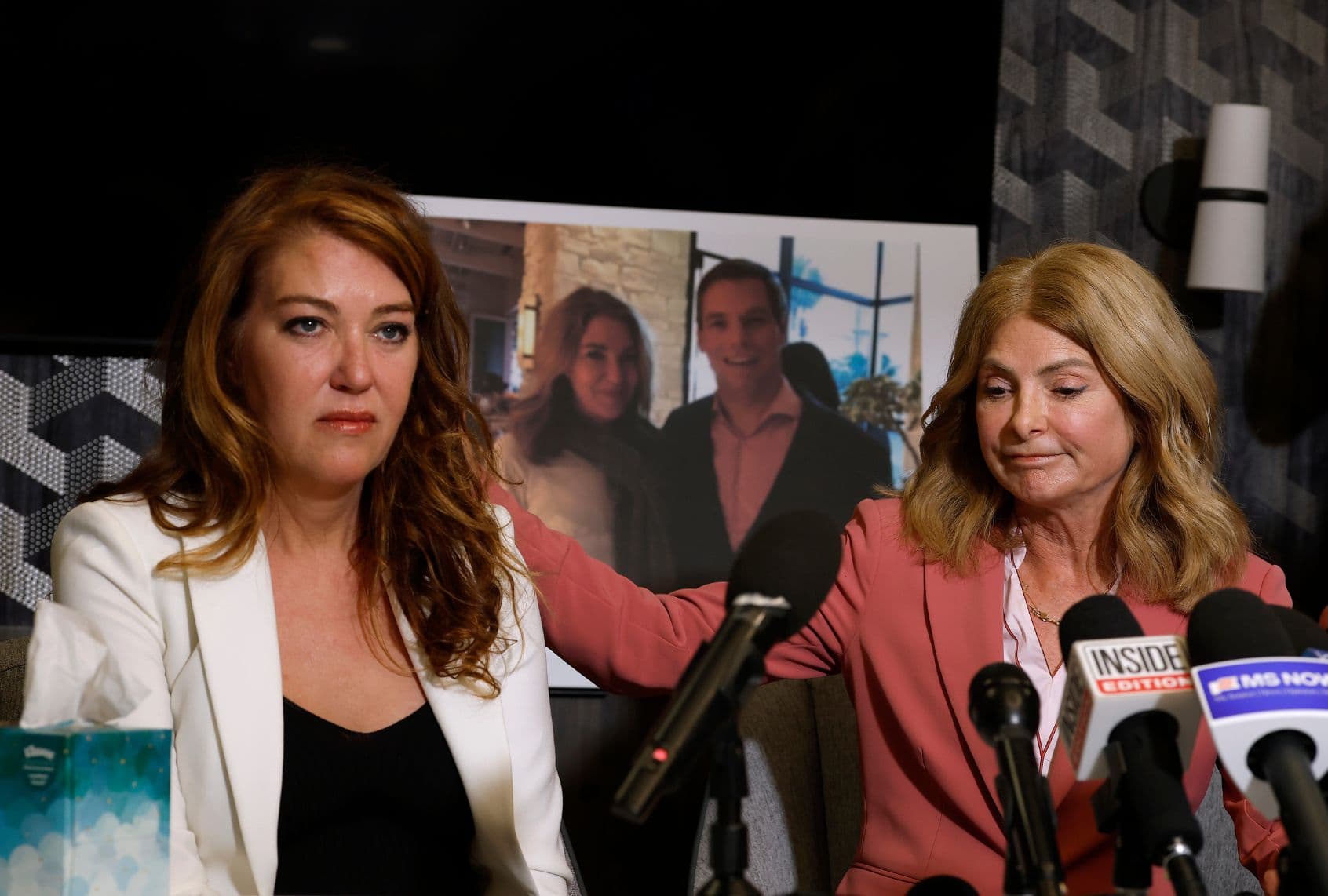
On Monday, he and former Republican Rep. Tony Gonzales of Texas, another congressman accused of inappropriate relationships with staff, resigned amid a bipartisan push led by two women to expel them from office. Swalwell has apologized for errors in judgment, but has denied the allegations of assault, with his lawyer calling them a “calculated and transparent political hit job.” While consequences for Chavez’s legacy and Swalwell were swift, it took longer for Gonzales, who had already dropped his reelection bid, to resign.
There’s also an open Ethics Committee investigation into Republican Rep. Cory Mills of Florida — last year, a judge granted his ex-girlfriend a protective order against dating violence after she said he harassed and threatened her. Mills has denied wrongdoing.
But despite his near-immediate fall after allegations were published, many said it shouldn’t have taken Swalwell running for governor, after rumors about him flirting with and pursuing younger women staffers had swirled for years. “There is no such thing as being flirty with a staffer. That’s not being flirty, that is inappropriate, harassing behavior,” said Brooke Nevils, a former NBC producer and author of “Unspeakable Things: Silence, Shame and the Stories We Choose to Believe.” In 2017, Nevils filed a sexual assault complaint against then-“Today Show” host Matt Lauer that led to his firing from the network. (He admitted to extramarital affairs but denied all allegations of assault).
In her book, she used her story as a lens to examine the conditions that allow misconduct and abuses of power to flourish. “When it gets to the point that it’s an open secret for years, then everyone is complicit in an open secret,” Nevils said. “There is this culture in D.C. where legislators are living away from their families, they’re drinking, it is very easy to compartmentalize that behavior, and there have to be clear boundaries. You’re never off duty when you’re a member of the Un