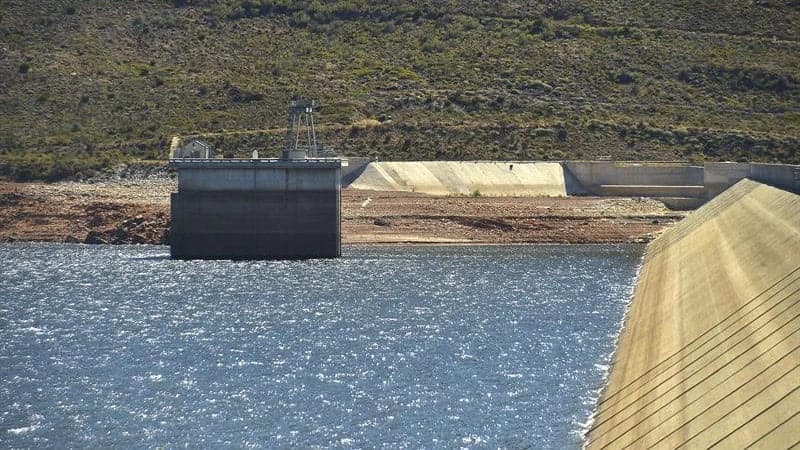
Cape Town’s major dams are currently holding just under half their total capacity, with the latest weekly readings showing a marginal improvement from the previous week but a significant drop compared to the same period last year. Current dam storage down sharply from last year As of 20 April 2026, the combined storage across Cape Town’s six major dams sits at 404 638 megalitres, representing 45% of total system capacity. That is a slight uptick from 44.8% recorded the previous week, when storage totalled 402 182 megalitres.
However, the year-on-year comparison tells a more sobering story. At the same point in 2025, the system held 556 580 megalitres, equivalent to approximately 62% capacity. The city cautioned that direct dam-to-dam comparisons can be misleading given the varying sizes of individual dams.
“Because each dam size is different, the best indicator of overall dam water levels is the total quantity stored expressed as a percentage of total dam capacity,” it stated. It added that “this statistic is shown in the bottom line of the table.” How each of the six major dams is performing Berg River Dam, the system’s second-largest at a full capacity of 130 010 megalitres, is currently at 43.6%, up from 40.1% the previous week, though well below its 62.3% level recorded in April 2025. Theewaterskloof Dam, by far the largest in the system with a capacity of 480 188 megalitres, mirrors Berg River at 43.6% this week, a marginal dip from 43.9% the week prior and significantly lower than its 62.4% reading a year ago.
Steenbras Upper is the strongest performer among the six dams, sitting at 58.4%. Its 2025 equivalent was 93%, highlighting how dramatically conditions have shifted in twelve months. Voëlvlei, with a full capacity of 164 095 megalitres, stands at 48.9%, slightly down from 49.6% the previous week and below its 60.8% mark from 2025.
Wemmershoek Dam is at 47.5%, compared to 52.9% in the same week last year, while Steenbras Lower is the lowest in the system at 36.1%, down from 46.7% a year ago. Why dam levels matter The City of Cape Town and the National Department of Water and Sanitation routinely monitor dam levels across the region to determine water availability and assess whether restrictions are needed. The dams feeding the city form part of the Western Cape Water Supply System, an integrated network of dams, pump stations, pipelines, and tunnels that does far more than just serve Cape Town. According to the City of Cape Town, “the system supplies water to towns in the Overberg, Boland, West Coast, and Swartland areas, and provides irrigation water for agriculture.”