Electricity Supply Corporation of Malawi (Escom) has announced “a structured eight-month rollout of embedded power and battery storage” to strengthen the grid, effectively exposing Malawians to a long wait for stable power supply. In an update issued yesterday amid persistent blackouts in the country, Escom also acknowledged the significant impact the current power outages have on households, businesses and the national economy at large. Reads the statement: “The current outages are driven by two primary factors: System instability [because] demand is currently exceeding available generation, leading to frequent load shedding for our customers.
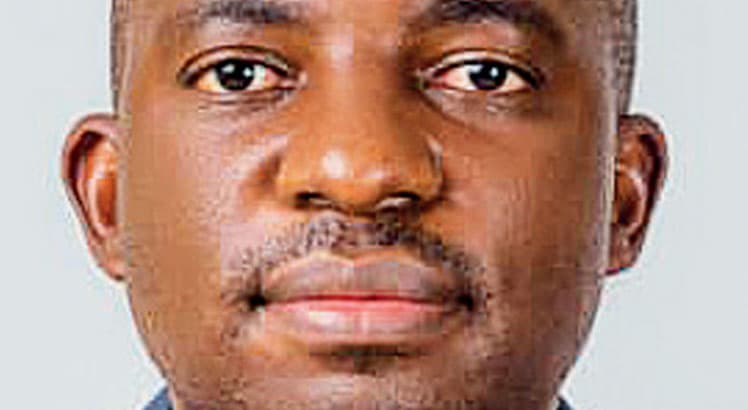
“Fault response: We acknowledge that fault response and restoration times have been unacceptably slow.” Escom said it was working with Electricity Generation Company (Egenco) and performing daily balancing of supply and demand as well as optimising all available generation. Mbukwa: Consumers areaffected. | Nation “A structured eight-month rollout of embedded power and battery storage is underway to strengthen the grid. “We have immediately launched a nationwide fault clearance campaign and mobilised additional teams to clear backlogs.
Managers have been deployed directly to fault centres to improve dispatch and coordination,” further reads the statement. Escom said there will be an improvement in fault response time within 30 days while stabilisation of response times is pegged at 60 days and reduction in load shedding is expected within eight months. Both Escom and Egenco have kept a tight lid on how much power is available at the moment, but information on Egenco website shows that out of the installed generation capacity of 444.67 megawatts (MW), 378.59MW is available.
Egenco spokesperson Moses Gwaza said he needed time to respond to queries on the matter. But in a recent statement, Egenco said that scheduled sediment flushing operations at all major hydropower stations, namely Nkula, Tedzani and Kapichira are ongoing and will continue every weekend from 9pm on Saturdays to 4am on Sundays until the end of June 2026. Reads the Egenco update: “These sediment flushing activities are essential maintenance works aimed at removing accumulated silt and debris from the power station intakes.
This process is critical for improving water flow and enhancing overall power generation efficiency. “Despite the temporary reduction in power generation at the affected stations, Egenco assures all stakeholders and the public that it will maximise power generation from other hydropower stations not undergoing maintenance, as well as from diesel power plants, to help maintain stable electricity supply during these periods.” In December 2025, Escom projected the country’s power supply to stabilise by February 2026 after three projects, including the Mozambique-Malawi power interconnector, are commissioned.
Escom said the interconnector coupled with restoration of the 31MW Tedzani Power Station and the 20MW Kanengo Battery Energy Solar System (Bess) would solve electricity challenges by February 2026. It said the interconnector which will enable Malawi to tap 50MW from Mozambique, will be commissioned in February 2026 the time Bess project (which targets storing solar power to stabilise supply) will be key to stabilise electricity supply from 2026 going forward. But stakeholders have warned that the eight months of unstable power supply will choke production, which has a detrimental effect on the economy while consumers, who already face shortage of gas, will have to resort to using charcoal, worsening environmental degradation.
For economist Chris Mbukwa of Mzuzu University (Mzuni), the situation will affect business operations, leading to increased costs, which affect output and profits of companies. He said: “Reliable energy is a key precursor of economic growth. Most macroeconomic indicators such as rising inflation and job losses, may be sorted out significantly with increased investment in the energy sector.
“Consumers are affected too as storage of commodities such as food becomes a challenge when blackouts are longer as it is the case in some areas. Businesses resort to alternatives, which basically add to the costs.” Mbukwa said Malawi needs to take advantage of the growth of solar energy electrification through private sector participation. Environmental rights activist Mathews Malata said industries are forced to scale down production and rely on expensive, inefficient and environmentally harmful alternatives such as diesel generators and firewood.
He said while the 2025 amended Forestry Act introduces tough penalties for illegal charcoal production, absence of reliable electricity and affordable alternatives such as liquefied petroleum gas (LPG) for cooking and briquettes, households may inevitably revert to charcoal use. “You cannot criminalise necessity without first providing alternatives to survival. Increased reliance on unsustainably produced charcoal will intensify ex