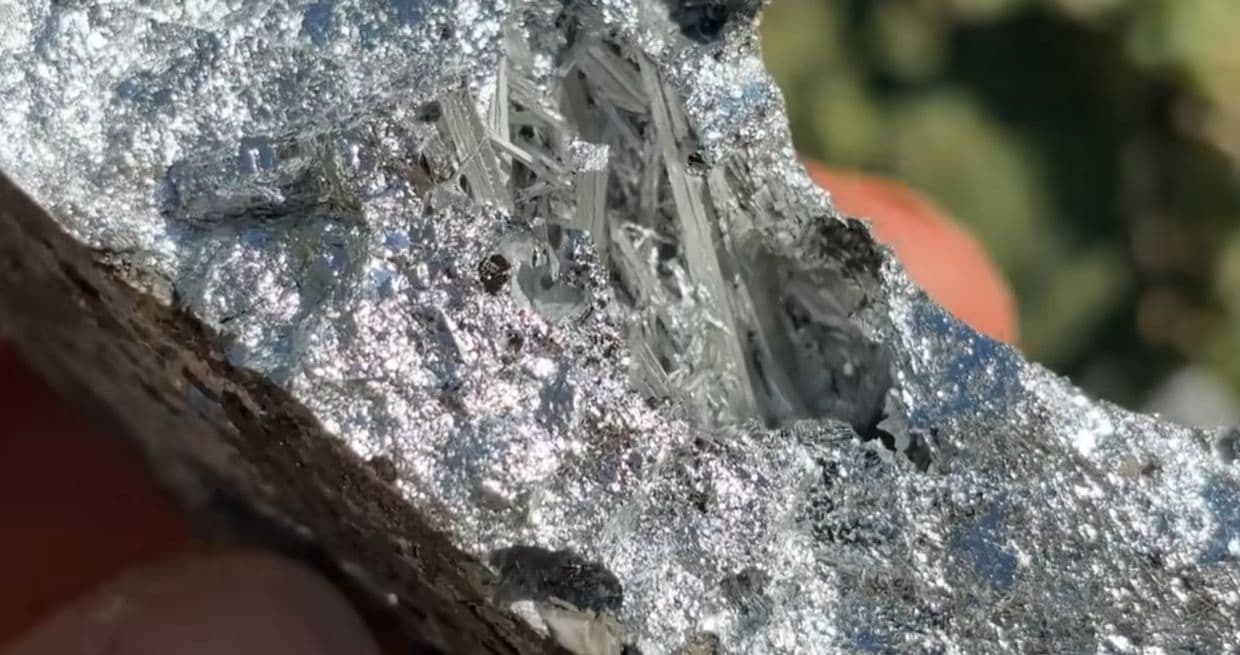
Having molten aluminium interact with atmospheric water forms a source of hydrogen which can be rather problematic if you’re trying to cast aluminium parts. As the molten metal cools down, …read more
Having molten aluminium interact with atmospheric water forms a source of hydrogen which can be rather problematic if you’re trying to cast aluminium parts. As the molten metal cools down, the dissolved hydrogen is forced out, creating bubbles and other flaws that make aluminium foundries rather upset. While you can inject inert gases to solve the problem, you can also lean into this issue to make some rather fascinating aluminium crystals and geodes, as [Electron Impressions] recently did.
The key here is to use a eutectic Al-Cu alloy at around 45% Cu by weight, as this alloy readily forms large crystals as it cools down. With hydrogen injected into the molten metal, this hydrogen forms large bubbles inside the cooling metal with crystals clearly visible. A way to create proper geodes involves very slow cooling and pouring off the still molten metal before the eutectic point is reached.
As can be seen in this video, this creates a rather impressive looking geode after it’s been smashed open. This also gives a good clue as to how these geological features form in nature, although one does not typically observe Al-Cu alloy geodes in the wild.