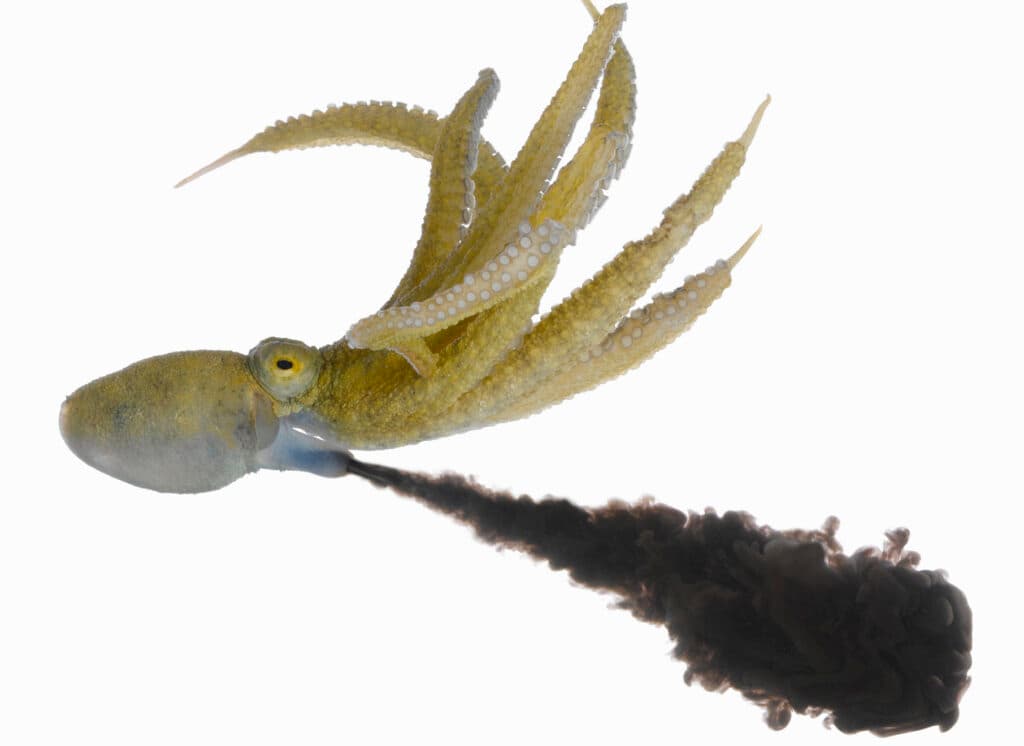
These cunning cephalopods like to make a dramatic exit The post Why Do Octopuses Ink? The science behind their defence mechanism appeared first on How It Works.
These cunning cephalopods like to make a dramatic exit Credit: Getty Images/ microdon Octopuses and their cephalopod relatives, squid and cuttlefish, produce ink to evade, confuse and deter predators. Ink is ejected from a structure in the cephalopod’s body called an ink sac and is mixed with mucous before being funnelled into the water. Read more: What is a sea squirt?The resulting stream can take on several forms, including the classic ink cloud, worm-like trails, and ‘pseudomorphs’.
The last of these are ink streams that resemble the cephalopod releasing them and might be intended to distract a predator from pursuing the real thing. The other forms could also work as distractions or for concealment, allowing the producer to escape.Read more: How did marine mammals evolve to return to the water?Experiments have shown that some fish are deterred by ink, perhaps due to its chemical composition. Cephalopod ink contains melanin (which is also in human skin), as well as cadmium, copper, lead and polymers that might have anti-cancer properties.
Researchers have also discovered that the release of ink by one or more individuals can serve to alert other cephalopods to nearby threats, prompting them to jet away or adopt defensive behaviours before they become lunch. Credit: Getty Images/Georgette Douwma Tools for the job Another aspect of octopus intelligence and defence is the use of tools. Previously only witnessed in primates, dolphins and some birds, octopuses in Indonesian waters have been witnessed carrying two halves of a shell as they traverse the seafloor.
The octopuses used these halves as a whole protective ‘case’, squeezing into the shell in areas where dens, nooks and crannies were hard to find in order to escape predators. Tool use has long been a benchmark of animal intelligence, but there is some debate among biologists as to whether this is classed as ‘tool usage’.Read more: 5 amazing animals that learnt how to use toolsFor more science and technology articles, pick up the latest copy of How It Works from all good retailers or from our website now. If you have a tablet or smartphone, you can also download the digital version onto your iOS or visit Apple News+. To make sure you never miss an issue of How It Works magazine, subscribe today