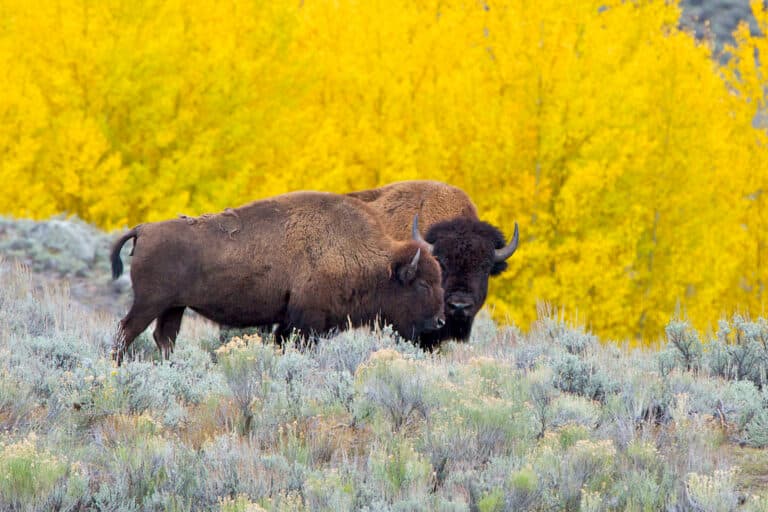
Rewilding — the process of letting nature take over — is having its moment across the world at every scale. From an 18th-century abandoned farm in the French Alps, to a volcanic lake in Indonesia, to primates being brought back into Brazil’s national parks, to restoring Kalahari’s savanna ecosystem in South Africa — conservationists are […]
Rewilding — the process of letting nature take over — is having its moment across the world at every scale. From an 18th-century abandoned farm in the French Alps, to a volcanic lake in Indonesia, to primates being brought back into Brazil’s national parks, to restoring Kalahari’s savanna ecosystem in South Africa — conservationists are tirelessly using nature’s landscape engineers to restore its wild ways. And, in many cases, it’s working: Birds are returning to their once-abandoned abodes, more carbon is getting into the ground, the earth is cooling down, animals once thought locally extinct are reappearing and ecosystems on the whole are getting healthier.
This transformation is not limited to land. In marine protected areas — where industrial fishing and other extractive activities are banned — coral reefs are once again teeming with marine life, fish are thriving and whales are making a comeback. As the world slowly inches towards the ambitious 30×30 goal, earmarking 30% of Earth’s land and oceans as protected areas by 2030, rewilding is poised to play a catalyst.
In the last two decades, various rewilding projects aimed at bringing back species and restoring whole ecosystems have sprung. But most have been siloed, evolving separately from each other. In 2021, the Global Rewilding Alliance (GRA) was formed to bring together these efforts, strengthen collaboration and connect rewilders across continents. Today, the alliance connects nearly 300 organizations across six continents, which are together rewilding more than 2 million square kilometers (760,000 square miles) of land —…This article was originally published on Mongabay