The issue is not just whether the policy is right or wrong, but whether it is understood. When residents retreat indoors because they feel unsafe, public spaces become vulnerable to predatory behavior.
The Philippine National Police (PNP) and the Department of the Interior and Local Government (DILG) recently launched the Safer Cities Initiative in Metro Manila. In only six days, authorities recorded more than 60,000 violations ranging from drinking in the streets, minors violating curfew, karaoke singing late at night, public disturbances, loitering, and other forms of minor disorder. Around 40,000 violators were warned and released, about 20,000 were fined, and more than a thousand cases were filed in court.
The public reaction was swift and divided. Human rights advocates criticized the program as anti-poor, arguing that enforcement disproportionately targeted residents in crowded communities while similar behaviors in affluent neighborhoods often go unnoticed. Others pointed out the cultural realities of urban poverty: shirtless men endure the tropical heat in homes without ventilation, and street socialization often substitutes for the lack of private space.
Even mainstream media questioned the logic of penalizing such acts. Faced with mounting criticism, the city of Manila at least temporarily suspended its implementation, while the DILG secretary issued an apology to at least one who was mistakenly apprehended in Mandaluyong City. The controversy reveals a deeper issue: not simply whether the policy is right or wrong, but whether it is understood.
If we are to make sense of the Safer Cities Initiative, we must turn to criminological theory. The theoretical lens most often associated with policies addressing minor incivilities is the Broken Windows theory. James Q.
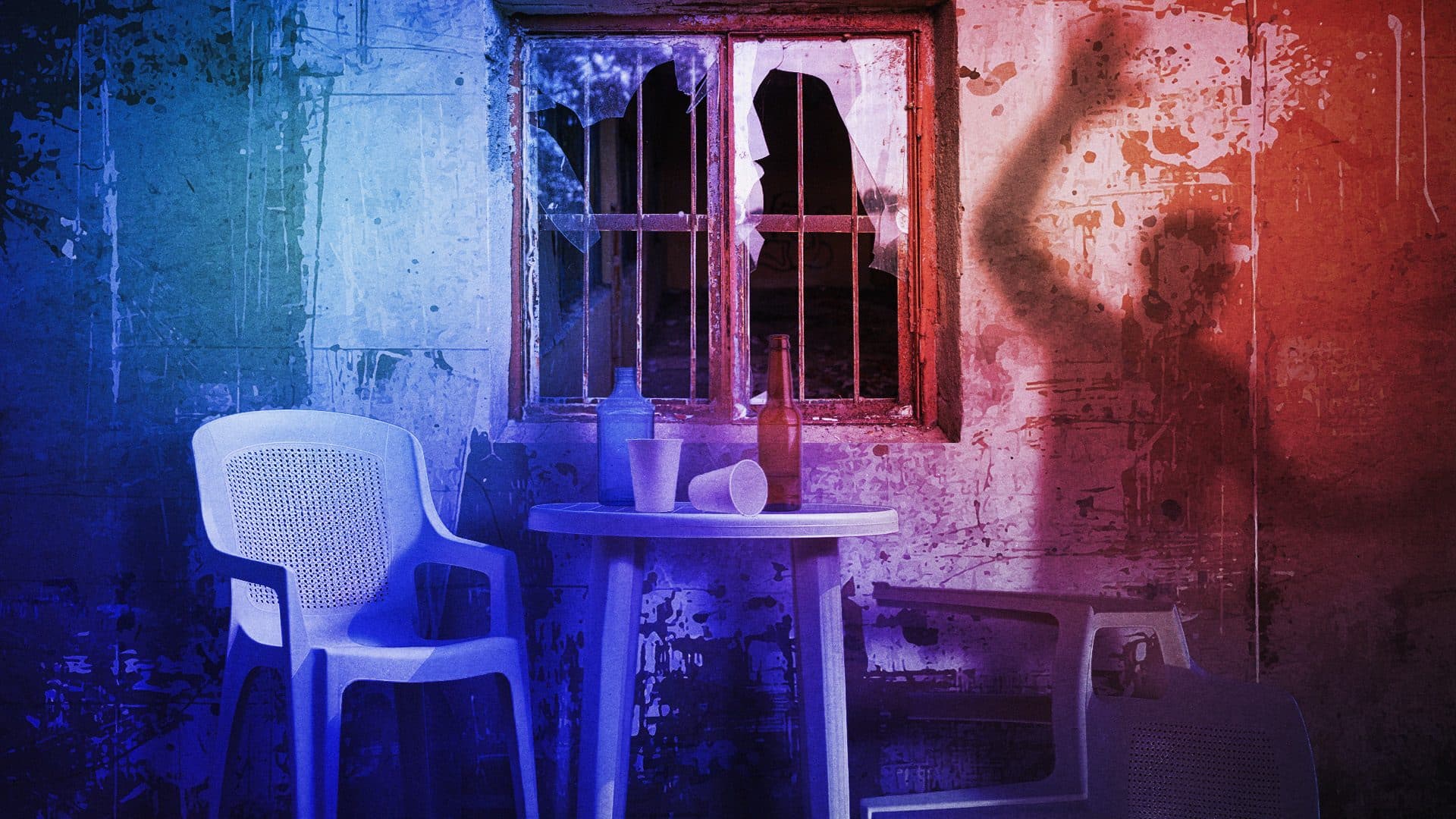
Wilson and George Kelling introduced the Broken Windows Theory in 1982. The central insight is deceptively simple: visible signs of disorder signal that no one cares, and when no one cares, disorder breeds more disorder. A single broken window left unrepaired sends a message that vandalism is tolerated.
Soon, more windows are broken. When trash accumulates, when public spaces are neglected, when rules are inconsistently enforced, the community slowly internalizes the belief that norms no longer matter. The result is a spiral of decay where minor incivilities escalate into more serious crimes.
Research on disorder and crime has produced mixed findings, but there is consistent evidence that perceptions of disorder influence fear of crime and public withdrawal from shared spaces. Studies by Skogan (1990) and Sampson and Raudenbush (1999) show that disorder weakens informal social control, the capacity of communities to regulate behavior collectively. When residents retreat indoors because they feel unsafe, social guardianship diminishes.
Public spaces become vulnerable to predatory behavior. Crime does not necessarily explode immediately, but the environment becomes conducive to it. The classic application of Broken Windows policing occurred in New York City in the 1990s under Police Commissioner William Bratton.
The subway system had become a symbol of urban neglect: vandalized trains, fare evasion, aggressive panhandling, and open disorder. The response was not merely to arrest offenders but to restore order in the environment itself. Graffiti was removed promptly.
Fare evasion was enforced. Police presence was increased. The goal was to signal that public spaces mattered and that rules would be upheld.
Over time, perceptions of safety improved, ridership increased, and economic activity followed. Yet Broken Windows policing has also been criticized when implemented as aggressive zero-tolerance enforcement. Scholars such as Harcourt (2001) caution that excessive enforcement of minor offenses may lead to over-policing of marginalized populations, erosion of trust, and strained police-community relations.
The lesson is not that Broken Windows theory is wrong, but that implementation matters. When the policy becomes punitive rather than preventive, it undermines legitimacy. This is where the Philippine experience becomes instructive.
The country’s criminal justice system already struggles with issues of legitimacy, police professionalism, and procedural justice. My previous research on police culture in the Philippines shows that when enforcement appears selective, citizens interpret it as harassment rather than protection. Legal cynicism grows.
People comply only when forced, not because they believe in the law. Broken Windows policing should not be confused with punishing poverty. The real message of the theory is that the state must demonstrate care for the community.
Care means ensuring that streets are clean, lighting is adequate, public spaces are safe, and rules are applied fairly. Care means prevention before punishment. Care means communication.
If minors are out late at night, the response should involve community engagement with parents, schools, and barangay officials. If drinking sessions spill into public roads, the response should include providing safe recreational spaces and consistent local ordinances. If noise becomes a sou