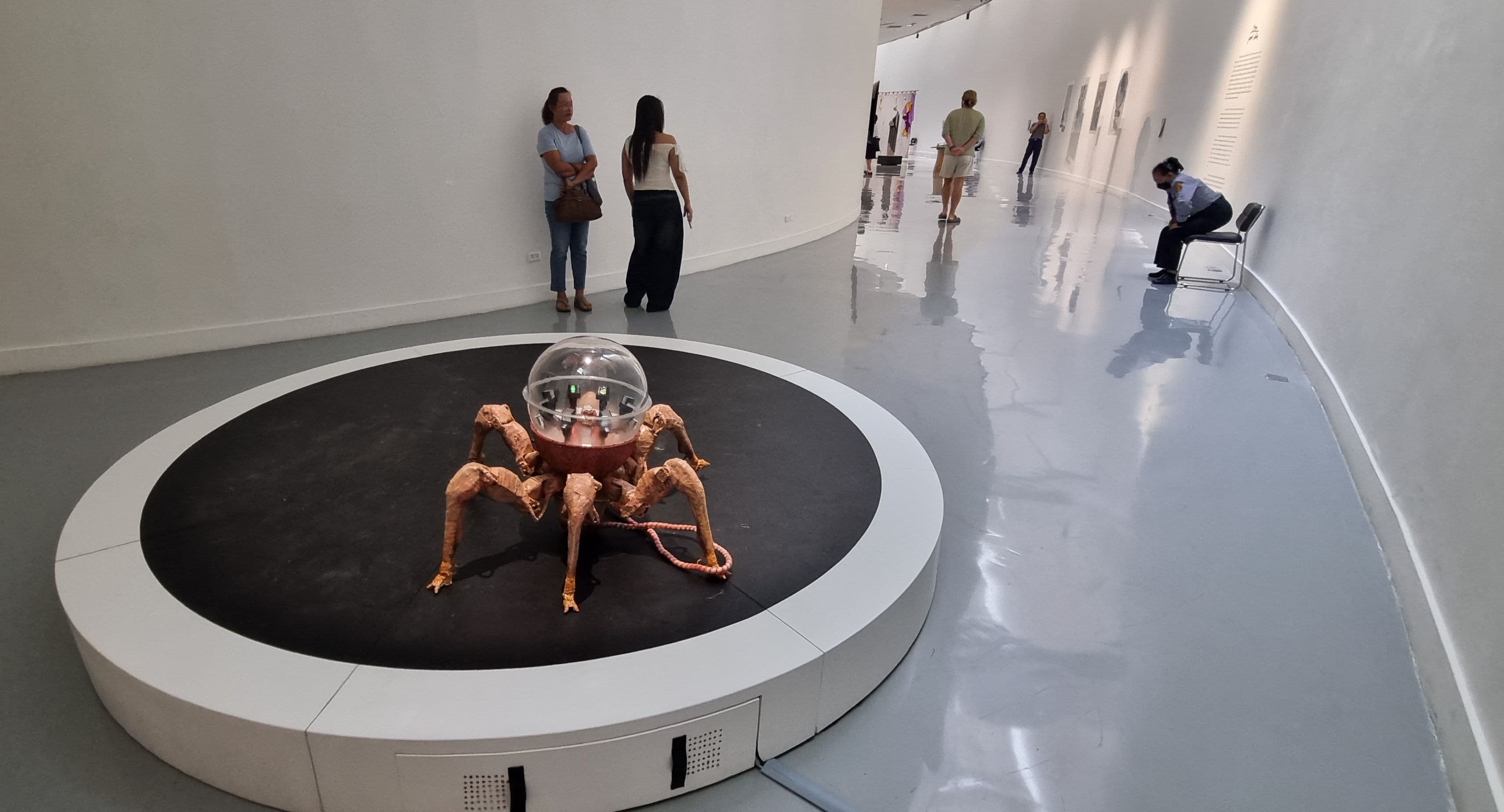
In this photo essay, we feature a visual tour of the Bangkok Art and Culture Centre and its art exhibitions.
Launched in 2014, PhotoSparks is a weekly feature from YourStory, with photographs that celebrate the spirit of creativity and innovation. In the earlier 980 posts, we featured an art festival, cartoon gallery. world music festival, telecom expo, millets fair, climate change expo, wildlife conference, startup festival, Diwali rangoli, and jazz festival.The Bangkok Art and Culture Centre (BACC) is regarded as one of Thailand’s most renowned cultural institutions and the leading contemporary arts venue in Bangkok. Located at the busy Pathumwan intersection near the National Stadium BTS station, it opened in 2008 (see our coverage of earlier exhibitions at BACC here).The centre is a culmination of years of campaigning for a public art space by artists, educators and civil society groups.
Today, BACC functions as a museum, gallery, performance venue, educational hub, and gathering place all in one. Furthermore, admission is generally free, helping make art accessible to a broad audience.Also ReadYear in Review: The great Indian consumer reset powered by protein, pickleball and micro-dramasArchitecturally, BACC is spectacular. Its circular interior atrium, spiraling walkways, and light-filled gallery spaces create a sense of movement and openness.
The building itself reflects its mission of keeping art connected to daily urban life, and not feel distant or elite. Located among shopping centers, universities, and transit lines, BACC places culture in the centre of Bangkok’s urban rhythm rather than at the margins.As seen in this photo essay, the galleries, studios and stores in BACC focus mainly on modern and contemporary art, especially work that reflects changing Thai society, regional Southeast Asian identities, and global artistic conversations. Its exhibitions change regularly, thus offering something entirely new for regular visitors.Featured exhibitions include Off the Radar, We Rise, organised by BACC and the Bangkok Metropolitan Administration, and curated by Penwadee Nophaket Manont.
The artist lineup includes Praichayon Punda, Anurak Khotchomphu, Akkarawin Krairiksh, Natnaran Bualoy, and Mariya Chetam.The exhibition addresses how silence can no longer be sustained as a viable position in the face of struggle and injustice. Artistic express is a fundamental right and necessity for those who persist in creating, despite enduring rejection, marginalisation and prolonged invisibility.The featured artists attempt to challenge, interrogate and unsettle dominant cultural structures. Their voices, ideas and lived experiences refuse to be erased or rendered inaudible.
Art is a means of disclosure, self-affirmation and the reclamation of space.Also ReadYear in Review: Top 10 celebrity-backed ventures of 2025The core of BACC’s programming is visual art: painting, sculpture, drawing, photography, printmaking, and mixed media. Many exhibitions feature Thai artists exploring identity, memory, politics, religion, urbanisation, family life, and environmental change. There are also showcases of international artists on related themes.
BACC has hosted solo shows, national competitions, photography exhibitions, and curated thematic displays.The cultural centre regularly hosts large-scale installation art. These immersive works often transform gallery rooms using sound, light, projected images, found objects, or interactive elements. Photography is a recurring feature at BACC, ranging from documentary images to conceptual photo series.
Digital and new media art—video, animation, projection, and interactive screens—play an important role here, showing how contemporary Thai artists use technology as an artistic language.Unlike a conventional museum, BACC hosts live arts as well. The centre stages performances, dance, talks, film screenings, poetry, and music events. This multidisciplinary approach makes it a living cultural space rather than only a place for static exhibitions.BACC includes spaces such as smaller galleries and public areas where emerging artists can exhibit work.
Student shows, community projects, and open-call exhibitions help younger creators gain visibility. This is crucial in a city where commercial gallery space can be expensive or limited.Also ReadYear in review: What 2025’s data tells us about women in IndiaBefore BACC, much of Thailand’s serious contemporary art scene was concentrated in universities, private galleries, or niche spaces. BACC pioneered a large, free, central, public institutional approach where anyone—from students and professionals to tourists and locals—could encounter art.
That accessibility changed how many Bangkok residents relate to culture. It gave artists precious and accessible space to validate, preserve and present their work professionally. BACC continues to give Thai artists a visible home comparable to major art centres in other global cities. It helps signal that Bangkok is not only a city of commerce and tourism, but also of ideas and creativity.BACC regularly hosts c