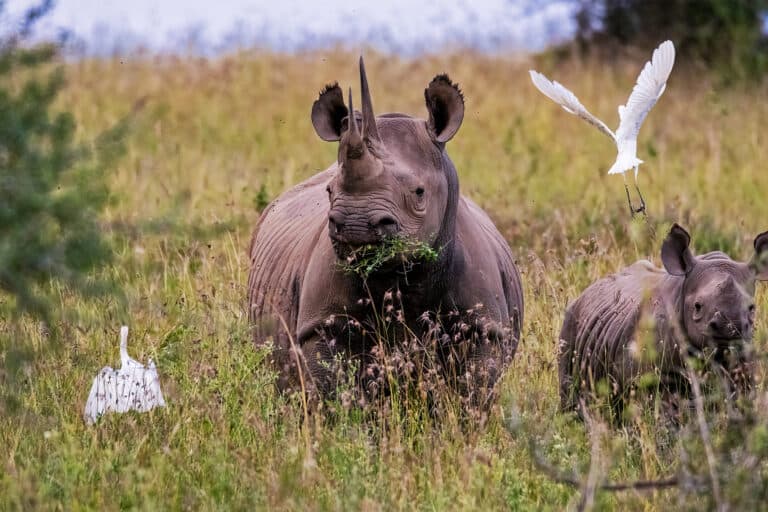
Rhinoceroses, one of the largest groups of animals on the planet, are fighting a battle for survival because of a prized body part: their horn, which they use to defend territories, assert dominance and protect their young. But people use this keratinous horn as medicine, adornment and decoration. In traditional Chinese medicine, it’s believed to have broad healing properties.
The horns are also crafted into jewelry, and carved horns are displayed as luxury items. The unrelenting demand for their horns has decimated these mega-herbivores across their Asian and African ranges, and combating the trade is a tough fight: Rhino horns are extremely valuable. They’re worth an estimated $20,000 per kilogram (about $9,090 per pound) on the black market, often trafficked and sold by transnational organized crime syndicates.
Poaching has pushed three of the five living rhino species to the brink. The International Rhino Foundation estimates that some 500,000 roamed the wild at the start of the 20th century; today, just under 27,000 remain, and a rhino is killed every 15 hours. China is the largest consumer, but data on trade within its borders is limited.
A team from the U.S.-based Environmental Investigation Agency (EIA) tried to bridge the information gap in a new report. It analyzed 258 court cases involving horn trafficking between 2013 and October 2025, posted on the China Judgments Online database. These court records revealed that authorities seized 700 kilograms (1,543 pounds) of rhino horns during that period, which means that perhaps 200 rhinos were killed to…This article was originally published on Mongabay