If you’ve been following our recent coverage, you’ll know we were at Drone University a few months ago, one of the visible drone guys in Zimbabwe. They’ve been focused on training pilots and, more recently, claimed to be the first in Africa to offer drone maintenance training as well. So up until now, we’ve understood […]
If you’ve been following our recent coverage, you’ll know we were at Drone University a few months ago, one of the visible drone guys in Zimbabwe. They’ve been focused on training pilots and, more recently, claimed to be the first in Africa to offer drone maintenance training as well. So up until now, we’ve understood them as the people building the skills side of Zimbabwe’s drone ecosystem.
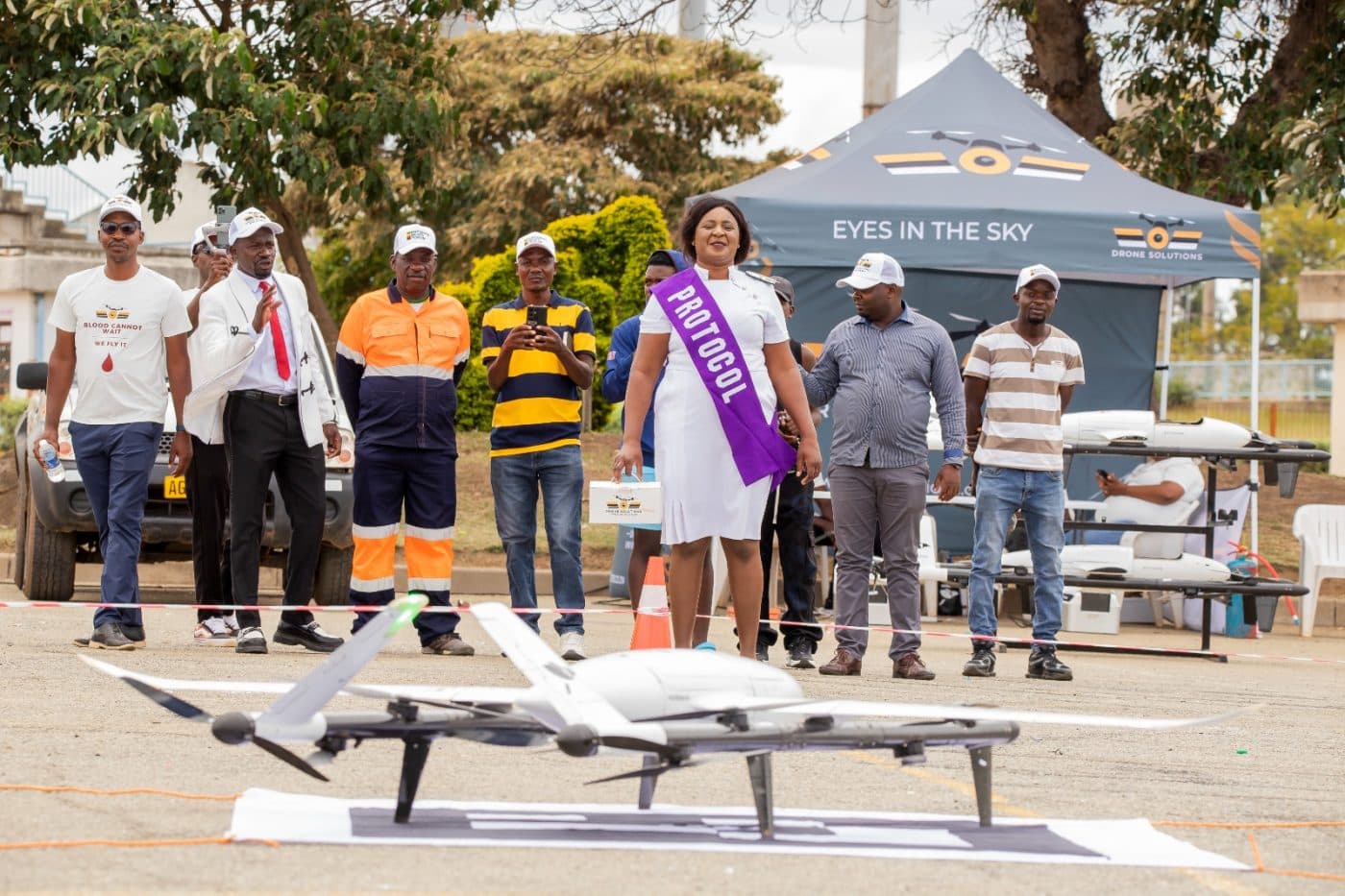
Now, there’s a new development. Through their sister operation, Drone Solutions, they’re saying they want to actually run drone deliveries, specifically for medical supplies across Zimbabwe and beyond. That’s different from training people to fly and fix drones as we’re now talking about using those same drones to deliver life-saving stuff.
It sounds like what Zimbabwe needs The idea itself is straightforward. Drone Solutions says it wants to use drones to transport things like vaccines, blood products, and emergency medication to remote areas. These are the kinds of deliveries that can take hours by road, especially during the rainy season or in places with poor infrastructure.
With drones, they’re saying those same trips could take under 30 minutes. If you’ve seen what’s been done elsewhere on the continent, this isn’t far-fetched. Companies like Zipline have already built similar systems in countries like Rwanda and Ghana, where drones are used to move medical supplies.
So the concept checks out. The question is: how far along is Zimbabwe’s version of this? Details not yet clear Reading through the announcement, it’s clear that something big is being built.
They talk about a network that serves millions of people, covers thousands of flight kilometres, and can improve delivery efficiency by over 90% in certain areas. They also describe a system designed to work directly with healthcare providers, using software to coordinate deliveries in real time. All of that sounds like a mature, working system.
But then you realise, there’s no real detail about what’s already live in Zimbabwe right now. There’s no mention of how many drones are currently operating locally, where the delivery hubs are, or how many deliveries have actually been completed so far. That doesn’t mean nothing is happening.
It just means we don’t yet know the scale. Regional expansion claims Then there’s the part that really jumps out. Drone Solutions says it is taking over drone delivery operations in Malawi, Mozambique, and the Democratic Republic of Congo.
That’s huge. Running drone logistics in one country is already complex. Doing it across multiple countries means dealing with different aviation regulators, health systems, and operational environments.
But the announcement doesn’t say who they’re taking over from, what agreements are in place, or whether those operations are already active. So this is one of those claims that sounds big, but will need to be explored and unpacked. Their operations are more impressive now What makes this more than just another announcement is how it connects back to Drone University.
Between the two, they’re now covering: training drone pilots, training maintenance technicians, and potentially running delivery operations. That’s not just one product or service, they want to build a full, local drone ecosystem. And if they pull it off, it would be one of the more complete ones we’ve seen in the whole Africa.
Something I’m sure South Africans will contest, as they did the claim of being the first in Africa to offere drone maintenance. So where are we right now? There’s no doubt the idea makes sense.
Zimbabwe has real challenges when it comes to getting medical supplies to remote areas, and a working drone delivery network could genuinely help solve that. But based on what’s been shared so far, it’s not entirely clear how much of this is already in operation and how much is still in the rollout phase. We’ve reached out to Drone Solutions for more detail on what’s currently happening on the ground, what timelines look like, and how that regional expansion is being handled.
Because if this is already live at scale, it’s a big story. And if it’s not there yet, it’s still one we’ll be watching because it’s one of those projects you hope succeeds.