Evacuation camps that were set up in primary schools following heavy rains in mid-March in Mchinji District are closing as schools opened yesterday for the third term of the 2025/26 academic year. Four days of incessant rainfall from Mach 19 to 21 left a trail of destruction in traditional authorities (T/As) Mlonyeni, Kawere and Dambe in the district. Following the disaster, some relocated to evacuation centres established in primary schools where they were surviving on humanitarian assistance.
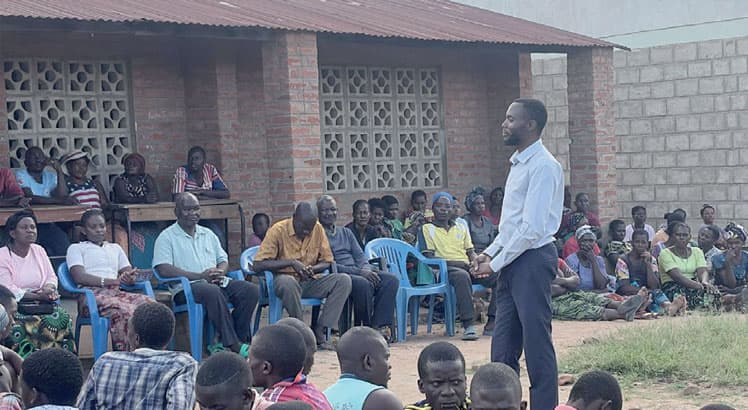
However, with schools opening today, all flood survivors camping in schools have been asked to return to their communities to rebuild their homes. Pindamkono speaking to the survivors. | Lefinat Nyangu One such camp is Kaigwazanga at Kaigwazanga Primary School in T/A Kawere where 29 households were seeking refuge. Mchinji district director of planning and development Martin Pindamkono said the decommissioning of camps sought to create space for learners.
He said the council has put in place a recovery plan and urged the affected people to work hard to rebuild their lives. “The council will visit affected areas including Kazyozyo Village in T/A Kawere to engage victims and document their current situation to plan appropriate recovery interventions,” said Pindamkono. He said the council will do a post-disaster assessment, which will help it and its partners to provide necessary support, including mobilising resources and engaging well-wishers to assist the affected families.
The camp’s chairperson Francis Makonyola thanked Mchinji District Council for the support rendered to them since the disaster struck on March 19. “We appeal to government to consider providing capital or loans to enable the affected families to start small-scale businesses,” he said. A survivor Catherine Joseph expressed gratitude to the council for giving them relief items as they head back to their communities.
“We thank the council for the help but we have nowhere to stay because we lost everything,” she said. The items included maize and beans, cooking oil, blankets, buckets, soya pieces, torches and cups