I’ve been reading about the virtues of the serviceberry (or saskatoon, or juneberry, or lots of other names) for years. About the same time I started reading about the bradford/callery pear plague. They have beautiful flowers in the spring and beautiful leaves in the fall. They are also known for their fruit. However, whenever I […] The post For the gardeners: Rust and research appeared first on L
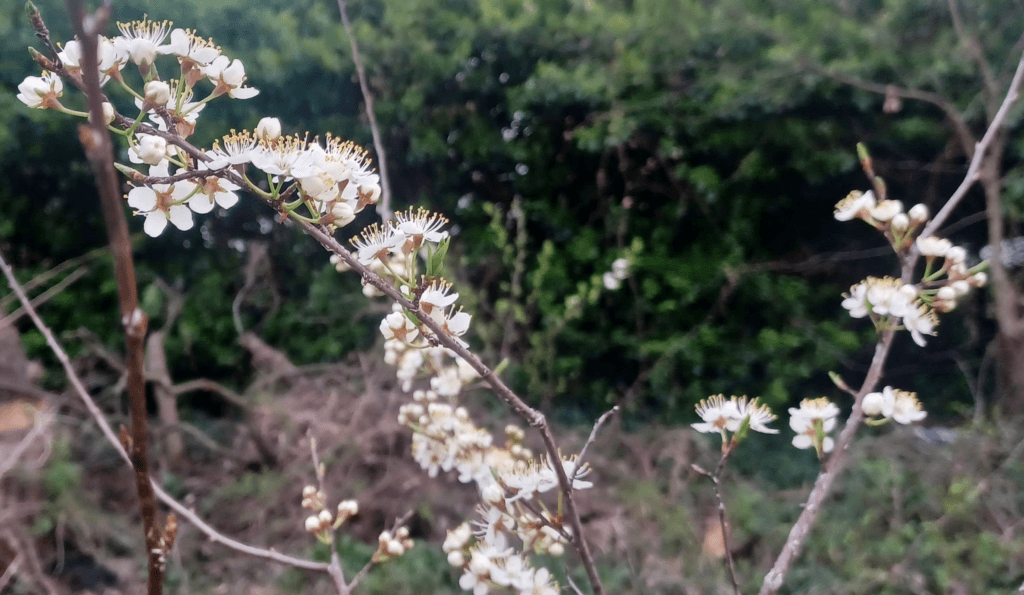
Native plum proving it can grow anywhere. I’ve been reading about the virtues of the serviceberry (or saskatoon, or juneberry, or lots of other names) for years. About the same time I started reading about the bradford/callery pear plague.
They have beautiful flowers in the spring and beautiful leaves in the fall. They are also known for their fruit. However, whenever I see the fruit it is covered in gross orange fungus spikes that make it look like an illustration of a virus.
I’m not interested in creating more hosts for plant diseases. Or futzing around with the kind of chemicals necessary to control plant fungus. But I really want one or two serviceberry trees.
After some research I learned the orange crud is caused by cedar-apple rust. Which should be called juniper-apple rust, but a species of juniper is known as red cedar in the U.S. At any rate, one preventive measure is to make sure there are no junipers within two miles.
That’s not going to happen. Another possibility is a rust-resistant version. There appears to be one hybrid known for rust resistance.
I might get one to see how it does. In other half-assed gardening news, the native plums that were planted three years ago proved they can shrug off bad conditions, including walnut tree chemical warfare, and flowered this year. The picture for this post is from the beginning of April.
The flowers smelled wonderful and now there are lots of little fruitlets on the trees. Time to buy some bird netting.