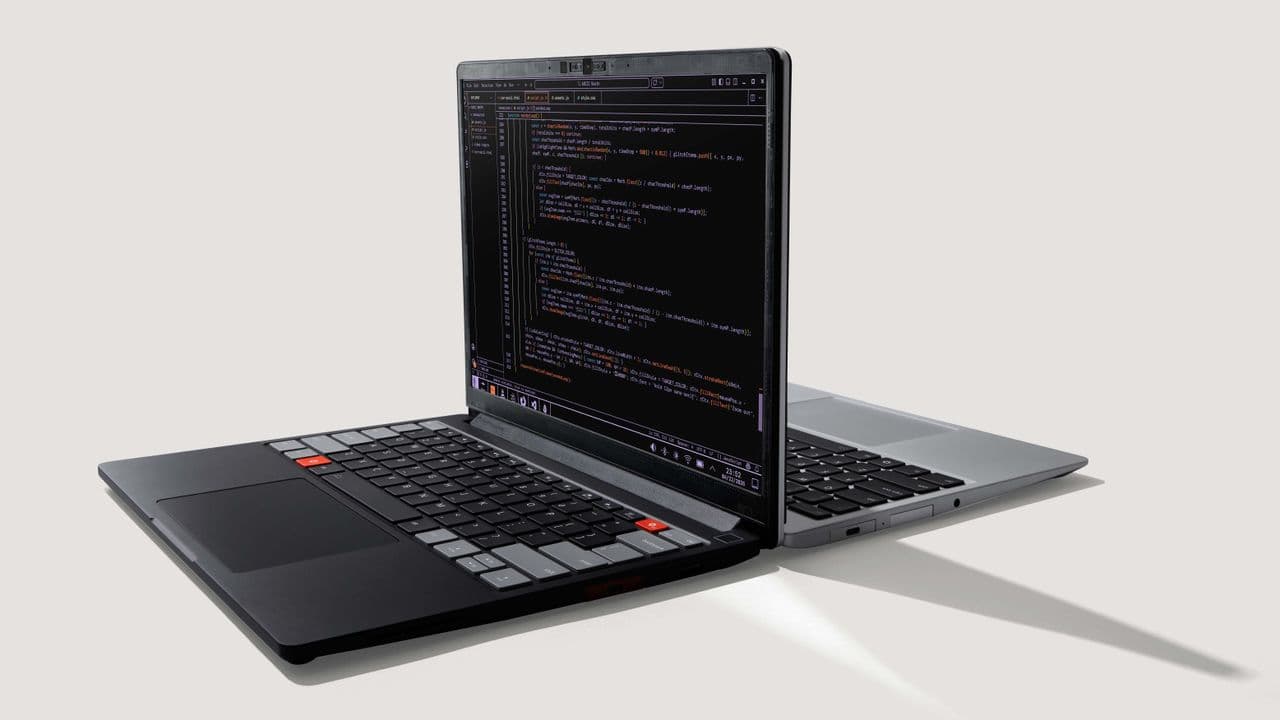
From the initial internal desire to build the "MacBook Pro for Linux users" Framework has created something that truly feels like a next generation version of its 13-inch notebook. The new Framework 13 Pro looks like the culmination of six years of regular releases from one of the most considered manufacturers in the space. But while it is using a whole new a chassis—for the first time fully machined out of extruded blocks of aluminium—and comes with a brand new Panther Lake mainboard, uses a whole new kind of memory module, has a bigger battery, a fully-custom display, and a brand new haptic trackpad, Framework hasn't departed from its original long-term, repairability focused ethos.
Every single one of the new elements is backwards compatible with every Framework 13 laptop that has come before it. You could be sitting on an old 11th Gen Tiger Lake machine from four or five years ago, and simply pick up the new Panther Lake mainboard, with its LPCAMM2 memory modules and PCIe Gen5 SSD support, and have an incredible laptop upgrade that will take just 15 minutes and one screwdriver. Or maybe you're happy with your current machine and just want that shiny new 700 nit screen.
I've personally swapped out a Framework 13 screen in maybe five minutes in the past, and this promises to be just as straightforward to do.I'll admit when I first saw it was making the 13 Pro I thought we would be looking at the first departure from the original Framework 13 laptop in terms of design compatibility."Even while overhauling the entire product," Framework notes in a blog post shared with us covering today's Next-Gen event, "we focused on cross-generation compatibility. "The new Mainboard and Display Kit follow the same form factors and interfaces as our earlier generations, which means you can drop them directly into your existing system.
We have the new chassis parts available in a Silver anodization option as well, and you can pick up a Bottom Cover Upgrade Kit that includes the new battery, new Input Cover Kit with haptic touchpad, or even an entire new Chassis to get every one of the improvements."FrameworkFrameworkFrameworkThe core of the new Framework 13 Pro is based around "a massive leap in battery life". Much of that is down to the efficiency of Intel's new Panther Lake architecture, but there's also a larger 74 Wh battery (up from 61 Wh), that new power-optimised display, and LPCAMM2 memory to factor in, too.The use of Micon-made LPCAMM2 is interesting, especially at a time when memory prices are at a premium, and I can't believe it's cheaper than standard SODIMMs right now.
But Framework is going to offer 16, 32, and 64 GB modules from the Marketplace to support it. Just figure out which of your kidneys you can do without.I'm a PC gamer, so the fact that Framework is offering the Core Ultra 5 as well as the Core Ultra X7 and Core Ultra X9 chips inside the new mainboards is big news for me. The X7 and X9 both get the 12 Xe core B390 integrated GPU, which absolutely slays when it comes to games.
That means you're getting close to entry-level discrete GPU performance out of it.To be able to run those chips for a long time, however, the bigger battery isn't just so in terms of capacity, it's physically larger, too. That means the bottom cover of the Framework 13 Pro has been redesigned to house the larger cells, making the 13 Pro just that little bit thicker at the front edge. That also means if you want the bigger battery for your standard Framework 13 you'll need the expanded housing.
Luckily that all comes as a kit from the Marketplace.FrameworkFrameworkFrameworkThe biggest weakness of all the Framework laptops I've used has been the screen. Even the updated 120 Hz version and the 16-inch panel share the same slightly ghosty experience in use. The new touchscreen panel being introduced with the 13 Pro is the first time Framework is bringing a totally custom panel to its devices, and I'm hoping that means it will have been able to clean that experience up.
The core specs sound great, with a 2880 x 1920, 3:2 resolution, 1800:1 contrast ratio, 30–120 Hz VRR, and the capability to go up to a full 700 nits in terms of brightness. We don't have any response time figures, so we'll have to see how it runs when review units turn up later in the summer.But it's not just the components that have changed, Framework has also introduced a new haptic trackpad. "Touchpad feel is an area where Windows and Linux laptops have historically fallen behind Macs," says Framework, "so this is where we’re putting a lot of our focus across our mechanical, electrical, and firmware teams to deliver the best experience possible."FrameworkFrameworkFramework Laptop 13 Pro release date - June 2026Prebuilt WindowsFrom $1,699 | £1,699Prebuilt UbuntuFrom $1,499 | £1,499DIYFrom $1,199 | £1,199MainboardFrom $449 | £449The first shipments of the Framework 13 Pro will be going out in June this year, with prices starting at $1,199 for the DIY edition and $