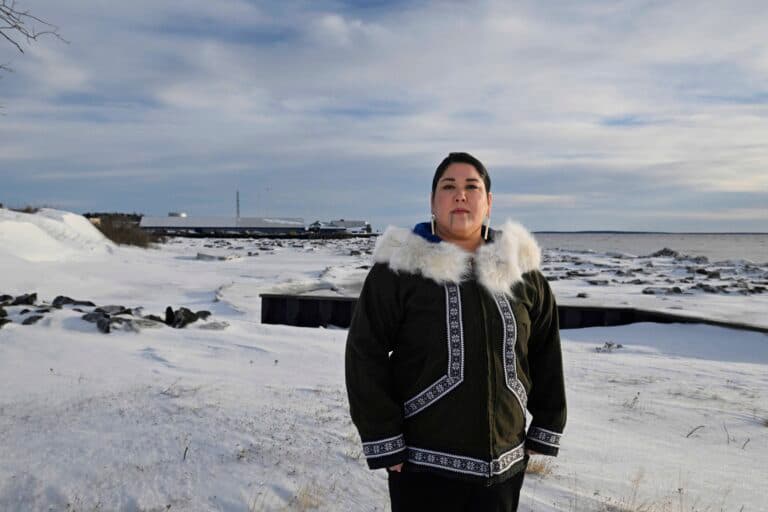
In the early 2000s, Alannah Acaq Hurley began working over her college summer breaks to spread awareness among rural communities in Southeast Alaska about a project called Pebble Mine: a pit 4 kilometers (2.5 miles) wide and 180 meters (600 feet) deep proposed at the head of Bristol Bay — the largest sockeye salmon fishery […]
In the early 2000s, Alannah Acaq Hurley began working over her college summer breaks to spread awareness among rural communities in Southeast Alaska about a project called Pebble Mine: a pit 4 kilometers (2.5 miles) wide and 180 meters (600 feet) deep proposed at the head of Bristol Bay — the largest sockeye salmon fishery in the world, and the waters that Hurley and her family call home. In 2001, the Canadian company Northern Dynasty Minerals Ltd. obtained mineral leases to deposits in the area for what would have been the largest open-pit mine in North America. Decades later, Hurley is now the executive director of the United Tribes of Bristol Bay (UTBB), and the work to stop Pebble continues.
Hurley has received a 2026 Goldman Environmental Prize for her work in organizing an opposition that seems poised to bring the proposed copper and gold mine to a halt. After a 2023 veto of the project by the Environmental Protection Agency due to “unacceptable adverse effects” on the region’s salmon fishery and a surprising court filing by the Department of Justice under President Donald Trump’s administration supporting that veto earlier in 2026, more than two decades of work by local advocates seem to have turned the winds against the Pebble Mine project. Yet Hurley said the work to protect the region — home to the Yup’ik, Dena’ina, and Alutiiq tribal nations, and to eagles and moose, bears and whales — is far from over. “Our tribes have never changed their…This article was originally published on Mongabay