A focus on metabolic health — how the body produces, uses, and stores energy — is not merely a trend. Although 80 per cent of all women will be affected by a chronic illness at some point in their lives, the medical system continues to treat symptoms rather than addressing underlying metabolic causes early on. Women are systematically underrepresented in clinical studies; hormonal fluctuations across the entire lifecycle – from the menstrual cycle through pregnancy to menopause – are barely accounted for in existing healthcare models.
And for most women, personalised prevention simply does not exist. Austrian startup Hello Inside aims to change that. The company is positioning CGM (continuous glucose monitoring)-based metabolic tracking as a tool for women’s health, addressing areas such as PMS, menopause, energy levels, cravings, and symptom awareness.
It delivers this through personalised, sex- and gender-sensitive recommendations. Its programme is now available free of charge to members of BARMER, one of Germany’s largest statutory health insurers, which covers more than 9 million people. I spoke to co-founders Mario Aichlseder, CEO, and Jürgen Furian, COO, to learn all about it. The challenge of reach vs impact For Aichlseder, that gap between reach and impact is personal.
Aichlseder was a professional athlete in his youth, competing as a rock climber at the European and World Championships. He was an early employee at Runtastic, where, as VP Growth, he helped scale the organisation to 140 million registered users, and then sold the company to Adidas in 2015 for €220 million. He stayed on for another four years through the corporate integration, getting to know corporate life.
And during that time, he revealed, one thing became very clear: “We had a fantastic product and fantastic reach, but reach does not necessarily mean impact. In other words, we helped healthy people stay healthy in a fun way, but it translated into a 1 per cent day-30 retention rate. “ At that point, he was working very closely with the Sports Performance Team at adidas to explore the next frontier in hardware beyond smart wearables and scales.
They were looking into biomarkers, hormone monitoring, blood sampling, and glucose. And that’s when, according to Aichlseder, things shifted. Experiencing an instant feedback loop Two of Aichlseder’s three aunts live with diabetes, and his mother also died early from a chronic disease.
That´s why preventative health became such an important topic in his life. He borrowed a continuous glucose monitor (CGM) from one of his aunts and put it to use. He recalled: “My brain went in a completely different direction, because it was the first time I got real-time insight into how my food, movement, stress, and sleep were immediately visible and gave me an instant feedback loop.” Aichlseder admits, “We tried building this before, back at Adidas and Runtastic, with a group of health experts.
We had all the resources. But it is really hard to figure out human metabolism. There are so many complex patterns and interdependencies.
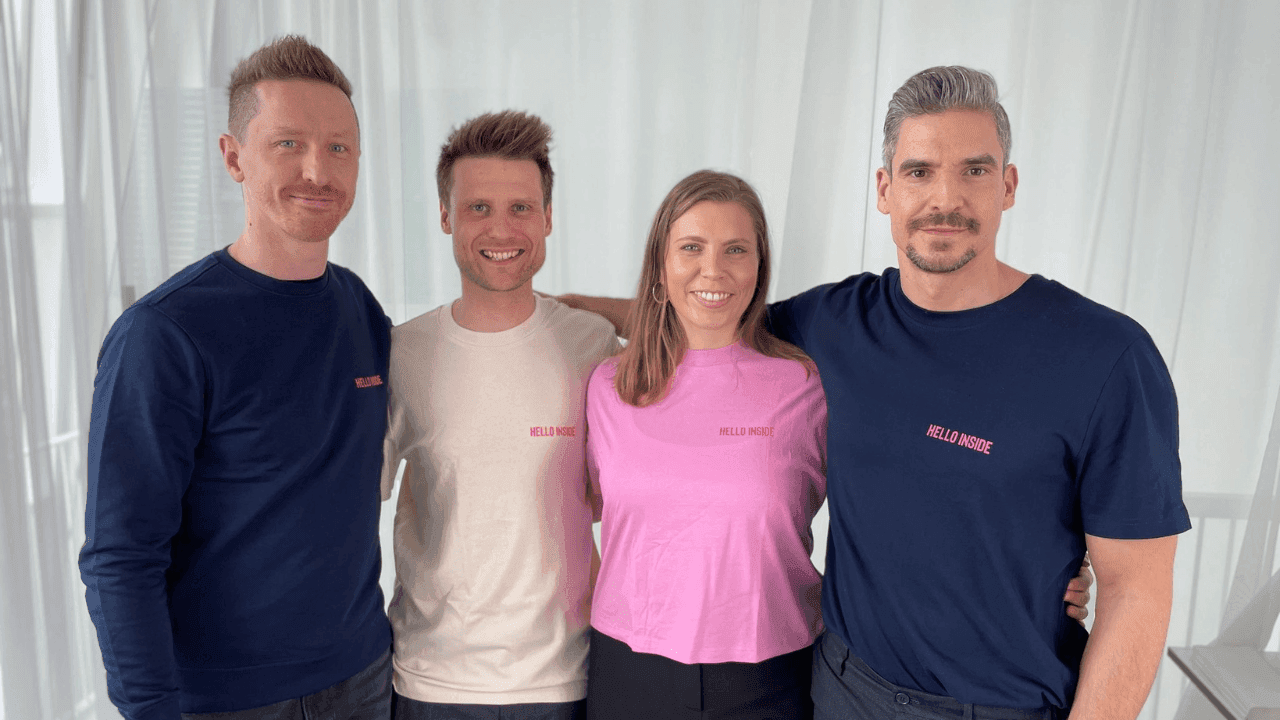
We worked with static decision trees, protocols, diets, exercise regimens — trying to somehow create structure — but we really failed.” So he decided to join forces with Jürgen Furian, founder of Pioneers and Vinzenz Weber, founder of blockhaus medienagentur and CTO of Diagnosia, to solve it. Cracking the code with data intelligence Image: Hello Inside in action. Most metabolic or wearable platforms stop at data collection and visualisation: glucose curves, sleep scores, activity metrics.
Hello Inside takes it a step further by building a system that interprets those signals in context and translates them into decisions. Aichlseder believes Hello Inside has cracked the code. Most companies use generative AI on large datasets.
But in healthcare, recommendations must be auditable and traceable. So the company built its tech using a "Controlled-by-Design" principle: every recommendation is transparent, monitored, and aligned with established medical guidelines. Aichlseder explained: “We rank them according to current scientific standards and then pass those into the model.
From there, we again reprioritise and apply quality assurance standards to the recommendations and insights.” This is necessary because much of the public health model's training data is of poor quality. A 2025 report by Stanford-affiliated researchers reports an approximately 60 per cent failure rate across 13 LLMs on women's health questions. Worse, these models often delivered incorrect answers with high confidence.
The company has built what is likely the most comprehensive metabolic health dataset for women in Europe, including 66,000 symptom logs from 1,743 women, tracked continuously with glucose monitors over a 90-day period. The approach is holistic, combining glucose data with inputs on movement and sleep, and integrating with wearables such as Oura, Garmin, and others. Women come for weight loss, but