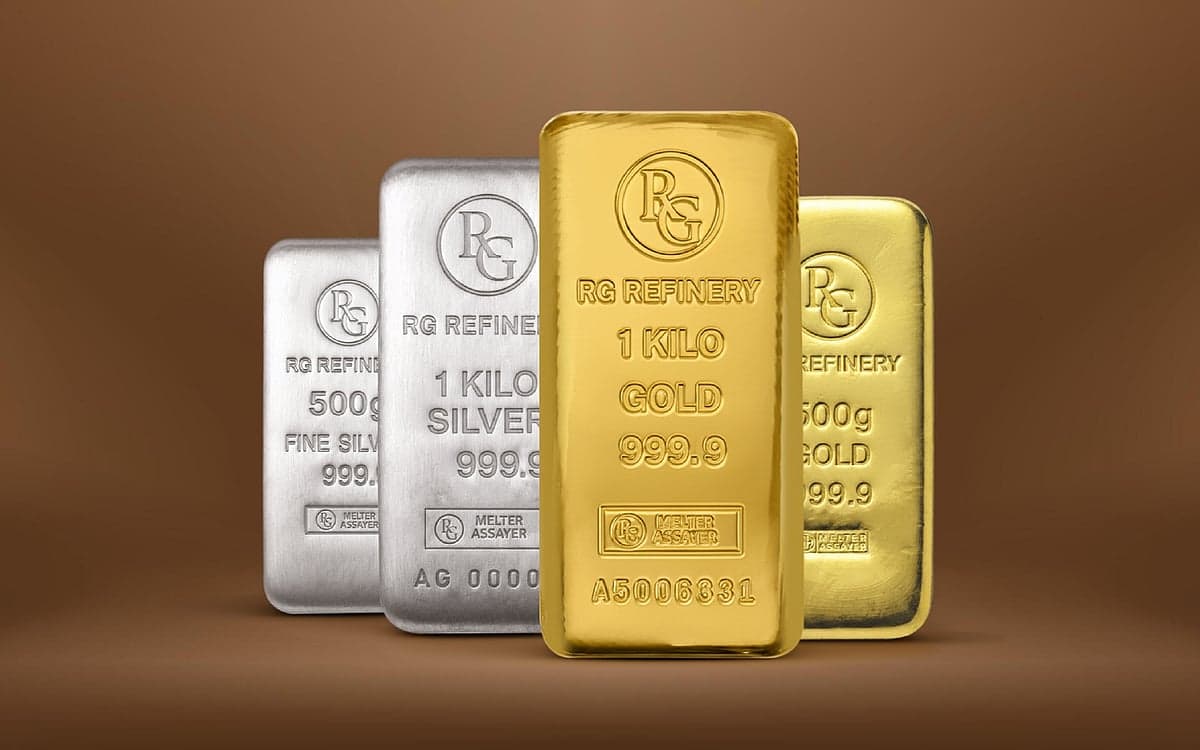
Gold and silver prices have swung sharply over the past month since the start of geopolitical tensions in the Middle East, underlining the intense volatility gripping the precious metals markets. Gold has ranged from $4,100 to $5,400 over the past six weeks with prices settling in the middle of this range while silver has ranged from $61 to $96 with current prices somewhere in the middle. Analysts attribute the recent volatility to fluctuations in the oil market and related inflationary pressures.
“Volatility is being driven by a unique convergence of geopolitics in the Middle East, macroeconomics and market mechanics,” explains Rafeeq Nandoli, Founder of integrated bullion trading company Rafmoh Gold. “At this moment the major catalyst for volatility is the conflict and the impact on all key markets such as oil, precious metals, stock and bonds. In the medium term, we will see shifting expectations around US monetary policy, particularly interest rates and the strength of the US dollar will become the major catalyst.”Higher rates and a stronger dollar typically weigh on precious metals, while expectations of easing policy tend to boost demand for gold as a hedge.
Geopolitical tensions and recent market reactions to Federal Reserve developments have reinforced this sensitivity, triggering swift price moves, he says.However, Nandoli stresses that deeper structural drivers are also at play. Central banks worldwide continue to accumulate gold reserves at a historic pace, providing a long-term support floor for prices. In silver, the story is even more complex.
“A multi-year physical supply deficit and its dual role as both an industrial and monetary metal amplify price swings,” he adds.Short-term movements are further intensified by technical trading dynamics. Algorithmic flows and commodity index rebalancing can all cause sudden moves that “overshoot the underlying fundamentals”, Nandoli says.Against this backdrop of rapid swings, gold traders and refiners have to manage pricing, risk exposure and client confidence with precision.Changing buyer behaviourPeriods of heightened uncertainty have reshaped the behaviour of institutional and wholesale buyers.
Instead of speculative exposure to paper contracts, institutional clients are shifting towards physical ownership and secure allocation of bullion.“We are seeing a clear shift from purely speculative positioning towards capital preservation and physical ownership,” Nandoli says. “Clients are increasingly concerned with the immediacy of physical delivery.”He points to recent market dislocations where futures prices fell sharply while physical liquidity remained tight. “That was a wake-up call,” he adds.
“Wholesale clients now prioritise counterparties who can guarantee physical allocation and supply chain security.”This shift has significant implications for traders and refiners, who must ensure reliable inventory and transparent custody to maintain credibility in volatile conditions.For firms operating across the full value chain, the challenge is not only to track daily price fluctuations but also to interpret what truly matters beneath the noise.Benefits of an integrated value chainFor Rafmoh Gold, operating an integrated value chain that spans refining, minting, retailing and trading helps manage volatility. According to Nandoli, this structure provides both operational agility and a unique informational edge.“An integrated value chain is our greatest strength in a volatile market,” he says.
“We see the physical flows of metal in real time, from scrap intake to retail demand, which gives us a much clearer picture of the true market balance.”This real-time visibility helps the company distinguish between temporary market dislocations and genuine shifts in supply and demand. When liquidity dries up in one segment, the firm can pivot across its internal operations to maintain continuity.The integrated approach also allows Rafmoh to pass tangible benefits to clients. By controlling the supply chain from refinery to retail, the firm eliminates intermediary margins and offers more competitive pricing.
Nandoli emphasises that this cost efficiency does not come at the expense of quality.“Since we operate our own refinery, we have complete oversight of purity and certification,” he explains. “Every gram we trade meets the highest standards.”Consistent supply is another key advantage. With direct control over inventory and logistics, the company can ensure steady availability of bullion even during market disruptions, helping clients manage procurement risks more effectively.Maintaining transparency and confidenceIn an environment where daily price swings can shake investor sentiment, trust becomes a decisive differentiator.
Nandoli believes transparency rooted in verifiable proof is essential.“In uncertain times, confidence is built on verifiable proof, not promises,” he says. “Clients need to see exactly where their metal is and what its history is at every stage.