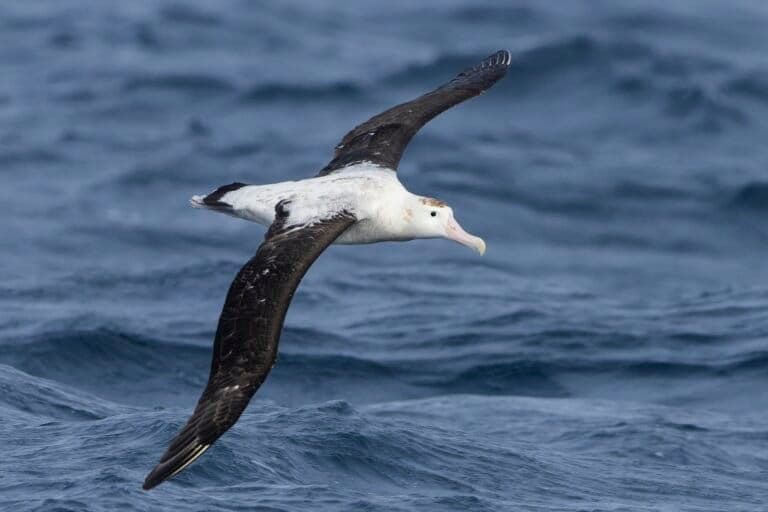
The routes taken by migratory birds, known as flyways, often cross vast expanses of ocean. Six of these marine flyways have now been formally recognized by the U.N.’s Convention on Migratory Species, at the suggestion of scientists who published their findings on these flyways in the British Ecological Society’s Journal of Applied Ecology. Tammy Davies, a co-author of the paper and marine science coordinator at BirdLife International, joins the Mongabay Newscast this week to discuss the conservation potential of the six flyways, and what the formal recognition by CMS does and doesn’t do.
“It’s a fantastic communication tool for highlighting these amazing journeys that the seabirds undertake and the fact that multiple people, stakeholders, and countries need to come together and everyone can do their bit,” Davies says. She notes that 151 bird species rely on these migratory routes, which connect 1,300 key biodiversity areas that the birds regularly use. Having nations focus on protecting these areas, and reducing bycatch from fishing, are just some of the ways countries can coordinate conservation efforts along these routes.
But this effort requires shared responsibility across the 54 nations that these flyways bisect. The flyways provide a formal mechanism for nations to do this, Davies says. “They’re facing threats throughout their life cycle,” she says. “You really need like a coordinated approach to address all of these threats when the seabirds are either breeding on land or when they’re out at sea.” Conservation goals and even some of the tools used to protect…This article was originally published on Mongabay