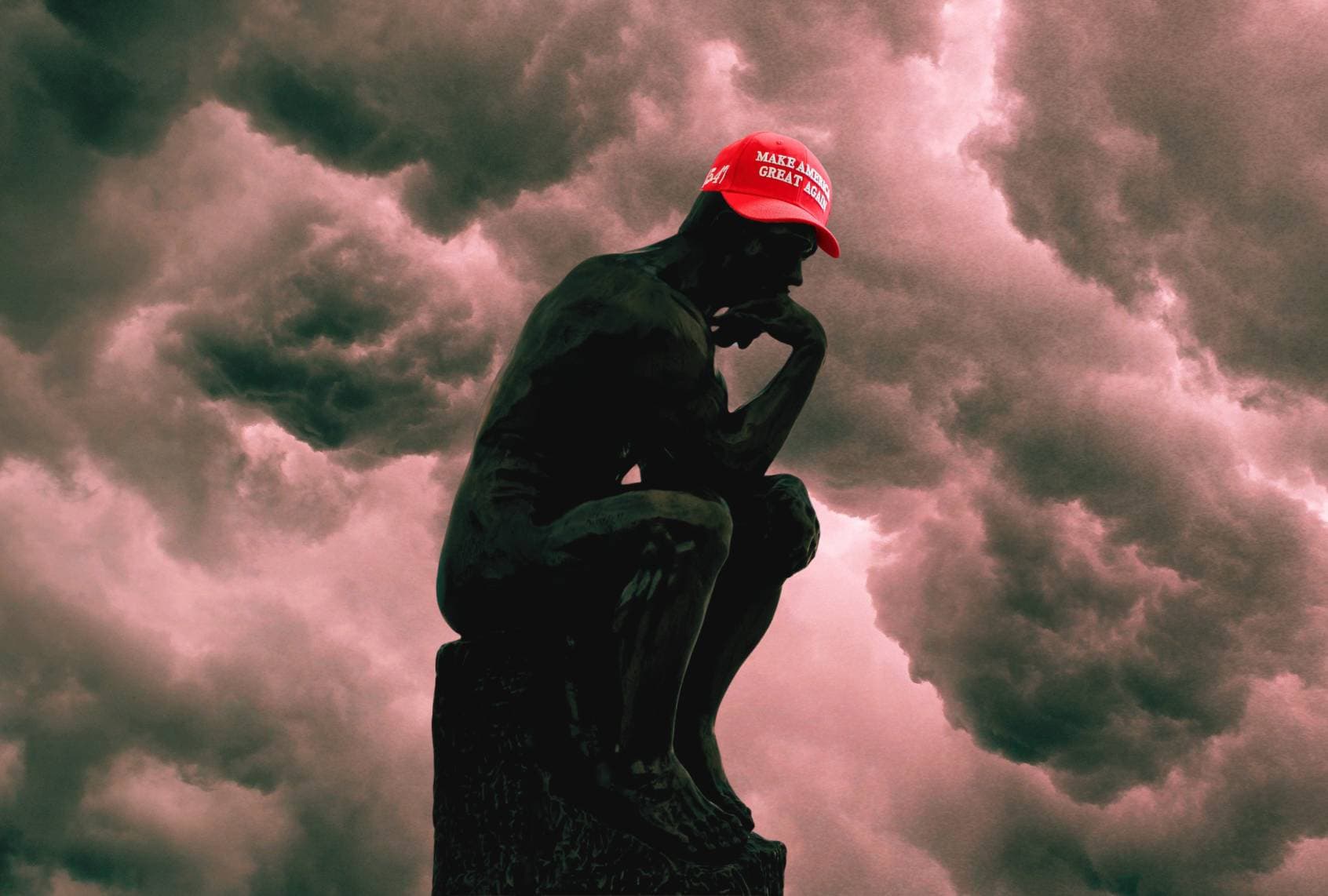
All the cool people hated middle-class suburban culture — but it looks a lot better compared to what came next
Those of us of a certain age can remember the middle-class suburban home of the late 1950s and early 1960s. On the coffee table lay a large format book titled “The World’s Most Beautiful Paintings,” or something similar. The bookshelf groaned under the weight of the Encyclopedia Britannica, or perhaps Collier’s Encyclopedia.
Alongside it were volumes of the various Book of the Month Club selections. The console where the hi-fi lived might have a Reader’s Digest boxed set of vinyl LPs called “Music of the World’s Greatest Composers” (pressed under contract by RCA), or a Time-Life classical music compilation. Did everyone routinely use the encyclopedia, or read the Steinbeck novel, or listen attentively to Schubert’s Unfinished Symphony?
That is uncertain, but what it showed was the cultural aspiration of the post-World War II American middle class: People wanted to be seen as interested in those things, whatever their actual level of enthusiasm. The era is often thought of in retrospect as the waning days of the McCarthy era and a time of drab conformity — think William H. Whyte’s “The Organization Man” or David Riesman’s “The Lonely Crowd” or even, retrospectively, “Mad Men” – but there was a flip side to the period: It was the high point of middlebrow culture.
The terms “highbrow” and “lowbrow” derived from the 19th-century pseudoscience of phrenology, and the former was first popularized by a New York Sun reporter around 1902, to be quickly followed by the latter. “Middlebrow” dates to the 1920s, first used by the British humor magazine Punch. Virginia Woolf then got into the act, criticizing the BBC Home Service as middlebrow, despite its newsreaders’ plummy Oxbridge accents.
Elsewhere she defined the term as “this mixture of geniality and sentiment stuck together with a sticky slime of calf’s-foot jelly.” Related How did we get from the ’60s to Trump’s kitsch White House? One can readily sense the intellectual hostility to middlebrow culture, which in England dated back before the existence of a large and prosperous middle class with a hunger for culture. As for Woolf, her status as a feminist heroine may be somewhat dimmed by the fact that she was a terrific snob.
While from time to time, like Matthew Arnold a century before, she professed to see some virtue in the lower classes, she reserved most of her literary barbs for the middle class. On the other hand, even that pretense fell away when she confessed to her diary: “The fact is the lower classes are detestable.” What would Woolf possibly have made of the spectacle of postwar America? The GI Bill and the industrial boom drove the greatest project of mass education and mass consumption in world history.
The huge expansion of universities created millions of graduates eager for cultural experience, along with a better life than they, or any previous generation, had experienced before the war. Equally, the need for professors and instructors engendered by the college boom created its own class of intellectuals and intellectual hangers-on. Some of those eagerly sought to enlighten their charges, while a few others grew to see – or claimed to see – an unbridgeable chasm between the ivory tower and mass cultural aspiration.
Virginia Woolf’s status as a feminist heroine may be somewhat dimmed by the fact that she was a terrific snob. … She confessed to her diary: “The fact is the lower classes are detestable.” The 1950s were a time of tremendous cultural expansion by these newly educated classes. As recounted by Susan Jacoby in her history of American culture wars, “In 1960, there were twice as many American symphony orchestras – 1100 – as there had been in 1949. The number of community art museums had quadrupled since 1930.
Recordings of classical music accounted for 25 percent of all record sales by the end of the fifties, compared with under 4 percent today.” (For the latter figure, Jacoby was counting CD sales as of 2003, when she was writing the book. In 2019, the most recent year for which I can find data, classical music sales were 1 percent of the U.S. market). Why did all of this happen in the early postwar years?
There is no way to prove this, but perhaps the cataclysm of the war impressed upon that generation the fragility of civilization and learning, and the need to preserve them. To millions of ex-GIs, the war was the greatest adventure of their lives, but also an admonitory lesson; sitting in a classroom listening to some stuffy pedagogue lecturing about Thucydides was certainly preferable to freezing to death in a foxhole in the Ardennes Forest. Perhaps Thucydides had something to say about the folly of war that they wouldn’t have appreciated had they remained civilians.
You might have assumed that America’s intellectuals would have been overjoyed at this postwar cultural leveling up, but not all were. Enter Dwight Macdonald, America’s answer to Virginia Woolf. He started out in the 1930s working for Henry Luce’s Time-Life behemoth, and th