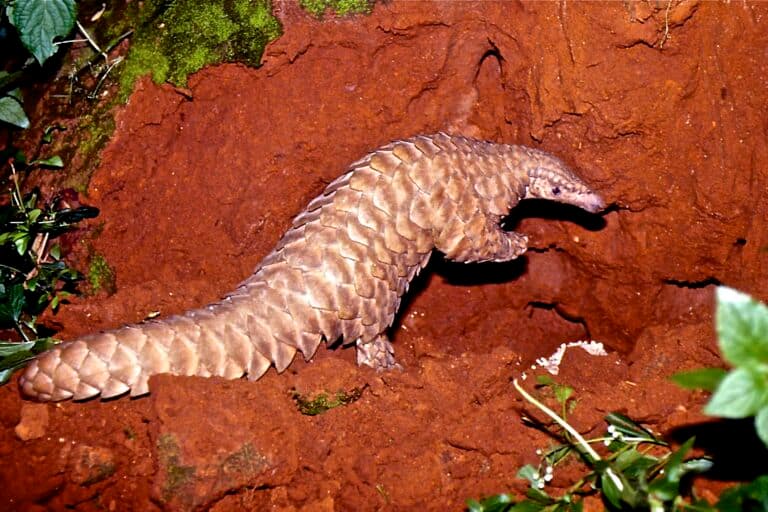
KATHMANDU — A proposed dam in Kathmandu’s northeastern ridge promises to revive the sewage-choked sacred Bagmati River that runs past revered Hindu temples and ease the valley’s chronic water shortage. But conservationists warn that the project could exact a high ecological cost, even potentially impacting critically endangered wildlife within the Shivapuri Nagarjun National Park, where the dam is set to rise. A new study in Ecology and Evolution journal states that the Nagmati Dam will inundate large parts of potential prime pangolin habitat and foraging areas, noting that the project’s environmental impact assessment (EIA) “overlooks this threat” and fails to recognize the impacts on the species.
The national park is home to the critically endangered Chinese pangolin (Manis pentadactyla) and the endangered Indian pangolin (Manis crassicaudata), both of which are protected under Nepal’s conservation law. “Pangolins have a small home range and specific habitat needs, so the impact on almost 100 hectares [247 acres] of area because of the dam will have big consequences for them,” said Kumar Paudel, a pangolin specialist from the nonprofit Greenhood Nepal and co-author of the study. “We need to be extremely careful about the impacts on biodiversity while developing infrastructure projects.
This is not just about pangolins but other species, too,” he said. A Chinese pangolin. Image by Sarita Jnawali of NTNC – Central Zoo via Wikimedia Commons (CC BY 2.0). The planned Nagmati Dam — a 95-meter (311-foot) barrier with a capacity to store more than 8 billion liters (2.1 billion gallons) of…This article was originally published on Mongabay