Dubai has the highest number of repatriations as of April 17
DUBAI, United Arab Emirates – For some Filipinos, being repatriated is so random that it can come down to plain luck. Take the case of frail, 59-year-old Anthony Cueva, who has been in hiding for lack of legal papers for the past five years. He was a chance passenger but made it because a diabetic repatriate whose blood sugar spiked so high that she had to forgo the flight.
Or Nina Reyes, a jobless nanny, who accompanied her departing friend to the processing center only to be told that she, too, was up for repatriation that same night. Or Doms Llovido Jr., a fresh graduate from Bulacan, who arrived on February 27 with a three-month visit visa. The following day, US and Israel bombed Iran in what started the ongoing Middle East conflict.
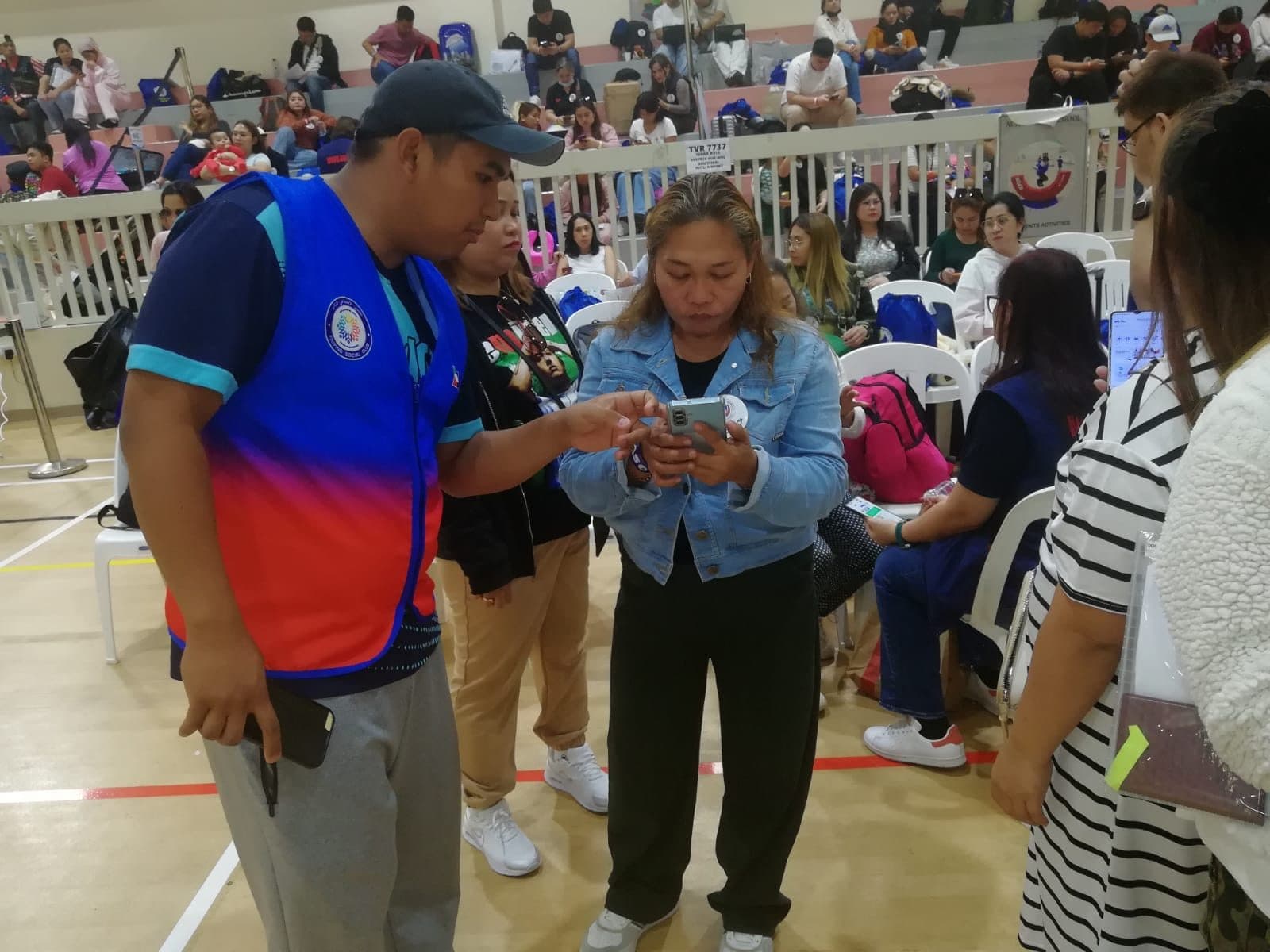
Llovido has, for the time being, volunteered to help repatriates with their luggage at the repatriation center. VOLUNTEER. Doms Llovido Jr. helps OFWs process their repatriation papers.
Dealing with OFWs Elsewhere, social media is awash with queries from Filipinos asking when their turn for repatriation will be, stressing that their papers have been with the Migrant Workers Office (MWO) for weeks. Others are asking if the repatriation is still on as they have decided to apply as well. Explains Labor Attaché John Rio A.
Bautista, MWO head in Dubai and the Northern Emirates: “‘Yung iba naman sasabihin, ‘Ang bilis naman. Teka muna hindi pa kami naka-impake.’ Tinatawagan pa naming isa-isa yung mga repatriates to confirm at the last minute.” (Others will say, ‘That was fast. Wait, we haven’t packed yet.’ We call the repatriates to confirm at the last minute if they will proceed.) They have also had instances when the repatriate appeared to be not so serious about going back home, having second thoughts “Kahapon mayroong isa na hindi dumating, di raw siya nagising,” said Bautista. (Yesterday, there was one who did not make it because he was not able to get up on time.) With final processing scheduled at 3 am because everybody has to be at Dubai International Airport (DIA) by 6 am for the 9:35 am flight, most repatriates were already at the repatriation center earlier than scheduled.
“Mayroong 11 pm andito na. Hindi na sila natutulog, tapos siya hindi nagising,” Bautista said. (There were those who arrive at 11 pm. They don’t sleep anymore, and we have him who did not wake up on time.) Still another one, the labor attaché said, informed them that he was missing his passport.
This was at the last minute at the assembly point, when all paperwork has been done. “Binibigyan namin sila ng plastic envelope para doon nila ilalagay lahat,” said Bautista in disbelief. (We give them plastic envelops where they can put all valuables in.) PREPARING. Anthony Cueva undergoes a medical check-up before his scheduled flight to the Philippines.
Coming back? Cueva, who came to the UAE in 2006 and worked as a construction firm finance officer until he lost his job in 2020, said life was surreal as an illegal alien. “Nag-TNT ako.
Hindi ako makakilos ng regular, hindi ako makapaglakad ng maayos. Alam mong mali, but you have to survive,” he told Rappler. (I went into hiding. I can’t act like nothing was wrong, I can’t go out and think everything was just fine.
You know it’s wrong but you have to survive.) Cueva said he made it in the past five years cooking and selling hot meals – lunch like sautéed lentils or adobo; afternoon snacks like glutinous rice in coconut milk. He makes AED 1 to 2 (P16.22 to P32.44) per order. “Sampung katao, may kita na.
Hindi ka pwedeng sumuko, sumuko ka gutom ka. Kung saan-saan ka maghahanap ng tutulugan mo,” said Cueva, who used to make, he said, AED 5,000 a month (P81,800). (Ten persons buying your food and you already have something. You can’t give up, you’ll go hungry if you do, you’ll go everywhere looking for a place to sleep for the night.) Cueva said he also learned to be a nanny, getting paid AED 700 (P11,400) a month looking after an infant.
Raised in San Mateo, Rizal, he said he had no plans of going home. “Gusto ko nang mamatay dito,” he said. (I wanted to die here.) Asked if he would come back to Dubai, Cueva said he keeps his options open. “Kung may oportunidad na bumalik ako at gaganda buhay ko, bakit hindi?
Lessons learned, next time na mapadaan ka sa kalsada na iyon, alam mo na kung ano gagawin mo,” he said. (If there is an opportunity to be back and my life will be better, why not? Lessons learned, next time if you passed by that road again, you’ll know what to do.) A nanny, who was a close friend, and an MWO repatriation volunteer helped Cueva with his paperwork. He was hospitalized weeks before for a very low heart rate, registering 15 beats per minute.
TRAVEL. Overseas Filipinos board a bus that will take them to the airport. Surprised repatriation Thirty-eight-year-old Reyes of Valenzuela, Metro Manila, meanwhile said she did not know she was also up for repatriation. “Alam ko po itong repatriation, pero hindi ko po alam na ngayong araw na ang paglipad