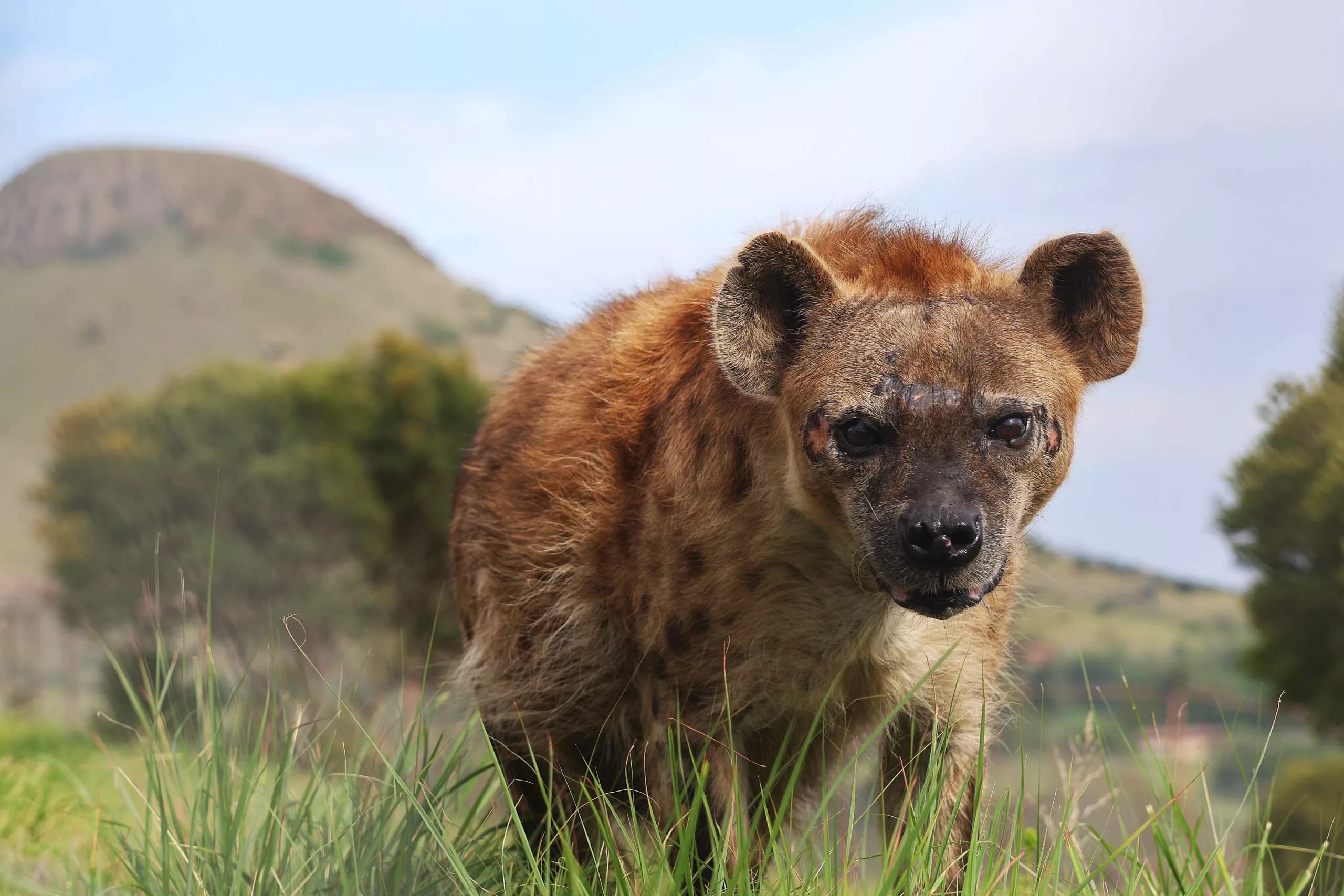
Once misunderstood, now celebrated: Phiri the hyena’s second chance at LIONSROCK Image: Supplied As International Hyena Day approaches on 27 April, LIONSROCK Big Cat Sanctuary is turning the spotlight onto an unlikely ambassador, a hyena named Phiri. His story is not an easy one. But it is an important one.
Rescued by FOUR PAWS after being kept in isolation and inadequate conditions, Phiri spent much of his early life without the stimulation or social structure essential to his species. Hyenas are intelligent and deeply social animals. They rely on complex communication, tight-knit clan dynamics and constant environmental engagement.
Without this, their wellbeing deteriorates, and for Phiri, it did. Things began to change when he arrived at LIONSROCK. Here, Phiri was introduced to a spacious, species-appropriate habitat designed to encourage natural behaviours.
He could explore, scent-mark, vocalise and be curious. Slowly, and on his own terms, he began to settle. And then, he began to thrive.
Today, Phiri’s personality is unmistakable. He is alert, expressive and vocal. It is a reminder that the so-called “laugh” of a hyena is not a joke, but a sophisticated form of communication.
Image: Supplied “Phiri reminds us every day how intelligent, sensitive and social hyenas are,” says Hildegard Pirker, Sanctuary Manager at LIONSROCK. “Once he felt safe, his entire personality opened up. Watching him flourish is one of our greatest joys.” International Hyena Day exists to challenge deeply rooted misconceptions.
For decades, hyenas have been cast as villains in popular culture, reduced to scavengers or symbols of menace. In reality, science paints a very different picture. Hyenas are skilled hunters, devoted family members and key contributors to ecosystem balance.
Misunderstanding, however, often leads to mistreatment. Image: Supplied Across the globe, hyenas are still kept in captivity under poor conditions, exploited for entertainment, or confined in facilities unable to meet their needs. Phiri’s past reflects this reality, but his present offers a glimpse of what ethical wildlife care can look like.
Sanctuaries like LIONSROCK play a critical role. While wild animals belong in the wild, not all rescued individuals can be released. For them, lifelong care in environments that prioritise welfare is the only viable option.
“Phiri carried emotional scars when he arrived,” Pirker adds. “Today, he moves with confidence and curiosity. His journey reminds us why stronger protections for wild animals are so urgently needed.” As International Hyena Day is marked around the world, Phiri stands as both a survivor and a symbol.
He challenges outdated narratives and invites a more compassionate understanding of one of Africa’s most misunderstood species. For more information, visit lionsrock.org Follow us on social media for more travel news, inspiration, and guides. You can also tag us to be featured. TikTok | Instagram | Facebook | Twitter ALSO READ: Why ethical wildlife travel starts before the safari