KUALA LUMPUR, April 21 — The Malaysian Maritime Enforcement Agency (MMEA) is currently examining the use of non-le...
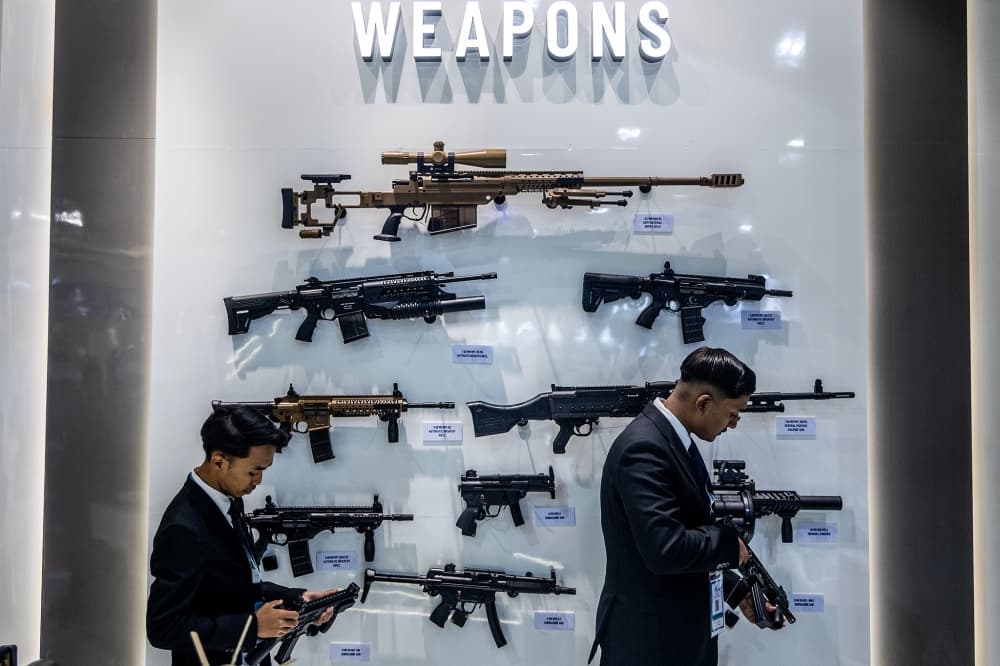
KUALA LUMPUR, April 21 — The Malaysian Maritime Enforcement Agency (MMEA) is currently examining the use of non-lethal weapons, including electric guns, as part of a more flexible and controlled enforcement approach.Its deputy director-general (Logistics), Maritime Admiral Datuk Saiful Lizan Ibrahim, said that the approach to the use of the weapons is in line with international enforcement practices.At the same time, he said the agency is also evaluating the need for the use of international standard duty sidearms, particularly for high-risk situations such as inspecting foreign fishing vessels or cross-border criminal activities.“The step is important to ensure the safety of the members is always guaranteed when facing uncertain situations at sea,” he said in a statement yesterday.Earlier, Saiful Lizan represented MMEA director-general Maritime Admiral Datuk Mohd Rosli Abdullah at the opening ceremony of the Defence Services Asia (DSA) Exhibition and the National Security Asia (Natsec) Exhibition 2026 here yesterday.He said that the MMEA is now fully focused on modernising the weaponry system to strengthen enforcement capabilities in the country’s waters.Saiful Lizan said that the current maritime operational environment requires the readiness of personnel to be at an optimum level through the support of the latest technology.“The operational environment is now much more challenging with increasingly complex cross-border threats. The MMEA needs to keep pace with technological advancements to ensure that every enforcement action is more effective and safer,” he said.He said that in the current landscape, the needs of the agency are not just about enhancing the capabilities of assets such as ships and aircraft, but also require relevant weaponry and technology support.However, Saiful Lizan said that the focus of the modernisation of the MMEA is not limited to the addition of assets alone, but rather involves comprehensive integration encompassing armaments, monitoring systems and intelligence elements.“It is to ensure that every operation is carried out responsively and can handle any threat quickly and effectively,” he also said.He added that all the initiatives outlined also take into account aspects of legal compliance, operational effectiveness, and the safety of personnel as the agency’s main priorities. — Bernama