The plight of Tanzanian opposition leader Tundu Lissu and many others illustrates the struggles that African democrats have to own until the Commonwealth and other international organisations speak out and act accordingly against democratic decline.
The leader of Tanzania’s main opposition party Chadema, Tundu Lissu, leaves the Kisutu Resident Magistrates’ Court in a Tanzanian Prisons Service vehicle in Dar es Salam on 19 May 2025. Lissu was charged with the alleged publication of false information online and another charge related to treason, which could carry the death sentence. He is alleged to have called on Tanzanians to rebel and disrupt the country’s presidential and parliamentary elections. (Photo: EPA / Anthony Siame) Democracy is on the retreat in Africa and around the world.
After the heady 1990s, during which democracy flourished in the wake of the end of the Cold War, we have seen two decades of democratic regression. According to Freedom House, which has tracked the health of democracy since 1972, by 2026 Africa had experienced 13 consecutive years of decline in democracy, with a rise in military coups, non-competitive elections, restrictions on civic space and weakened democratic institutions. In continental southern Africa, only South Africa, Malawi, Namibia, Botswana and Lesotho are considered “free”, with Mozambique and Zambia “partly free”.
The remainder, including key states such as Angola, Zimbabwe, Tanzania and the Democratic Republic of Congo, are all in the “not free” category. A total of 54 countries worldwide experienced regression in their political rights and civil liberties during 2025. Against this, 35 countries registered improvements.
Guinea-Bissau, Tanzania, Burkina Faso, Madagascar and El Salvador had the largest score declines, while Syria, Sri Lanka, Bolivia and Gabon recorded the largest gains. Three countries – Bolivia, Fiji and Malawi – improved from “partly free” to “free” status thanks to competitive elections, growing judicial independence and the strengthening of the rule of law. Of the 210 countries and territories surveyed, “not free” countries increased in 2025 to 59 – up from 45 in 2005 – primarily at the expense of “partly free” nations.
The share of “free” countries remains stable at about 45% worldwide, but is at less than 20% across Africa. Repression in Tanzania Tanzania suffered an election abomination in October 2025. President Samia Suluhu Hassan of the ruling Chama Cha Mapinduzi (CCM) was declared the winner with an unbelievable 98% of the vote as thousands of protesters were killed by security forces.
Unsurprisingly, Tanzania’s political freedom score is 28/100, just above Zimbabwe (25) and below autocratic Uganda (33). Tanzania has, in the past two years, suffered a significant decline in freedoms, including forced disappearances of political activists, police brutality against protesters and the disenfranchisement of Maasai communities. The 2025 election continued this trend of rising repression, intimidation and severe constraints on political opposition and civic space with the banning of the opposition Chadema movement and the imprisonment of its leader, Tundu Lissu, on treason charges.
The election was widely condemned by international and regional observers as failing to meet democratic norms and standards, including those who routinely step out in support of African elections, no matter the quality. The Thabo Mbeki Foundation said: “Following the succession of negative events that led to the tragic loss of life, the Election Observer Missions (EOMs) of our regional and continental organisations, [the Southern African Development Community, SADC] and the AU, have made distressing determinations regarding the conduct of the election. “Collectively,” read its statement, “the EOMs concluded that the General Election fell short of the Principles and Guidelines Governing Democratic Elections of both SADC and the AU, as well as international standards.
As the SADC EOM stated, the Tanzanian voters were unable to freely express their democratic will. “Consequently, both the SADC and AU observers assert that the Presidential and Parliamentary results announced by the Independent National Electoral Commission (INEC) are not a true reflection of the will of the Tanzanian people. “This leads to the deeply troubling conclusion that the United Republic of Tanzania currently lacks a legitimate government,” the foundation concludes, “suggesting instead that the current administration has been imposed upon the people through a combination of force and fraudulent means.
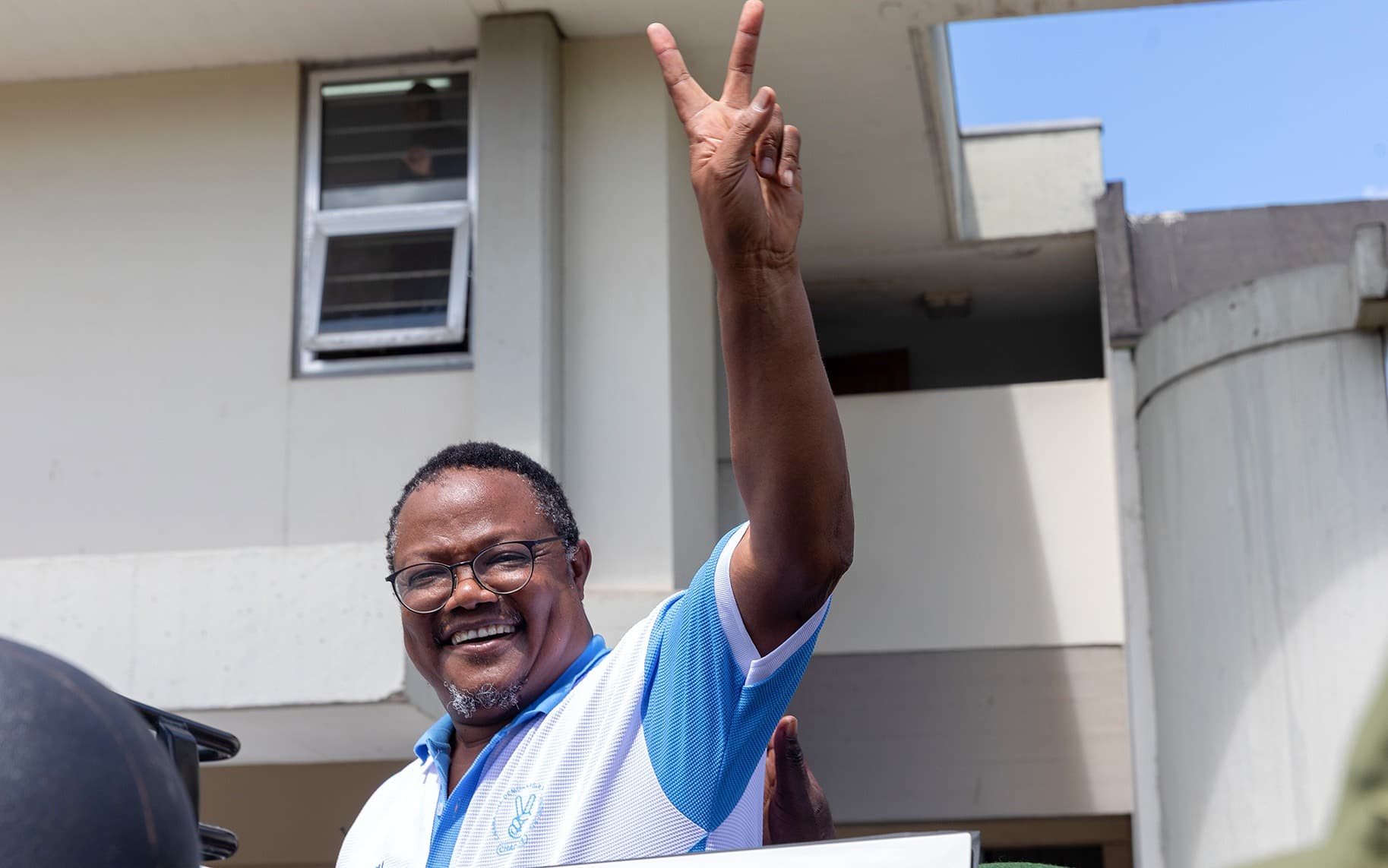
This situation is exacerbated by persistent, disturbing reports of systematic violence against opponents of the CCM, including abductions and murders.” Tanzanian opposition stalwart Tundu Lissu waves to supporters upon his return on 25 January 2023, after five years in exile. Photo: Ericky Boniphace/AFP Lissu remains in prison, where he has languished for more than a year. Chadema’s senior party officials are prevented from international travel.
The Commonwealth, led by its envoy, the former president of Malawi, Lazarus Chakwera, was able to secure an appointment to see Lissu this week. It has taken the Commonwealth months to act despite its