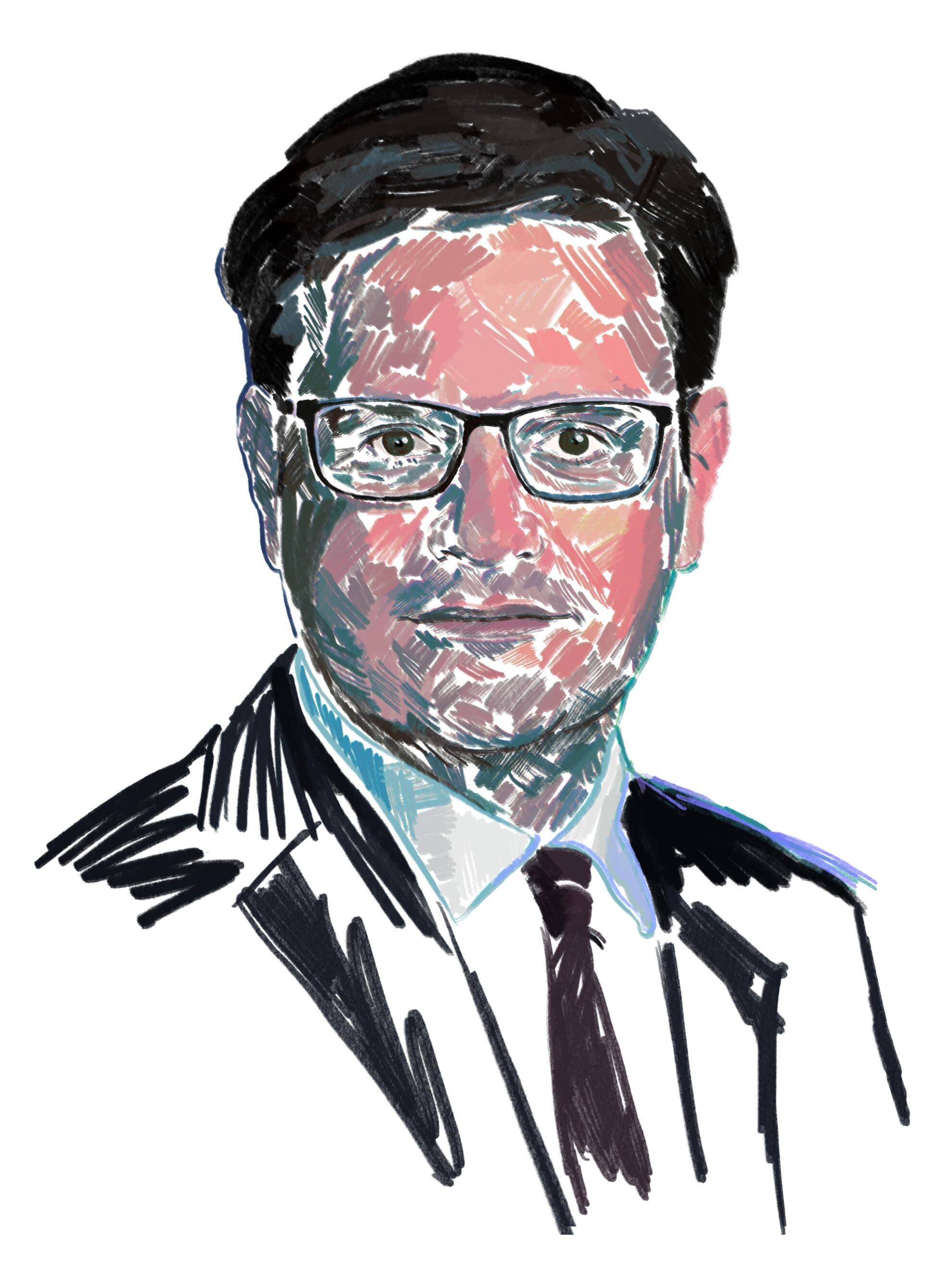
Ambassador Bálint Ódor's knowledge of the EU's inner workings helped the outgoing government forcefully make its points for years. But his time in Brussels looks like it's coming to an end.
Orbán’s EU fixer faces becoming Hungary’s ‘fall guy’ Ambassador Bálint Ódor’s knowledge of the EU’s inner workings helped the outgoing government forcefully make its points for years. But his time in Brussels looks like it’s coming to an end. By GABRIEL GAVIN Illustration by Natália Delgado/POLITICO Under Viktor Orbán, Hungary needed someone in Brussels who could aggressively defend his government’s belligerent anti-EU stance while quietly working with other countries to get things done.
In Bálint Ódor, it had its man. Over the past six years, the 50-year-old — more mild-mannered than his bosses’ reputations in Europe might suggest — served as Hungary’s ambassador to the EU as relations with the bloc sank to historic lows. In that time, Budapest moved closer to Russia, trashed Ukraine and saw the bloc freeze billions of euros in funds over curbs on democratic freedoms.
But with Orbán’s defeat after 16 years as prime minister, Ódor could be out of a job. Opposition leader Péter Magyar, who ended the populist government’s rule in parliamentary elections on April 12, promised a historic reset, signaling he will sweep aside anyone too closely identified with the previous administration. “By definition, everybody understands of each other that the loyalty is to your political bosses and to delivering results to their instructions,” said Ivan Rogers, about national ambassadors to the EU, a role he performed for the U.K. in Brussels until 2017.
And, whatever Ódor thought about these instructions personally, he followed them to the letter. While even those who worked closely with Ódor were uncertain about whether he was simply following orders or shared Orbán’s desire to bash Brussels, his reputation as the outgoing prime minister’s fixer may well be his downfall, according to five diplomats and officials from countries other than Hungary who worked with him closely, and who were granted anonymity to speak to POLITICO. It would be easy to think that, given Orbán’s loud anti-EU stance, his man in Brussels would be a blunt instrument.
Quite the opposite. Ódor is an expert on its treaties and has a PhD in international relations. Universities back home use his books to teach students how Europe works. Hungary’s ambassador to the EU Bálint Ódor, whose position could be under threat under the new government, attends an EU Trade Ministers’ meeting in Brussels on November 24, 2025. | Thierry Monasse/Getty Images That’s why he was so effective, according to his fellow diplomats.
Building any kind of trust within the Brussels bubble when he took over as ambassador in 2022 was a tough task. Ódor arrived in the wake of a spying scandal that saw the embassy itself accused of running intelligence agents under diplomatic cover and amid warnings Budapest was passing information to Moscow. The other leading Hungarian in town, Olivér Várhelyi, had also served as ambassador before being nominated by Orbán to be the country’s European commissioner, and is still being probed for his involvement in the alleged affair. He denies any wrongdoing.
‘You know he will deliver’ As Rogers implied, the group of ambassadors in Brussels are often a close-knit bunch. They’re expected to keep a close eye on diplomatic moves by their counterparts, feeding back notes on what other governments are saying or, perhaps more crucially, not saying. They also play an essential role in hammering out compromises and ensuring their countries’ interests are reflected in negotiations.
This requires bridge-building skills and strong working relations with other envoys, MEPs and European Commission and Council officials. For Ódor, the job wasn’t made easier by Orbán’s broadsides at Brussels and his accusations the EU was interfering in its domestic affairs. The ambassador had to build constructive ties with colleagues, while not drawing suspicions back home for being too friendly with them. Ódor has at least been a consistent opponent on issues where Budapest was digging in its heels, clearly telegraphing to other nation’s ambassadors the Hungarian government’s position and being upfront about where there was room for negotiation, the four diplomats and officials who worked with him said.
They were granted anonymity because the nature of their roles means their working relationships are sensitive. “When you talk to Balint and he says ‘I agree with you’ you know he will deliver,” one of them said, adding that Ódor could be constructive even while having to follow the Budapest hard line. Six-foot-two tall with glasses and graying hair, the Hungarian ambassador cuts a slightly awkward figure — and is spotted more frequently in the background of pictures while escorting his bosses in Brussels than during appearances in his own right.
And when publicly challenged to defend the Hungarian government’s public priorities at a think tank event in late 2024, those present said he was evidently uncomfortable at the prospect of speaking out beyond his brief on EU affairs. Howe