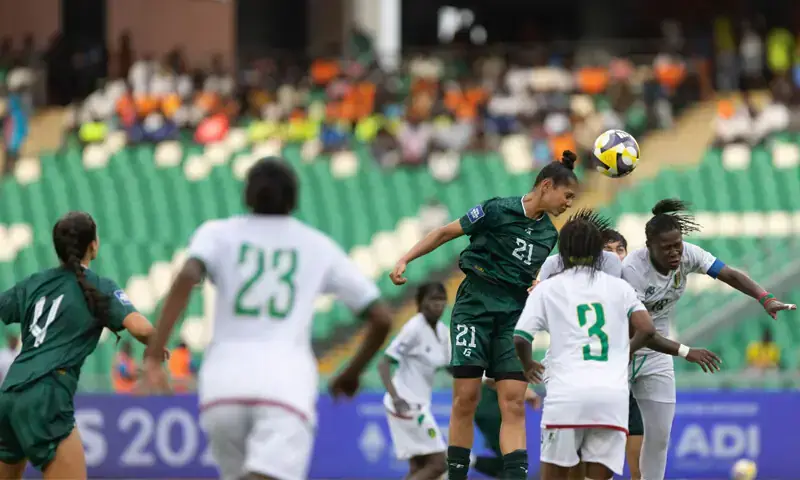
KARACHI: Pakistan women’s team head coach Adeel Rizki has called for regular camps and increased international fixtures as the only path to sustained progress, days after his side finished third in their maiden FIFA Series campaign in Ivory Coast. “The most important thing is continuity — regular camps and international matches,” Adeel said. “The players need consistent time together to build understanding, improve fitness levels and develop cohesion as a team.
Without that continuity, progress becomes very difficult. If we can ensure that, you’ll see clear and measurable improvement.” His words echoed those of forwards Nadia Khan and Aqsa Mushtaq, who earlier pointed to the same fundamental obstacle: Pakistan women play too few games. Aqsa noted it had been “a whole year” since the team last played Indonesia before this tournament, while Nadia called for regular mini-camps for local players to bridge the gap with diaspora team-mates who have club training abroad.
When asked what he had learned about the squad during the tournament, Adeel highlighted their mental strength. “One of the biggest things I’ve learned about this group is their resilience and willingness to grow,” he mentioned. “In a short space of time, they showed an ability to absorb new ideas, adapt to different levels of opposition and stay committed even in difficult moments.
That mentality is something you can’t always measure before a tournament, but it’s a very strong foundation for us moving forward.” The Mauritania loss — a game Pakistan dominated in chances but lost to a single opposition attack — raised questions about whether the record 8-0 win had led to overconfidence. Players previously rejected that notion, with Nadia saying the team was “confident but not arrogant.” Adeel offered a coach’s perspective, emphasising process over any single result. “It’s about creating the right culture and standards within the team,” he said.
“After a big win, the focus immediately shifts back to process rather than outcome. We review honestly, highlight areas we still need to improve and reinforce that at international level, every game demands maximum respect for the opponent. Consistency in mindset is something we’re building and moments like that are part of the learning curve for a developing team.” On closing the gap with higher-ranked sides — Ivory Coast sit 72 places above Pakistan in the FIFA rankings — Adeel acknowledged there were no shortcuts.
“There’s no shortcut for consistent exposure to high-level matches, that’s the reality,” said Adeel, who has been leading the team since 2022. “However, we can still make progress through structured camps, targeted training and better preparation in key areas like physical conditioning and game management. At the same time, increasing the number of international fixtures and improving the domestic environment will be crucial.
Closing the gap is a process, but with the right support and planning, it’s absolutely achievable.” Asked to name the most underrated player in his squad, the coach declined to single out an individual. “Every team has players who don’t always get the headlines but are vital to how the team functions,” he said. “For us, we have a few who bring balance and discipline to the side.
I prefer not to single one out, because their value is in how they contribute to the team as a whole.” Pakistan now face an uncertain international calendar, with no confirmed fixtures on the horizon. But Adeel’s message was clear: if the team is to build on their historic FIFA Series appearance, they must play — regularly, consistently and often. Published in Dawn, April 22nd, 2026