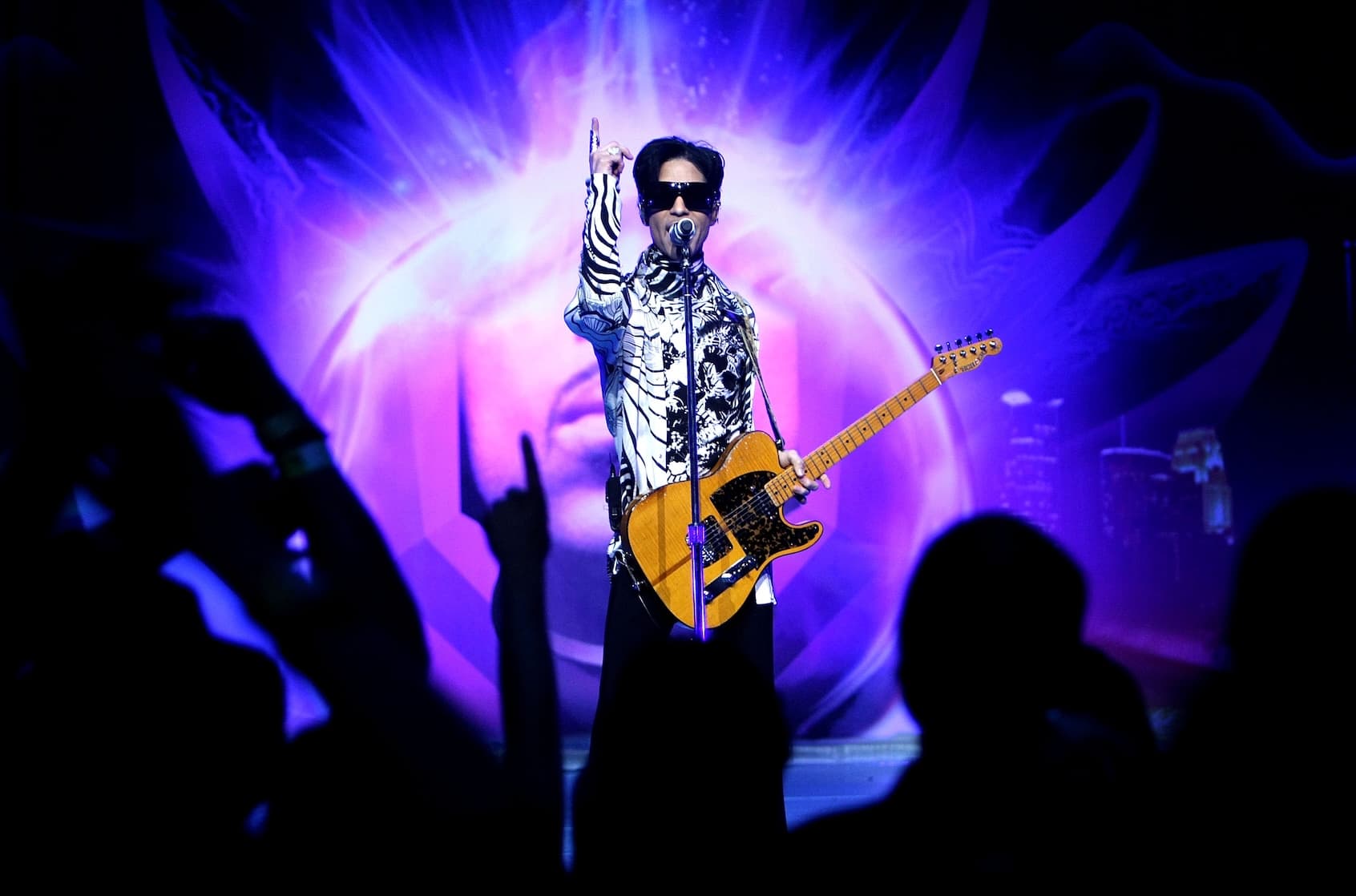
For many of his 57 years on Earth, Prince was treated like a living god. An untouchable genius of songcraft and sex who straddled the frequently divergent worlds of massive chart success and universal critical acclaim. He was in our world but not of it, sent down to carry revelations of new ways to be funky, freaky and free.
He was a diminutive guitar deity who could only have descended in America, but calling him something so plain and mortal as “American” still feels close to sacrilege. Despite his metaphorically Olympian stature, the pop star’s death was astoundingly and shamefully normal for a United States citizen. Prince died 10 years ago today, at the age of 57, from an accidental overdose on opioids.
Related The Prince nobody knew U.S. prescriptions for opioids spiked in the late ‘90s and early ‘00s. While the amount of opioids prescribed by U.S. doctors began to decline in 2010, a report from around the time of Prince’s death found that Americans were receiving three times as many opioid prescriptions than they had at the turn of the century. Since 2020, at least 50,000 Americans have died from opioid overdoses every single year.
The Purple One’s descent into opioid addiction was also remarkably average. The long version could only have happened to Prince — he fell from an on-stage bathtub from which he planned to sing “Purple Rain” — but what came after was routine. A doctor prescribed him pain pills that are incredibly addictive, a cure that does nothing to address the underlying cause of chronic pain.
“Most insurance … won’t pay for anything but a pill,” University of Cincinnati professor Judith Feinberg told the BBC in 2017. “The best thing is physical therapy, but no one will pay for that. So doctors get very ready to pull out the prescription pad.” Want more from culture than just the latest trend?
The Swell highlights art made to last. Sign up here When police entered Prince’s home after his death, they found scattered pill bottles prescribed under various names. It was determined that Prince died from an overdose of counterfeit Vicodin that was laced with fentanyl.
Prince’s bodyguard had picked up the singer’s prescription medicine to deal with the effects of opioid withdrawal mere hours before his passing. Prince’s death was a tragedy on several levels. The titanic size of the loss is the most obvious.
No one else could have done what Prince did for as long as Prince did it, and the untimely departure of His Royal Badness left behind no heirs. We need your help to stay independent Subscribe today to support Salon’s progressive journalism Ten years later, it’s hard not to be a little angry at how avoidable it all was. If Prince had been born or lived in any other country, his doctor’s first recourse might not have been a highly addictive painkiller.
If he hadn’t been forced to rely on a system that prioritized quick fixes over long-term care, he might still be here. The ultimate tragedy of Prince’s death is how common the beats of this story are. Millions of Americans get old, get hurt and get hooked.
The need for more and more painkillers drives an illicit market full of cheap, deadly substitutes. Prince had a one-of-a-kind life that could only have happened when and where it happened. The same was true, sadly, of his all-too-ordinary death. Read more about this topic We still swoon for Prince’s “Kiss” Prince: Why, five years after his death, the Purple One still reigns You may never hear anything from Prince’s vault of unreleased music