There is a certain pattern you begin to notice when you use enough phones in the sub Rs 35,000 segment. On paper, almost everything looks similar and sorted, as almost each one of them comes with bigger batteries, high refresh rate displays, multiple cameras, and numbers that try to sound impressive. However, the real story […]
There is a certain pattern you begin to notice when you use enough phones in the sub Rs 35,000 segment. On paper, almost everything looks similar and sorted, as almost each one of them comes with bigger batteries, high refresh rate displays, multiple cameras, and numbers that try to sound impressive. However, the real story begins when you take the phone out of that controlled setup and start living with it.
Not testing it just for a few hours, but actually using it as your own phone through the day. That is exactly what I did with the Realme 16 5G, which is priced in India starting at Rs 31,999. Survey Thank you for completing the survey!
I’ve been using the Realme 16 as my primary device for a few weeks now. I’ve used it for everything. I use it for Instagram, for watching YouTube and OTT, taking voice/video calls, gaming, and clicking photos.
Basically, I have used it the way most people would, with no switching back to a secondary phone and no avoiding weak areas, just regular day-to-day usage. While the Realme 16 5G tries hard to present itself as a well-rounded device, the longer I spent with it, the more its compromises began to show in ways that are hard to ignore. Here’s my full review of the Realme 16 5G.
Realme 16 5G design: Looks that try too hard While everything may look good on paper, the first thing you notice when unboxing a device is its design and build, and that was exactly my experience. As soon as I took the Realme 16 out of the box and held it in my hand, it felt light, easy to grip, and not bulky at all. In those first few minutes, it gave me the impression that Realme has done a decent job here, with an intent to deliver a slightly premium feel the moment you pick up the phone.
However, as you continue using the device, small issues begin to surface. The back panel, which appears to be made of polycarbonate with a matte finish, does a good job of resisting fingerprints, which is a plus. It does not pick up smudges easily, and that helps it look clean at a glance.
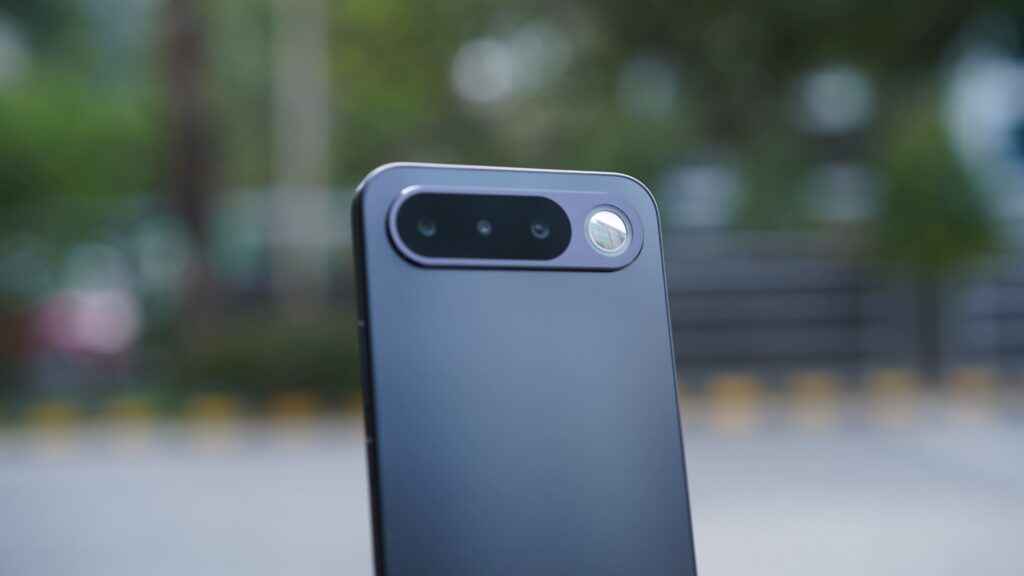
But dust is a completely different story. I tested the black variant of the Realme 16, and the area around the camera module is where things start to fall apart. It attracts dust almost instantly, and the dust is quite stubborn.
No matter how many times you wipe it, it starts looking messy again within minutes. Over time, this becomes frustrating because the phone never really appears clean, especially around the camera section. From a durability standpoint, the phone feels decent but not reassuring.
The lightweight build helps with comfort, but it does not give that solid confidence you expect at this price. There is no strong sense of toughness here, as the edges and the back panel do not feel like they can handle rough usage without picking up marks over time. Moreover, the camera module itself presents another problem.
There is a noticeable bulge, and when placed on a flat surface, the phone does not sit evenly and tends to wobble. While using a case can fix this, that is not really the point. Without one, the experience feels somewhat unfinished.
On the positive side, the buttons are well done. They are tactile and responsive, which adds a sense of confidence during everyday use. Realme 16 5G display: Bright and clear The Realme 16 comes with a 6.57-inch AMOLED display that, at first glance, feels well-balanced and easy to like.
It is sharp, smooth and bright enough for most situations. The 120Hz refresh rate keeps scrolling fluid, and animations feel clean without any stutter. The Realme 16 comes with a claimed peak brightness of 4,200 nits.
That said, we all know how peak brightness works. Where it all matters, in our testing, the phone achieved 1,631 nits in High Brightness mode (HBM). The phone is rated to hit 1,400 nits in HBM, so getting this sort of result is actually fantastic, though not the brightest in the segment.
However, for what it’s worth, the screen is still good enough for comfortable use under sunlight. The text remains readable, and colours do not wash out easily while using the device outdoors. I also tested the display using Calman, and the results are quite reassuring.
Colours appear accurate and balanced in the Natural mode, which is also the most calibrated mode available in the device. The average DeltaE came out to 1.8, and the maximum DeltaE was 3.6. Whites look clean, Blacks are deep, and the contrast is strong.
The measured white luminance was around 592 cd/m², while black luminance stayed close to zero, which helps with that punchy look. What this means in daily use is simple. The content looks natural, the skin tones do not look off, landscapes have the right colours, and even simple things like reading documents feel easy on the eyes.
The display does not try too hard to boost colours, and that actually works in its favour. Realme also offers multiple colour modes, and the Natural mode is clearly the one to use if you care about accuracy, as it is properly calibrated. On the other ha