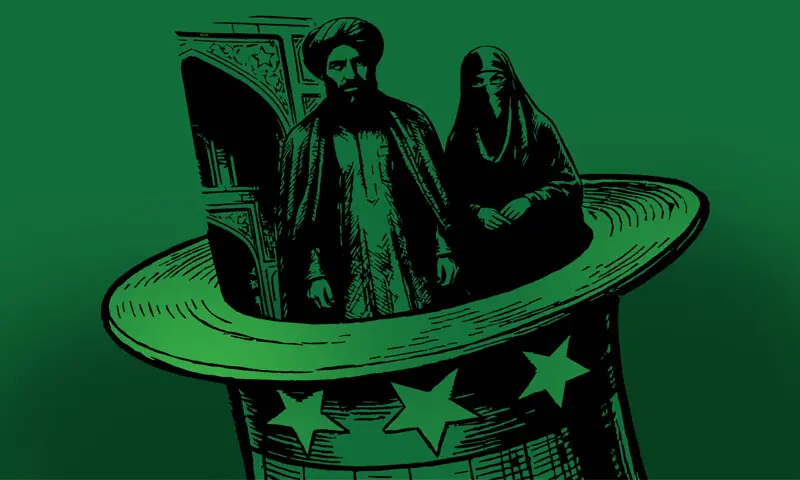
The history of Western engagement in the Middle East and South Asia reveals a pattern in which radical Islamist movements were frequently used as strategic assets against secular or leftist rivals. The Central Intelligence Agency’s (CIA) involvement in the 1953 coup against prime minister Mohammad Mosaddegh in Iran is now well-documented. The CIA coordinated with influential clerics, such as Ayato
llah Kashani, to incite religious opposition against the Mosaddegh regime. Mosaddegh had nationalised British and American economic interests in the country. Collaborating with the Iranian clergy demonstrated a willingness by Western intelligence networks to leverage the pulpit for regime change.
Ironically, though, the clergy that was bolstered by the CIA went on to eventually reject the legitimacy of the Shah of Iran, whom the CIA had reinstalled after toppling Mosaddegh. In the 1970s, while the CIA focused on suppressing leftist and nationalist anti-Shah forces, the clergy successfully co-opted a nationalist movement against the Shah, transforming it into an ‘Islamic Revolution’ that branded the US and the West as “satanic”. It was a miscalculation by Western intelligence agencies that were prioritising the elimination of ‘socialism’ over the potential rise of theocratic governance.
Western powers once instrumentalised political Islam to counter socialism. Today, the same forces are recast by the West as existential threats. Now, as countries such as Pakistan and Saudi Arabia move away from past Islamist frameworks, a new, more pragmatic regional identity is emerging The British state, too, has a history of viewing radical Islamist groups through the lens of strategic utility.
According to the British historian Mark Curtis, British intelligence frequently collaborated with the Islamist outfit Muslim Brotherhood during the 1950s and 1960s to undermine the influence of ‘modernist’ Arab nationalist leaders, such as Egypt’s Gamal Abdel Nasser. British agents facilitated the distribution of pamphlets and radio broadcasts that mirrored the rhetoric of the Brotherhood. These were shaped to alienate the Egyptian public from Nasser’s Pan-Arab project, which the Western powers believed was being supported by the Soviet Union.
By portraying Arab nationalists as ‘apostates’ whose secularism was an affront to the Islamic faith, Western powers engaged in a sophisticated form of cultural and social engineering. This suggests that their Cold War doctrine in Muslim-majority regions was not only militarist, it also flexed certain social forces to delegitimise ideologies that threatened Western hegemony. Pakistan served as another experiment for this strategy during the military regime of Gen Ziaul Haq.
Beyond the logistical support the regime received from the US to bolster an Islamist insurgency against a Soviet-backed government in Afghanistan, the US also provided assistance to enable Zia to ‘Islamise’ Pakistani state and society. According to the American writer and journalist Lawrence Wright, in his book The Looming Tower, Zia’s implementation of Sharia law and the establishment of thousands of madrassas was viewed by Western agencies as an essential tool for hardening the population against the perceived threat of communism. The madrassas became breeding grounds for radical ideologies that would later shape terror networks such as the Taliban and Al-Qaeda.
The prioritisation of short-term security goals through the pulpit led to the corrosion of moderate political alternatives. When the Cold War ended in 1991, the most organised and well-funded forces remaining in many Muslim-majority countries were those grounded in radicalism. The conclusion of the Cold War did not see these projects dissolve, though.
Rather, they trickled down from state-sponsored initiatives into the hands of non-state actors that chose to continue the ‘struggle’. Following the demise of the Soviet Union, these actors turned their weapons against their erstwhile Western benefactors, as well as against the governments of Muslim-majority regions, which they accused of being ‘false Muslims.’ Iran and Turkey have often claimed that the rise of the so-called ‘Islamic State’ (IS) served a specific purpose (for Israel and its Western allies) in fragmenting Libya and Syria. While IS is largely viewed as a chaotic by-product of the 2003 US invasion of Iraq, its role in weakening the Syrian state and justifying the West’s re-entry into the region cannot be dismissed.
But the flipside of the doctrine has more to do with a new rhetorical front that has opened, in which far-right Zionists and Christian nationalists have rebranded territorial and political struggles as a clash of faiths. This ploy is increasingly being employed by certain Western and Israeli politicians to frame the suppression of Palestinian movements and the isolation of Iran not as matters of international law, but as a ‘crusade’ to protect the “Judeo-Christian heritage.” The Palestinian-American