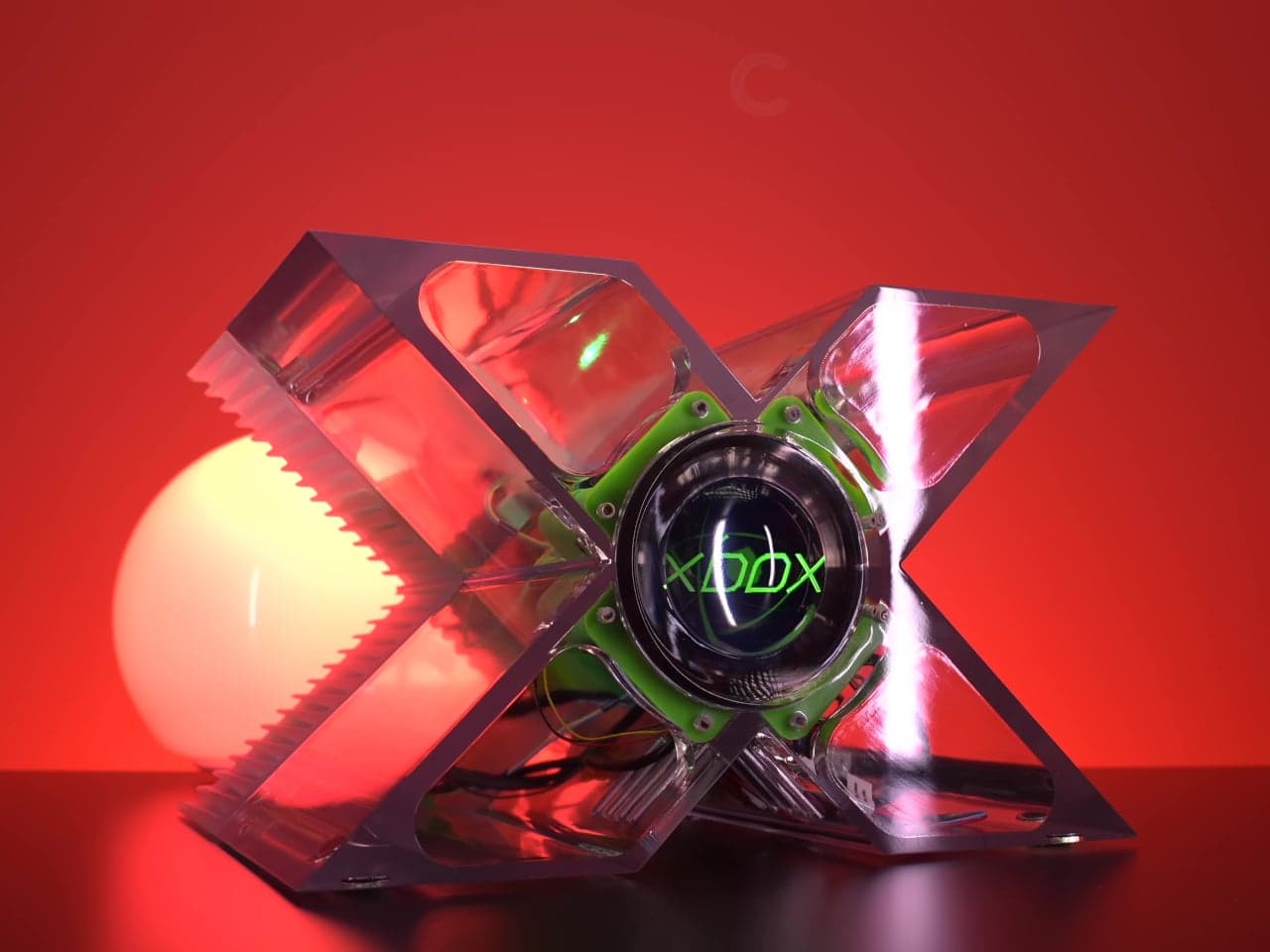
There are hardware designs from the early 2000s that still stop people cold, and the original Xbox prototype is near the top of that list. Revealed at GDC 2000 by Bill Gates and Seamus Blackley, it was a massive X carved from a single block of aluminum, reportedly costing around $18,000 per unit. It was a developer showcase piece that toured press conferences and wasn’t meant for production.
Tito of Macho Nacho Productions previously got as close as anyone has managed by building a functional aluminum replica, though the enclosure alone cost thousands of dollars in machining. It was impressive and historically faithful, but it wasn’t something you could attempt yourself. His new version takes the same idea and rebuilds it entirely around 3D printing, with accessibility as the primary goal.
Designer: Macho Nacho Productions/Nacho Engineering The digital files are available through his online store, and the enclosure can be printed at home if you have a large enough machine, or sent off to a 3D printing service. It’s not a complicated sourcing challenge; different configurations accommodate different build approaches, giving hobbyists some flexibility in how they put it together. Either way, the barrier to entry has dropped considerably, which is the entire point.
Getting the shell printed in clear resin produces a glass-like finish the aluminum build never had, and the transparency turns the internal components into part of the visual appeal. More significantly, this version finally matches the true dimensions of the original GDC prototype, a distinction the previous aluminum replica couldn’t make. For anyone interested in historical accuracy, that’s the more meaningful improvement of the two.
The original prototype didn’t have much at the center of its X besides a small green light. The replica replaces that with a round Waveshare LCD driven by a Raspberry Pi Pico 2 paired with a DVI sock. That combination lets the Pico push video to the round display without additional hardware, a compact solution that gives the build a much more animated presence than the original’s glow ever managed.
What makes this genuinely interesting beyond nostalgia is how deliberately it was rebuilt for the modding community rather than as a personal showcase. The print-friendly engineering turns what was previously a one-of-a-kind machined object into something with a shared community standard. Hobbyists don’t need access to a machine shop anymore to own one; they just need a printer, some patience, and a donor Xbox motherboard.
The build runs the original Xbox motherboard inside the new shell, keeping its gaming credentials intact. A modern USB-C power solution replaces the original Xbox’s notoriously oversized power brick, freeing up internal volume that the X-shaped enclosure genuinely needs. It’s a practical modernization that doesn’t ask you to give up the authenticity of running original hardware, which is exactly what this kind of replica demands.
The original X design was always more statement than product, a way of telling developers in 2000 that Microsoft was serious with hardware dramatic enough to make the point without words. The retail Xbox that followed looked nothing like it. Twenty-five years later, the modding community is effectively building the console Microsoft couldn’t, and making the files available to anyone willing to put in the work. The post The Xbox Prototype That Cost $18K Now Takes Just a Spool of Filament first appeared on Yanko Design.