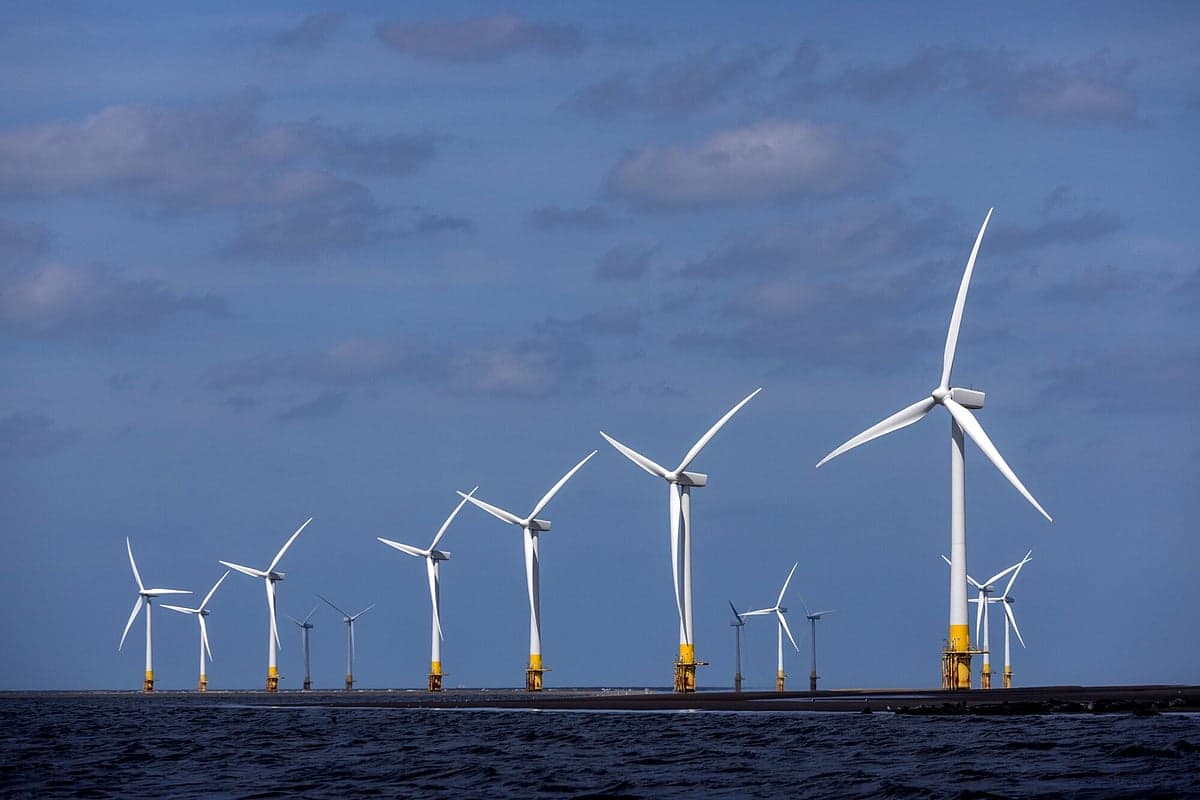
The United Kingdom is accelerating a sweeping clean-energy expansion, recording a bumper wind power output in the first quarter of 2026, as per government data.The green energy drive is aimed at shielding households from volatile natural gas prices that have driven up electricity bills amid global supply shocks tied to the war in Iran.On Tuesday, the Labour government unveiled measures designed to weaken the long-standing link between gas prices and electricity costs by rapidly boosting homegrown renewable generation and overhauling grid and planning systems that have slowed project delivery for years.Energy Secretary @Ed_Miliband will outline new measures today - including decisive action to break the influence of gas on electricity prices.Going further and faster to roll out clean, homegrown energy & deliver long term energy security & sovereignty.https://t.co/lsN7hiWhbX— Department for Energy Security and Net Zero (@energygovuk) April 21, 2026 Cushion vs fossil fuel price shocksUK's drive to accelerate clean energy is aimed at protecting against fossil fuel price shocks, Reuters reported.5 MILLION HOMES: The UK’s target to build 10 GW of solar and wind on public land could power roughly 5 million homes. In simple terms, that is enough electricity for about one in five UK households.Central to the plan is a push to “massively expand renewables” across the public estate — including brownfield land, former industrial sites and railway property — for solar panels and wind turbines.
Officials said even limited use of government-owned land could unlock as much as 10 gigawatts of new capacity, enough to power roughly 5 million homes.Solar tsunami: How the world did in 2 years what took 68 — terawatts of power unleashedBumper wind power output in Q1The announcement comes as Britain, where about a third of electricity generation typically comes from gas-fired plants, feels renewed energy pressure after oil and gas prices surged in the weeks following the outbreak of war in Iran.The spike has underscored how fossil-fuel volatility continues to flow through to consumer electricity bills, despite years of renewable growth.Solar power surpasses coal in EU as renewables hit record high: ReportAt the same time, Britain recorded its highest-ever wind power output in the first quarter of 2026, including a new daily generation record on March 25 — evidence, officials say, that expanding domestic renewables can buffer the country from imported fuel shocks.The government also plans what it calls the largest overhaul of planning, land access and grid-connection rules since the start of its clean-energy drive. The aim is to cut delays for grid upgrades and renewable projects and open faster routes for developers to build and connect capacity.UK hands health service £29-billion spending boostIn addition, ministers will introduce voluntary long-term fixed contracts later this year for existing low-carbon generators that are not currently on fixed-price agreements, covering about a third of Britain’s electricity supply.
The move is intended to provide price stability and reduce exposure to gas-linked wholesale markets.“As we face the second fossil fuel shock in less than five years, the lesson for our country is clear: The era of fossil fuel security is over, and the era of clean energy security must come of age,” Energy Secretary Ed Miliband said.“That’s why we’re doubling down on clean power, to give our country energy security and bring down bills for good.”What it means for householdsA 10 GW buildout does not mean 10 GW is delivered every hour, because wind and solar output varies with weather and daylight. Using the UK government’s estimate, the capacity could still provide the equivalent of about 5 million homes.
What it means for gas prices The bigger significance is not just extra power, but reducing how much UK electricity prices are tied to gas prices. The government says it wants long-term fixed-price contracts for renewables and other measures to lessen the impact of gas spikes on bills. UK media reported the policy is aimed at weakening the link between electricity costs and volatile gas prices, which has been a major driver of high energy bills.Scale of the UK PlanThe UK government’s initiative to use public land for renewables could unlock up to 10 GW of additional solar and wind capacity — roughly enough to power about 5 million homes.For perspective: In its most recent clean-energy auction, the UK secured nearly 4.9 GW of new solar and a total of 14.7 GW of clean power across solar, wind and other sources — already suggesting the planned 10 GW is a meaningful chunk of near-term growth.Even though a 10 GW buildout is significant for the UK — it remains modest on the global stage.In contrast, China’s wind and solar expansion is enormous:As of early 2026, China’s total installed renewable energy capacity reached about 2,381 GW (2.38 TW), with wind and solar together around 1,883 GW — far eclipsing a 10 GW target by