What will you be doing this weekend? Visiting family? Hitting the couch? Hosting a braai or get-together at your place?
Will you be thinking of your freedom, the access and opportunities given to you, and the cost it came at? Freedom Day, observed on Monday, honours the first democratic non-racial election held in the country in 1994. It was a time of celebrating the breaking down of walls of segregation, hate, and fear.
Anyone who lived through the late 80s and early 90s will know the tension in the air as South Africa took the necessary steps toward equality. Those close to the negotiations knew the price of compromise that had to be paid to ensure a smooth transition. Everyone knew that the danger of civil war was more than just a theory; it was a possibility if egos and malice were not kept at bay.
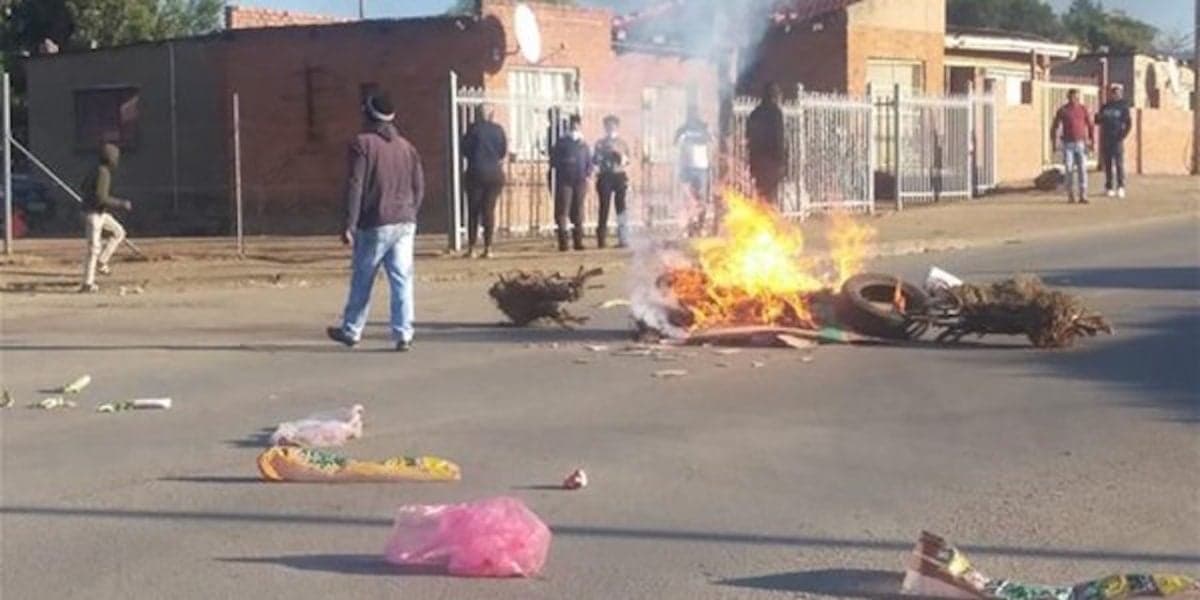
The fight for freedom remains While we live in a different world from the early 90s, one where freedom of access and opportunity are greater, the fight for equality remains. 32 years later, there is tension in the air again. This time, in frustration and impatience with promises unkept. While there are no obvious risks of a civil war, concerningly, civil unrest has grown.
The anger towards the Apartheid government is mirrored in many ways at the party that followed it: the ANC. Once the liberator, decades of corruption, maladministration and failed governance have left the country to rot under their feet. The attitude of enriching today and leaving the problems for those who follow in office has left us in a country where taps run dry, electricity cuts are a way of life, garbage is left on the streets, roads fall apart, sinkholes swallow entire areas, and crime runs rampant.
In rural and semi-rural areas, this has been a lived reality for decades, with the promised relief never arriving. If the ANC is increasingly being seen as a “rural party”, it is doing all it can to make the country rural too. The promises of freedom made Freedom, the freedom that was promised and hoped for in 1994, seems to have been merely a dream.
Nowhere is this more evident than in viewing the promises in the introduction and purpose statement of the constitution. One of the most praised pieces on governance in the world. People of all races were promised they could walk the streets more freely and not fear for their lives amid violence, but spiralling crimes mean that is not true.
In the preamble, they were promised that the quality of life would improve “for all citizens and free the potential of each person,” but failed or absent infrastructure and crippling youth unemployment mean these may never be realised. The first promise was to “heal the divisions of the past and establish a society based on democratic values, social justice and fundamental human rights,” but constant racist and tribalistic comments by politicians and neighbours still allow deep bitterness and bias to grow. “Every citizen is equally protected by law,” was thrown in the dustbin when top leaders failed to account, sold the country to the highest bidder, actively undermined the law and judiciary, and have largely been unpunished or given special treatment.
Where are the strong leaders? What is needed in 2026 is the same as was needed in the early 90s: compromise and co-operation, not egos, malice, racism, and violence. If we are truly going to reverse the slide the country is on, we need strong political will and a Herculean effort.
There needs to be an acknowledgement that mafia bosses rule and are enabled from MP chairs in Parliament and Cabinet seats. That political killings are real and need to be punished. That we can no longer sacrifice the good of the country’s people for mere factionalism and selfish gain.
Sadly, such leaders seem to be in short to no supply. Even those who once promised change have been found to be hiding their cold heart of greed behind overalls or fake smiles of non-racialism. From politician to businessman and neighbour, we will never reach equality if we are obsessed with just pulling ourselves out of poverty and struggle, while leaving the people next to us in the ditch. There is no freedom there, just selfishness that has relegated the long walk to freedom to merely a long weekend of self-indulgence.