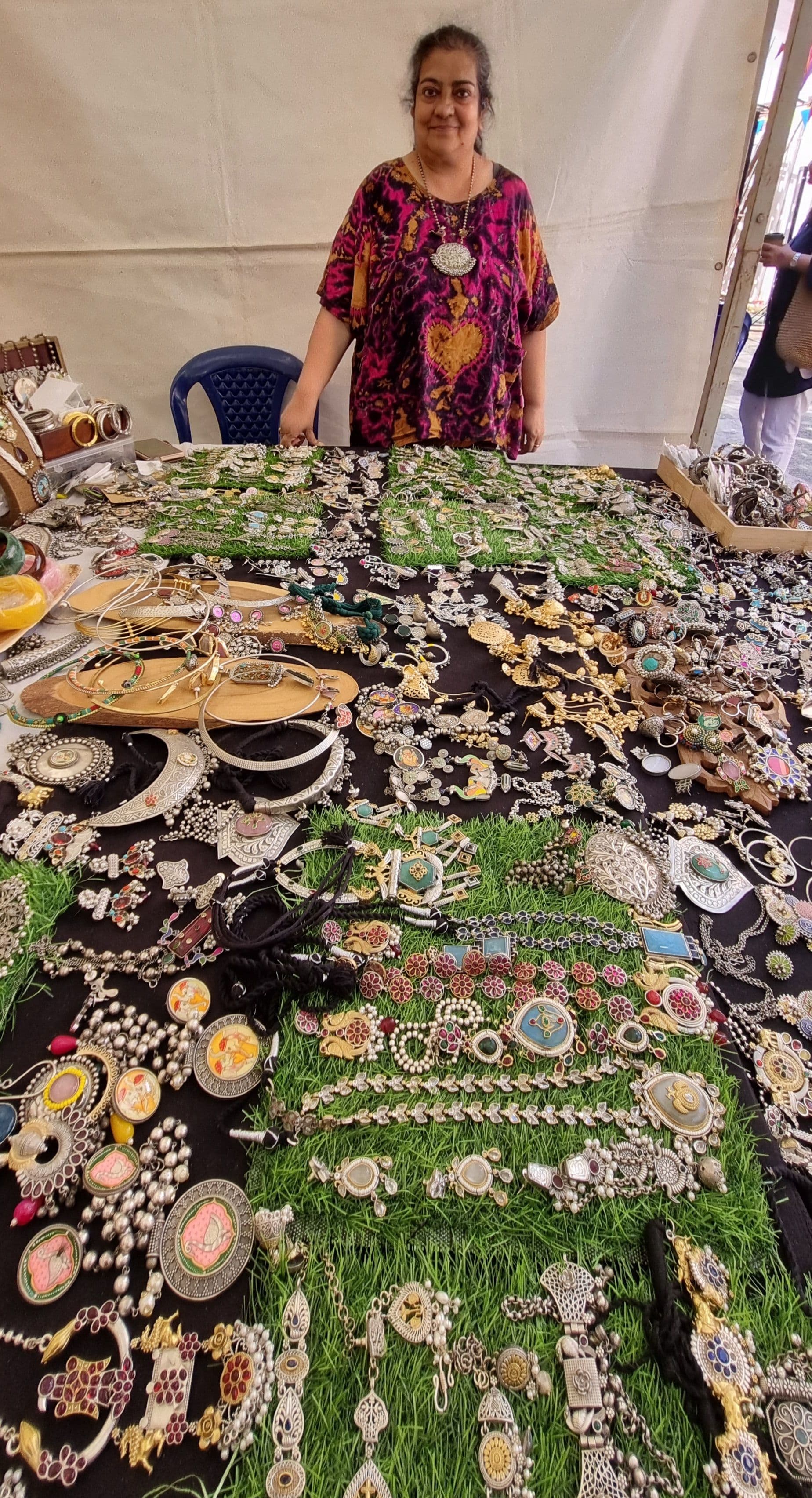
Launched in 2014, PhotoSparks is a weekly feature from YourStory, with photographs that celebrate the spirit of creativity and innovation. In the earlier 980 posts, we featured an art festival, cartoon gallery. world music festival, telecom expo, millets fair, climate change expo, wildlife conference, startup festival, Diwali rangoli, and jazz festival.Launched by sisters Mona and Sonia Dhawan, A Hundred Hands (AHH) is regarded as a pioneer among handmade art collectives. Based in Bengaluru, it has held numerous editions of its events such as The Festival of Handmade, at the campus of NIFT in Bengaluru and other venues.
“We received over 5,000 visitors at our NIFT exhibition, and our exhibitors reported sales volumes of over Rs 3 crore,” AHH co-founder Mona Dhawan tells YourStory. Also ReadYear in Review: The great Indian consumer reset powered by protein, pickleball and micro-dramasThe main feedback received from attendees and exhibitors was to also bring such festivals online. “We got other ideas about the need to show more handmade products in the modern home to remove the perception that they are old fashioned,” she adds.“The younger generation gets it.
We need to be more in line with their wants and needs,” she affirms. Handmade products represent far more than objects for sale—they carry culture, craftsmanship and human connection in a world increasingly shaped by automation and mass production. Every handmade item tells a story: the hands that shaped it, the tradition that inspired it, and the care invested in every detail.
The handmade sectors also encourage entrepreneurship because they require creativity, skill and relatively low startup costs compared with large-scale manufacturing. This allows individuals to build businesses from homes or small studios, generating income and employment. In developing economies especially, handicrafts can become a major source of exports, tourism revenue, and regional development.Consumers who choose handmade Indian products thus end up supporting livelihoods, preserving culture, and encouraging sustainable production.
Every purchase can help keep a tradition alive.There is also a special joy in making something with one’s own hands, especially for hobbyists and budding designers. In a world where many things are bought instantly or produced by machines, creating something personally brings a sense of pride, connection and fulfillment that cannot be easily replaced. Also ReadYear in Review: Top 10 celebrity-backed ventures of 2025Whether it is cooking a meal, painting a wall, planting a garden, knitting a scarf, carving wood, repairing furniture, building a shelf, or crafting a handmade gift, the act of making transforms effort into meaning.
One of the greatest satisfactions of handmade work is seeing an idea become real. There is also joy in learning through mistakes. A crooked cut, broken thread, spilled paint, or uneven finish teaches patience and resilience.
Over time, skills improve, confidence grows, and challenges become opportunities to learn. In India, handmade products are among the most unique and culturally rich creations in the world. They reflect thousands of years of tradition, regional identity, and exceptional craftsmanship passed down through generations.Every region of India offers a distinct artistic language shaped by local history, materials, climate, and customs.
These products are not merely goods—they are living symbols of India’s heritage and diversity, with variations across states.For example, AHH held a curated display of Karnataka weaves and crafts at Windmills. It is gearing up for its main festival later this year in Jayamahal Palace, and has also unveiled its 2026-27 Membership Programme.“It has been a wonderful journey for us over the past 16 years, and the Membership Programme this year is extra special where we are looking at a more engaging association,” Dhawan enthuses.Also ReadBreaking barriers in 2025: Women’s progress at work and what the road ahead demandsThe main aim of AHH is to help those people whose livelihood depends on the products they create by hand.
“We help them learn better, develop their work, and most importantly build their own individual brands, so that they are not at the mercy of the middleman,” she describes.AHH offers programmes in business growth via market access, branding and marketing. Such insights are offered by experts as well as the peer community.“Many crafters work on their own. AHH aims to build a crafters community that supports one another,” Dhawan says.It is important for artisans to realise the value of brand building.
“We guide them on ways to help build their brand, and promote their work across the AHH supporter base,” she adds.Members benefit from regular workshops and knowledge bases for business planning and problem solving. There are opportunities for crafters to sell their work via AHH catalogues and promotions. Members get better rates for exhibitions spaces. The AHH team makes