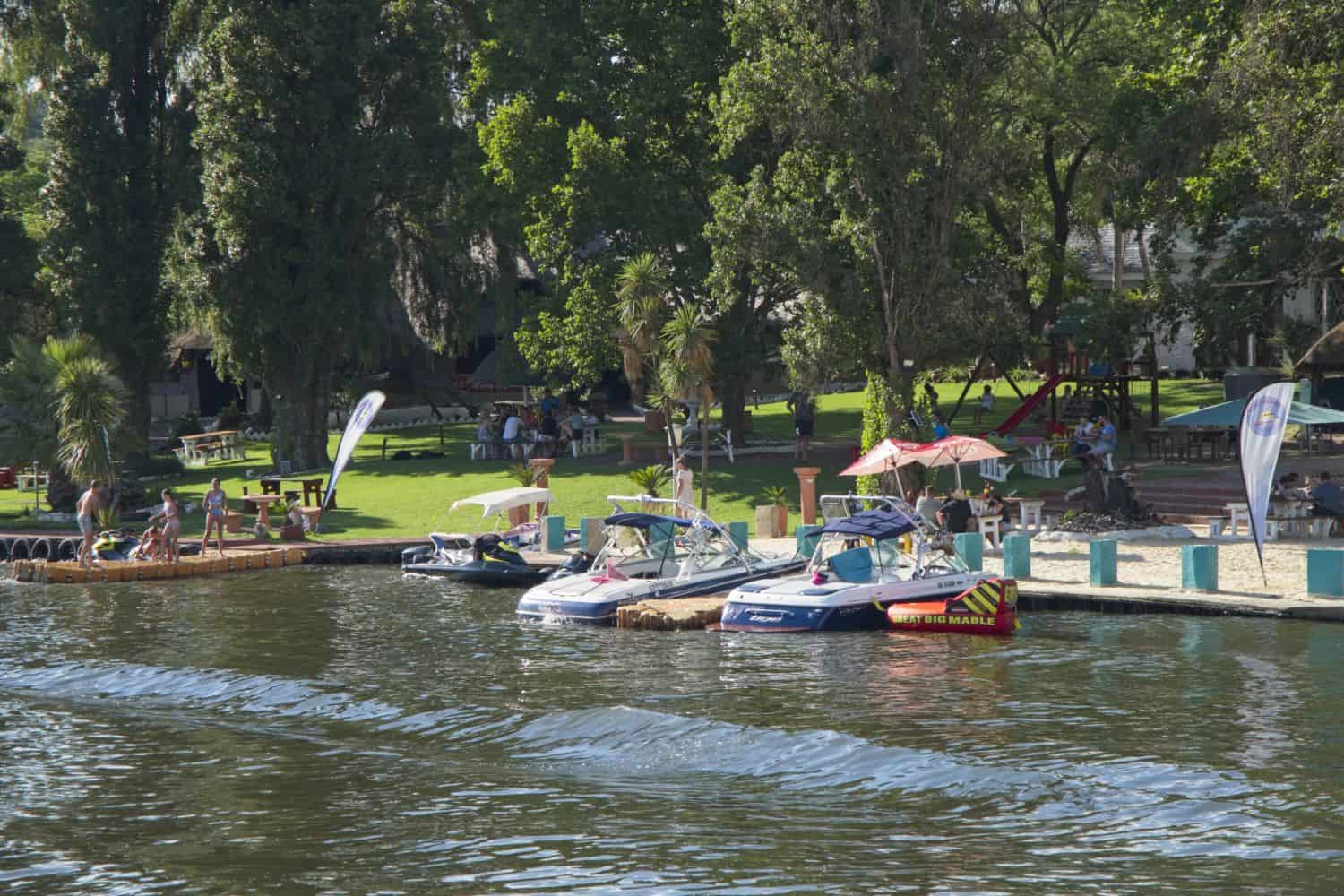
Businesses situated at the water’s edge of South Africa’s more than 320 state dams will be considered “illegal” if recently proposed regulations in terms of the National Water Act are adopted. Dipping a toe in the water or casting a line without prior approval – at the likes of the Vaal Dam, Hartbeespoort Dam, Clanwilliam Dam and Theewaterskloof Dam – could result in a fine or even jail time. Proposed regulations could be disastrous for businesses Minister of Water and Sanitation Pemmy Majodina published the proposed regulations for comment in January.
If adopted, the regulations will drastically limit access to dams owned by the state and could be disastrous for businesses and properties along their shores. “Without the necessary approval, activities such as rowing and fishing, which have taken place legally for decades, will effectively be criminalised,” AfriForum warns in a statement. Anglers, sailing clubs, tourism and accommodation groups are among the stakeholders that have voiced strong opposition, arguing that the minister is overstepping her powers with regulations they say conflict with the National Water Act and even the Constitution.
SA Sailing, which represents sailing clubs across the country, and AfriForum are calling for the regulations to be withdrawn and revised. The deadline for comment has just passed. The ball is now back in the department’s court regarding the way forward.
In addition to restricting access to and recreational activities on the water, the proposed regulations – read together with the department’s Water Resource Management Plans and leasing policy – effectively render all businesses on land bordering the dams illegal. Today’s businesses, tomorrow’s public-private partnerships? If the regulations come into effect, these businesses will be given six months to enter into agreements with the department to “formalise” them.
This includes, among other things, converting the businesses into public-private partnerships (PPPs). PPPs are a specific form of enterprise regulated by National Treasury and can take years to finalise. Examples where they have been used include the development of the Gautrain, private prisons, hospitals and many ventures in national parks.
According to the proposed regulations, owners of land bordering the dams may not even be able to enter the water on their own property, as the department claims ownership of land below the 100-year flood line. This is despite, according to some objectors, it only having rights to servitudes for the storage of water when levels rise that high. Unlawful expropriation?
SA Sailing and AfriForum agree that this amounts to unlawful expropriation. Infrastructure that has been built – such as jetties, slipways, ablution facilities, houses and marinas – will be regarded as illegal and must either be “formalised” or demolished. Furthermore, the department wants to regulate activities on these private properties to such an extent that permission would be required before people can picnic, walk or go birdwatching there.
Land and business owners will be required to enter a lease agreement, an access agreement and a host of other agreements with water authorities before they may grant people access to the water. It is unclear what the costs will be, but transformation is clearly one of the objectives being pursued. SA Sailing strongly objects, saying that what is proposed is not an agreement between two parties.
It is a set of rules and obligations the government wants to impose on those involved – without proper authority. ‘Draconian’ Tshifhiwa Tshivhengwa, CEO of the Tourism Business Council of South Africa (TBCSA), says the regulations will be a death blow to everything happening in and around South Africa’s state dams. “It’s draconian.
You will need a permit for this and a permit for that. Even taking photographs will be subject to state approval!” Tshivhengwa refers to provisions requiring water authorities to grant permission for events on “state land” and on the water, as well as for commercial photography, filming and advertising. Andries Maree, president of the South African Angling & Casting Confederation, says the organisation, which represents anglers nationwide, has a meeting scheduled with department representatives next month to discuss its concerns.
Maree says anglers rely on private landowners to grant them access to the shoreline. “The regulations could impose additional costs on them to give us access and to allow us to use the water resource.” This could discourage shoreline owners and leave anglers high and dry, they fear. Department fails to manage water resources Derek Holmes, a committee member of Save the Vaal Environment, a civil organisation fighting pollution of the Vaal River and surrounding areas, says the department is meddling – through the proposed regulations – in matters that fall under other government departments. He points out that the department itself has failed over the past two decades to pr