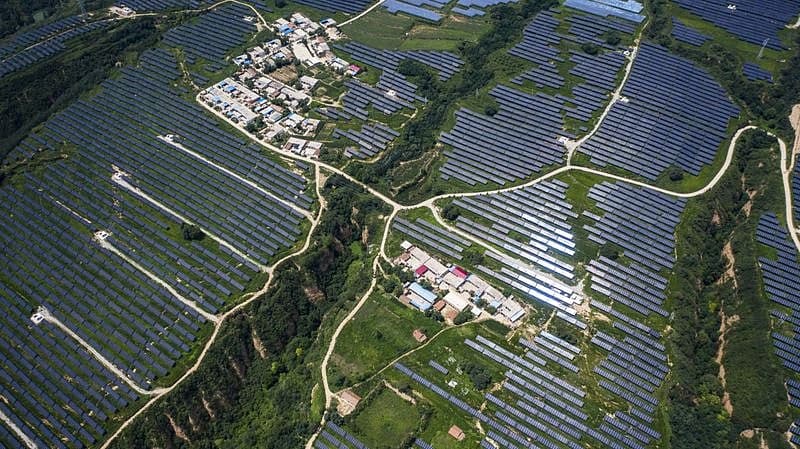
BEIJING: China's total installed power generation capacity reached 3.96 billion kilowatts by the end of March 2026, up 15.5% year on year, the National Energy Administration said.According to Xinhua news agency, solar power continued its rapid expansion, with capacity soaring 31.3% to 1.24 billion kW. Wind power also posted strong growth, rising 22.4 percent to 660 million kW.The country's average utilisation hours of power generation equipment stood at 703 hours in the first quarter, down 66 hours from the same period last year, the administration added.It shows China’s power system not just got bigger, but also greener at the same time.
What the numbers meanThe headline figure is China’s total installed power capacity, which includes coal, gas, hydro, nuclear, solar and wind. At 3.96 billion kilowatts, or roughly 3,960 GW, China’s grid is enormous by global standards and still expanding quickly, up 15.5% year on year.Solar was the biggest driver. Installed solar capacity reached 1.24 billion kilowatts, up 31.3 % from a year earlier, while wind rose 22.4% to 660 million kilowatts.
That means China is not just adding more power, but adding more low-carbon power faster than most other major economies.The lower average utilisation hours, at 703 hours in the first quarter, suggest that equipment is being added faster than it is being fully used. In plain language, China is building capacity ahead of demand, which can reflect grid congestion, curtailment, seasonal swings or the lag between construction and full operation.Industrial policyThis is important because China is using power infrastructure as industrial policy. More generation capacity gives Beijing more room to support factories, electrify transport, run AI infrastructure and reduce vulnerability to fossil-fuel shocks.It also shows why China is often described as having an electricity advantage.
Even when per capita comparisons are adjusted for population, China’s electricity use and capacity growth are still rising much faster than in the U.S. and Europe, where demand has been comparatively flat for years.China vs the US and EuropeChina’s installed capacity is now so large that it dwarfs the U.S. and European systems in sheer scale. A recent comparison noted that China has overtaken the European Union in per-capita electricity use in recent years, while the U.S. still leads on a per-person basis.But China’s growth trend remains far steeper.The key difference is momentum. The US and Europe have mature grids with slower demand growth, while China keeps adding capacity at a pace tied to industrial expansion and electrification.
That means China is building the physical power base for future manufacturing and digital growth much faster than its Western rivals.What it means for energy marketsChina’s rapid solar and wind expansion also changes the global energy picture. Bloomberg and Reuters reporting this year showed China’s clean-power capacity has already surpassed fossil-fuel capacity, a milestone that underscores how quickly the system is shifting even while coal remains important.For markets, the lesson is that China is trying to be both the world’s biggest manufacturing power and one of its fastest-growing clean-energy builders. That combination gives it more resilience against imported fuel shocks and more flexibility to support energy-intensive sectors such as AI, semiconductors and advanced manufacturing.Africa’s solar explosion: 10 countries smashing recordsUK targets 10GW solar-wind buildout on public land — what it meansBattery boom is here: How energy storage solves biggest knock against solar, windGlobal solar power tops 2,000 TWh (terawatt-hours), equal to entire annual electricity demand of India