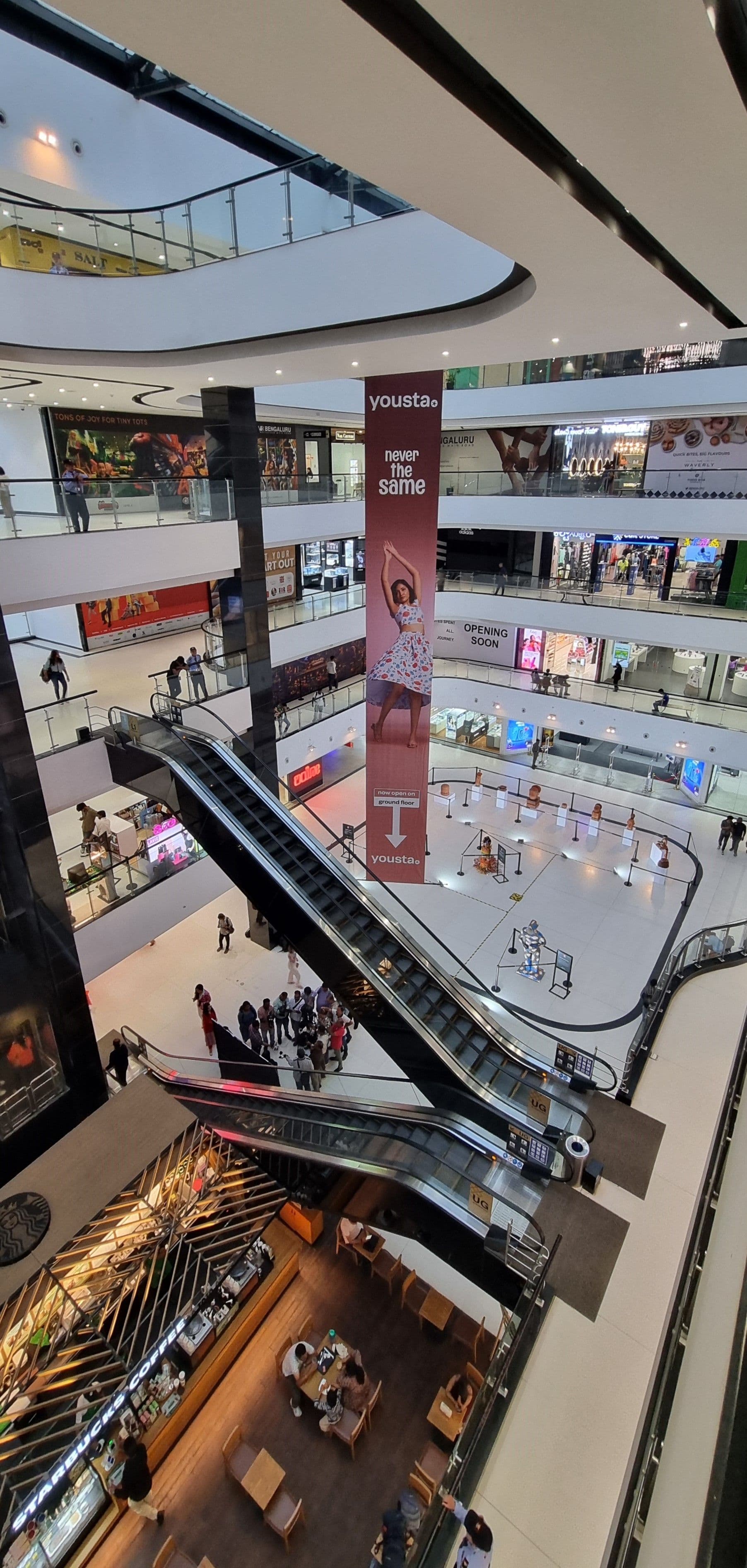
Launched in 2014, PhotoSparks is a weekly feature from YourStory, with photographs that celebrate the spirit of creativity and innovation. In the earlier 980 posts, we featured an art festival, cartoon gallery. world music festival, telecom expo, millets fair, climate change expo, wildlife conference, startup festival, Diwali rangoli, and jazz festival.The Whitefield Art Collective (WAC) wrapped up the ninth edition of its visual and performing arts festival at VR Bengaluru this month (see our coverage of earlier editions here). The festival kicked off with a live musical performance by Grammy Award-winner Ricky Kej and ensemble, and featured a range of installations, photographs and interactive art.There was also a fashion showcase celebrating sustainable designs and practices.
Titled A Rose for Khadi, it was conceived by designer-curator Rajini Rekha (see our photo essay on her Reves Art Gallery here).Also Read2026 Outlook: AI, robotics, biotech, unicorns and the road ahead“A Rose for Khadi is not merely a collection. It is a quiet movement, an ode to India’s most enduring textile, reimagined through a lens of contemporary expression,” Rajini Rekha tells YourStory.The collection is rooted in the philosophy of mindful creation. “It celebrates Khadi as a living heritage – organic, resilient and deeply human,” she adds.“The rose emerges as a central metaphor, soft yet strong, delicate yet enduring.
Much like Khadi itself, it represents quiet power. It is not ornamental, but philosophical,” she describes.The show was intended to redefine the perception of Khadi. “Khadi is sharp, contemporary and undeniably relevant,” Rekha affirms.“We showed Khadi drapes reimagined with a modern, sculpted edge.
The audience response was not just appreciation, but awe and captivation,” she enthuses.Each of her showcases has raised expectations. “Pushing that bar, again and again, is both a challenge and a quiet pleasure. This journey wasn’t just presented, it was lived,” she says.Also ReadYear in review: startups that raised big from VCs in 2025“Many Bangaloreans are already familiar with my art-led concepts at Reves Art Gallery.
Now, merging art with sustainable fashion has opened a more expansive dialogue that allows engagement across mediums – visual and wearable,” Rekha explains.Wider and more diverse audiences have been reached. “Storytelling, sustainability and structure have come together with intent – leading to a stronger, more defined voice,” she says, with pride.She studied at National Institute of Fashion Technology and then worked in the corporate world with Tommy Hilfiger. “That experience refined my understanding of garment construction, textile design, and fabric development.
Working within the B2B space brought a different rigor altogether, navigating scale, precision and the complexities of bulk production,” Rekha explains.The festival in Whitefield also featured exhibits influenced by technology, and performances showcasing AI imagery. “Technological shifts, including the emergence of AI, are part of the broader evolution of creative practice,” WAC curator Sumi Gupta explains.“Throughout history, artists have adapted to new tools and mediums, from photography and film to digital design. AI represents another moment of transition within that continuum.
Rather than approaching AI solely as a challenge, it is also viewed as a new creative medium and catalyst for experimentation,” she describes.For artists, digital media, tools and platforms have opened up possibilities to expand the boundaries of storytelling, visual expression, and interactive experiences. “For art educators, they offer opportunities for interdisciplinary learning, where traditional art practices intersect with digital tools, design thinking, and technological literacy,” Gupta adds.Also ReadHow IIT Madras Incubation Cell is powering India’s next-gen deeptech startups“At the same time, the most important aspects of artistic practice, be it human imagination, critical thought, and emotional expression, all remain irreplaceable.
The conversation around AI therefore is less about replacing artists and more about how artists can engage with emerging technologies in thoughtful and responsible ways while preserving the essence of human creativity,” she affirms.The overall message to audiences at WAC is to approach such festivals with curiosity and openness. “WAC 2026 was designed as an experience where art unfolded across familiar public spaces, inviting visitors to encounter creativity in unexpected ways,” she says.“Through installations, photography, painting, performance, music, and interdisciplinary works spread across the venue, visitors were encouraged to slow down and engage with the ideas behind the artworks. The theme – Tomorrow, Altered! – asked viewers to reflect on how environmental, technological and social changes are already shaping the present and influencing the future,” Gupta describes.Over the years, WAC has become a highly-anticip