Elisabeth Braw is a senior fellow at the Atlantic Council, author of the award-winning “Goodbye Globalization” and a regular columnist for POLITICO. Her new book, “The Undersea War,” is out later this year. Oil!
Oil! Oil! Since Feb. 28, the world has been able to focus on little else. Iran’s closure of the Strait of Hormuz in response to the U.S. and Israel’s war has fueled an oil shortage, replete with sky-high energy prices and temporary factory closures.
Such is the scope of the misery that oil prices sank dramatically last week when U.S. President Donald Trump posted: “IRAN HAS JUST ANNOUNCED THAT THE STRAIT OF IRAN [sic] IS FULLY OPEN AND READY FOR FULL PASSAGE. THANK YOU!” But the reprieve was short-lived.
Nearly two months into the crisis, the troubles for Gulf oil and gas exports are far from over. And the world is so dependent on fossil fuels that these problems will continue to deepen and create economic shock waves whenever tensions flare up again in the Middle East — and they will. In Europe, this makes it a good moment to think of waters quite unlike the Strait of Hormuz: dams and reservoirs.
Indeed, they may be the future of European energy security — or at least part of it. Dams have controlled river waters for decades, generations even. The larger ones also produce energy and feed water into reservoirs.
Now dams and their adjacent reservoirs can take on an additional role helping Europe become more energy independent. Let’s consider, for example, Norway’s reservoirs: Though one may think of Norwegian energy as mostly oil and gas, the Scandinavian country is also Europe’s leading producer of hydro power, with 88 percent of the electricity used in the nation itself coming from hydro power. (Another 10 percent comes from wind power.) Sweden, too, produces great amounts of hydro power. Vattenfall, the government-owned hydro-power giant, owns some 100 hydro power plants, and the country has other operators too. (Vattenfall, incidentally, means waterfall.) France, Italy and Germany produce a lot of hydro power as well.
But if hydro power is to become a viable alternative to fossil fuels more broadly, we will need hydroelectric reservoirs that can store the energy they generate, just like traditional reservoirs store water. Renewable energy has traditionally been harder to store than oil, which can be put into a container of any size. Hydroelectric reservoirs work like this: Whenever energy is needed, the reservoir releases water that then travels through turbines to create electricity.
Norway specializes not just in hydro power but also in such hydroelectric reservoirs. In fact, they account for about half of Europe’s hydroelectric storage capacity. The river Otra and its waterways support 14 reservoirs, primarily in the municipality of Bykle; the energy held by them alone is the equivalent of 20 million Tesla batteries.
Spain has a similarly massive reservoir as well. Such capabilities are vital. In 2023 — the latest figures available — 49 percent of oil imports from outside the EU came from the U.S., Norway, Saudi Arabia, Kazakhstan and the U.K., while 71 percent of natural gas from outside the EU came from Norway, the U.S., Algeria and Russia.
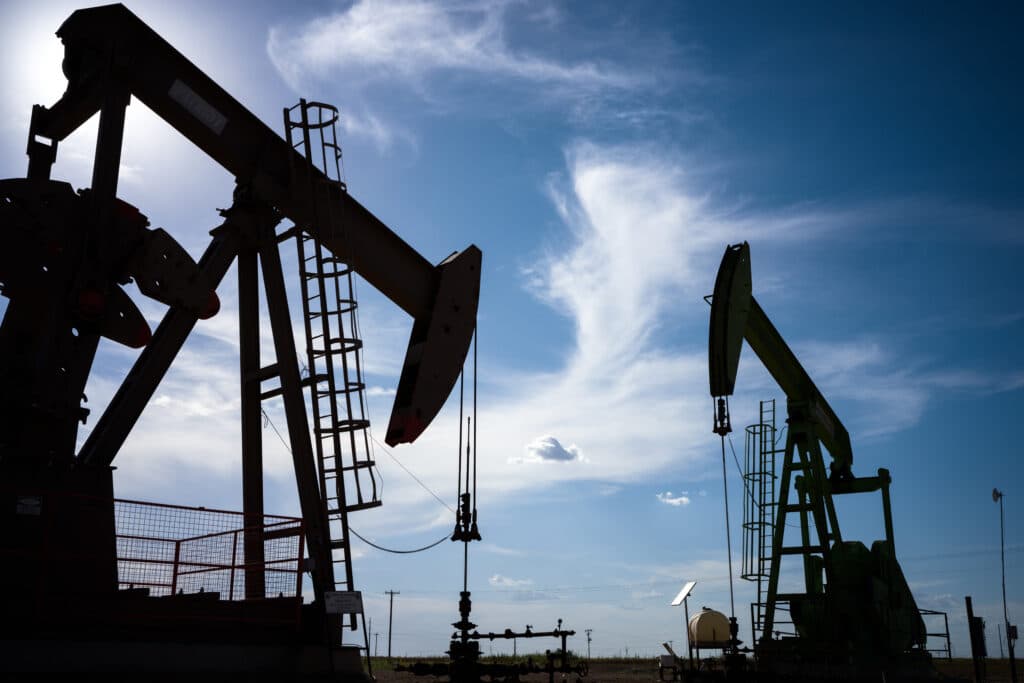
Most of the oil and gas imported by the U.K. last year came from Norway, the U.S. and Qatar. Oil pump jacks are pictured in Stanton, Texas on June 27, 2024. | Brandon Bell/Getty Images A decade ago, or even five years ago, the source of energy imports didn’t matter much. But with globalization stumbling, Trump irate with Europe and the conflicts affecting Gulf oil suddenly very real, reservoirs truly matter for Europe’s energy security.
Indeed, recently Europe has seen an impressive expansion of renewable energy: Last year, the continent installed 16.4 gigawatts of new wind capacity — the equivalent of being able to heat 12 million homes — and the expansion of solar power was even bigger, with 65.6 gigawatts in new capacity installed last year. Now hydro power, which has been around in Europe for much longer than solar or wind, is expanding too. While wind accounted for 39.1 percent of the renewable electricity generated in the EU last year, hydro followed not far behind at 29.9 percent and solar at 22.4 percent, according to Eurostat.
That means nearly half of the electricity generated in the EU came from renewable sources last year. That, in and of itself, is a remarkable achievement. Now imagine if our continent could also expand its renewable-energy storage.
This would allow Europe to speed ahead with the green transformation and lessen its dependence on fossil-fuel imports. We may soon see this solution in action in southern Norway, which is home to the country’s largest reservoirs: Å Energi, a municipality-owned hydro-power company that operates Bykle and others, is looking to pursue this path by using surplus power to pump water back into reservoirs that are high up in the mountains when electricity prices are low — say, when it’s windy in the Nort