Yesterday morning, with White House officials set to depart for Pakistan for further peace talks with Iran and a two-week ceasefire on the verge of expiring, Donald Trump issued one of his now-standard threats: “I expect to be bombing” Iran within a few days, he told CNBC’s Squawk Box, “because I think that’s a better attitude to go in with.”Iran, however, seems to be putting less and less stock in such threats—and it’s hard to argue they’re wrong to do so. Yesterday afternoon, Trump suddenly announced he was unilaterally extending the ceasefire despite a lack of diplomatic engagement from Iran “until such time as their proposal is submitted, and discussions are concluded, one way or the other.”Iran’s response, per an adviser to Iranian Speaker Mohammad Ghalibaf: “The extension of the cease-fire by Donald Trump has no meaning.” Overnight, Iran said it seized two ships that were attempting to transit the Strait of Hormuz.
Who’s in charge around here again?Programing note: For this week’s episode of Command Post, Mark Hertling and Ben Parker will be going live on Substack and YouTube at 10:30 a.m. EDT. Happy Wednesday.Photo illustration by The Bulwark/Photos ShutterstockTwo Cheers for Gerrymandering (For Now)by William KristolThe Muse of History can be capricious.
We don’t remember Elbridge Thomas Gerry (1744–1814) of Massachusetts as an important early supporter of the American Revolution. We don’t recall that he served in the Second Continental Congress, where he was not only a signer of the Declaration of Independence but a leading advocate of it. We don’t know that a decade later Gerry was elected to the first House of Representatives, where he was involved in the passage of the Bill of Rights.We remember his name—alas!—only because later on, as governor of Massachusetts, he presided over a highly partisan redistricting by the state legislature.
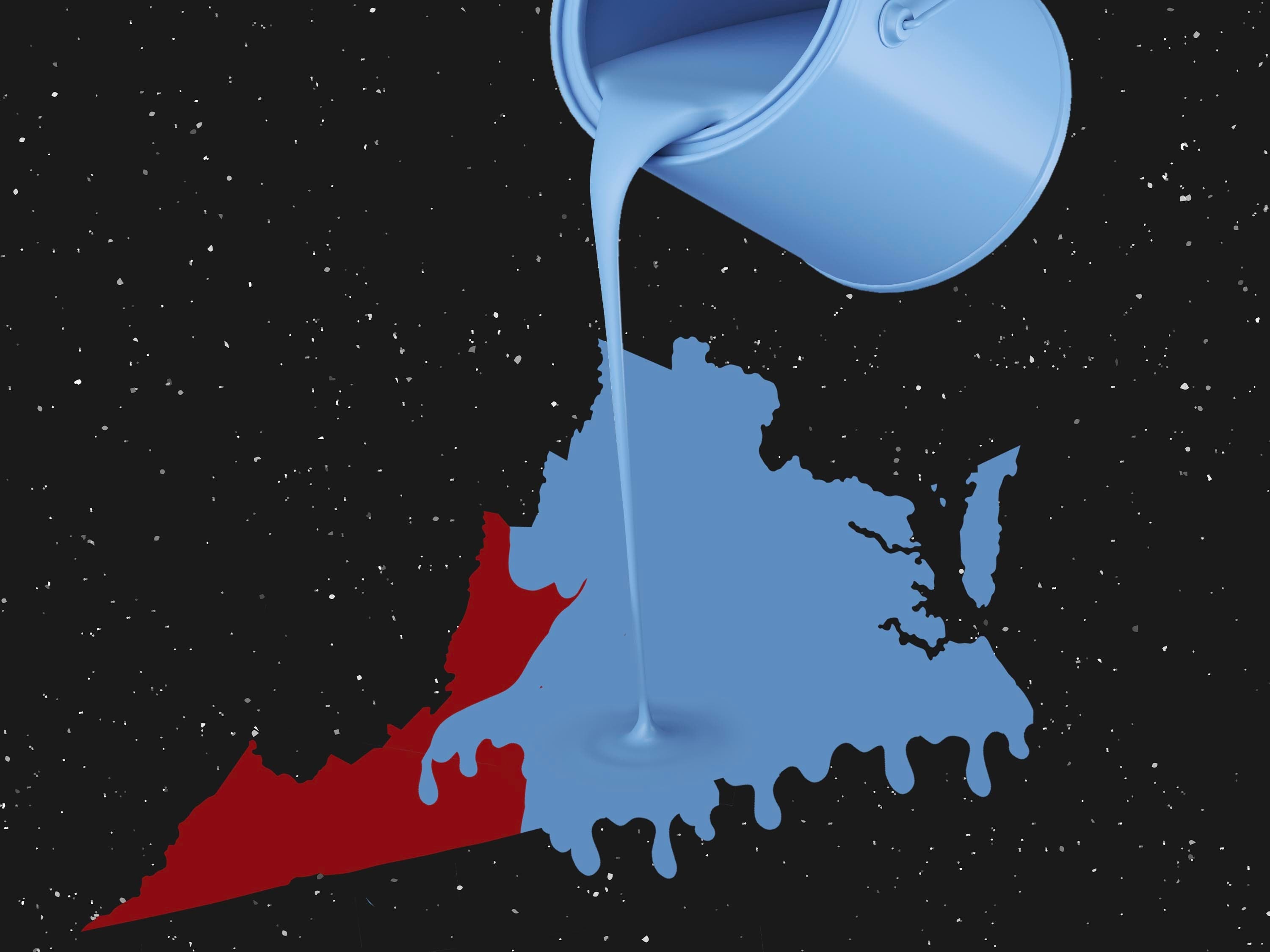
A local newspaper compared the shape of one of the new state senate districts to a salamander, coining the term “Gerry-mander.” And so we have memorialized this impressive Founder with the term “gerrymandering.”When the history of the democratic resistance to Trumpism of 2026 is written, yesterday’s vote in Virginia will be called a ratification of gerrymandering. And not unfairly. The new maps approved by the voters have some salamander-like qualities in pursuit of a likely gain of four Democratic seats and a 10–1 Democratic congressional delegation for the state.But just as Gerry’s redistricting deserves to be remembered as only one act in an impressive political career, so yesterday’s vote was merely one act in a broader patriotic effort.
The Trump administration started the mid-cycle redistricting wars in the summer of 2025. Over the next several months Republican legislatures in Texas, Ohio, North Carolina, and Missouri (themselves gerrymandered to ensure lopsided Republican majorities) passed new maps to produce increased Republican representation from their states in Congress.Would Democrats and anti-Trumpists respond only by hand-wringing and eloquent op-eds decrying the unfairness? No.
California acted first, with a voter-approved congressional redistricting in November 2025. And last night, Virginia voters approved a constitutional amendment allowing the state legislature to temporarily reshape the commonwealth’s congressional districts, which had been drawn by a non-partisan redistricting process in 2021. Maps drawn by a bi-partisan commission will return after 2030.Last night’s vote was close, with about a 3-point margin in favor of the referendum.
It wasn’t an easy sell. Virginia voters had approved the nonpartisan redistricting process in 2020 by a two-to-one vote, and there was unhappiness among even Democrats and anti-Trumpists at having to resort to this unattractive counter-measure here to what Republicans had done elsewhere. There were also voters in central Virginia unhappy at being stuffed into districts that would be dominated by Northern Virginians, and likely represented by someone from Northern Virginia.
And the anti-referendum campaign was sophisticated, making what appeared to be a case for good government, not for Donald Trump.Still, the referendum passed. And so the bottom line is this: Democrats and liberals have likely wrestled Republicans and Trumpists to a draw—possibly even to slightly better than a draw—in the great redistricting war.When things look dark, it’s important to have a community from which to draw strength. And when things look hopeful, it’s good to have a community to hope with.
That’s why the Bulwark community exists. Join us.It’s an impressive achievement. Democrats are often thought to be hapless competitors in rough-and-tumble politics.
Liberals are often thought to be unwilling or unable, in Robert Frost’s memorable formulation, to take their own side in a fight. But Democrats held their own in this contest of political hardball, liberals stepped up and fought back in this bare-knuckle political struggle.I’d add