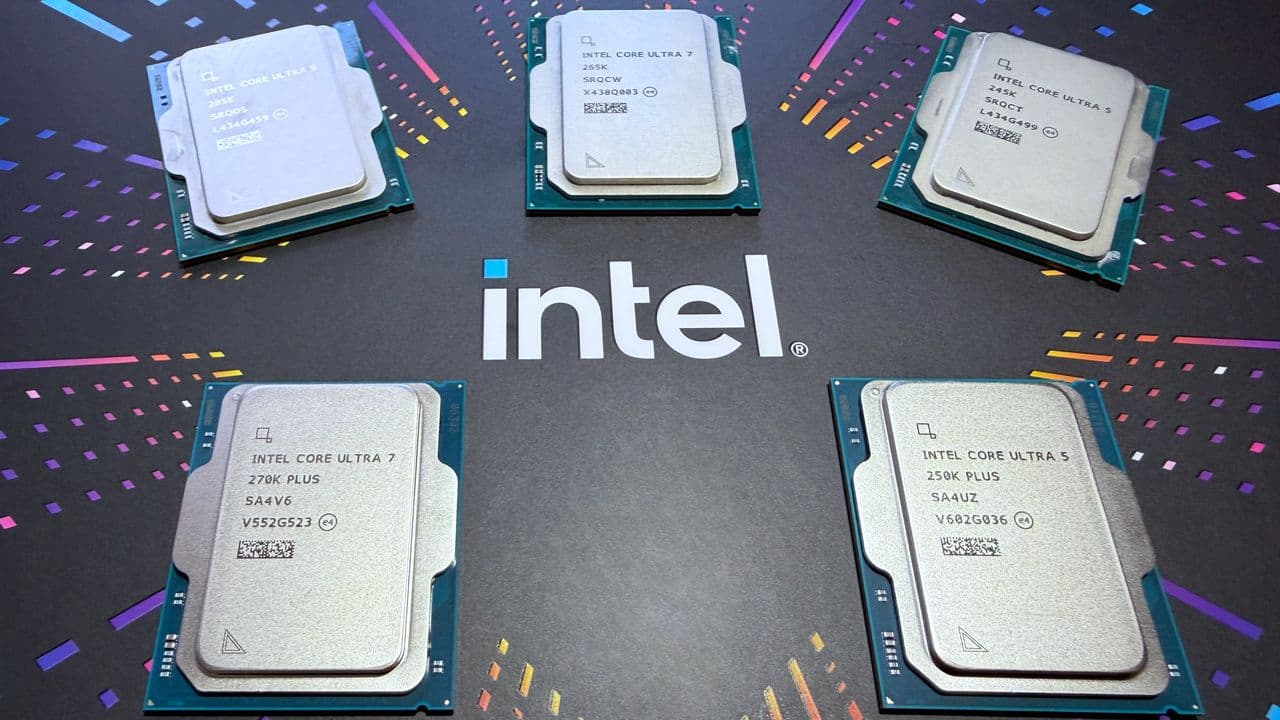
Intel's Enthusiast Channel VP and GM Robert Hallock has told PC Games Hardware that we shouldn't underestimate the impact software improvements could have on gaming performance. In other words, that perhaps our focus as gamers shouldn't be so laser-focused on hardware:"I truly believe that the general PC gaming market and especially enthusiasts... are significantly underestimating the importance of software to the PC experience, like really, really seriously.""There is no game on earth that is as fast as it's going to be purely through hardware. That doesn't exist anymore.
That used to be the case in 2010, 2015. That is not how gaming works anymore." He doesn't deny that hardware is an important factor, but wants to remind us that it's not the only one:"Yes, you can make the game faster with a faster piece of hardware, but there's always going to be 10, 20, 30% performance hidden behind the fact that that game was just not optimized for your CPU."In one sense, this shouldn't come as a surprise, because in pretty much any CPU review we've done we see that some games perform better on AMD chips and some on Intel ones.
Often, game devs will simply optimise their games for whichever CPUs they can spend the most time testing them on. (Image credit: Intel Corporation)While the 10–30% figure is referring to game optimisations and, more specifically, console ports, games are only one part of the software picture. Apparently Hallock also couched some of the discussion in terms of things like CPU scheduling, which is an operating system task that helps direct the right processes to the right CPU cores and threads. Scheduling and similar fine grain CPU management has been incredibly important for Intel most especially since the company decided to split its cores into P-cores and E-cores (and, more recently, LPE-cores).
And while the company got rid of Hyper-Threading for a while, multithreading should be back in future, given CEO Lip-Bu Tan admitted. "Moving away from SMT put us at a competitive disadvantage." Which means optimised CPU scheduling will become even more important.
Given all this, Hallock claims that gamers asking for Intel to focus less on software and more on hardware is sort of like saying "hey, just leave 20% performance behind."When thinking about software and hardware improvements, though, I can't help but think we should be echoing Tulio and Miguel on their Road to El Dorado: Both. Both is good.