An imminent explosion in the number of historic vehicles in the UK combined with a ‘dramatic’ fall in classic car values have been highlighted as two huge factors in increasing the accessibility and affordability of the hobby, bringing in new blood and providing a superb platform for securing its future for generations to come. The revelations were put to a record turn-out of 150 delegates attending the Historic & Classic Vehicle Alliance’s sixth Heritage Matters conference at Brooklands Museum yesterday (23 April), including a welter of industry big hitters. With a title of Diversifying for Success, a youthful theme ran throughout the event and there was a gratifying number of younger people present, though there were plentiful warnings that the industry needs to work desperately hard to attract and involve younger people if it wants to remain the £18billion economic behemoth that it is currently.
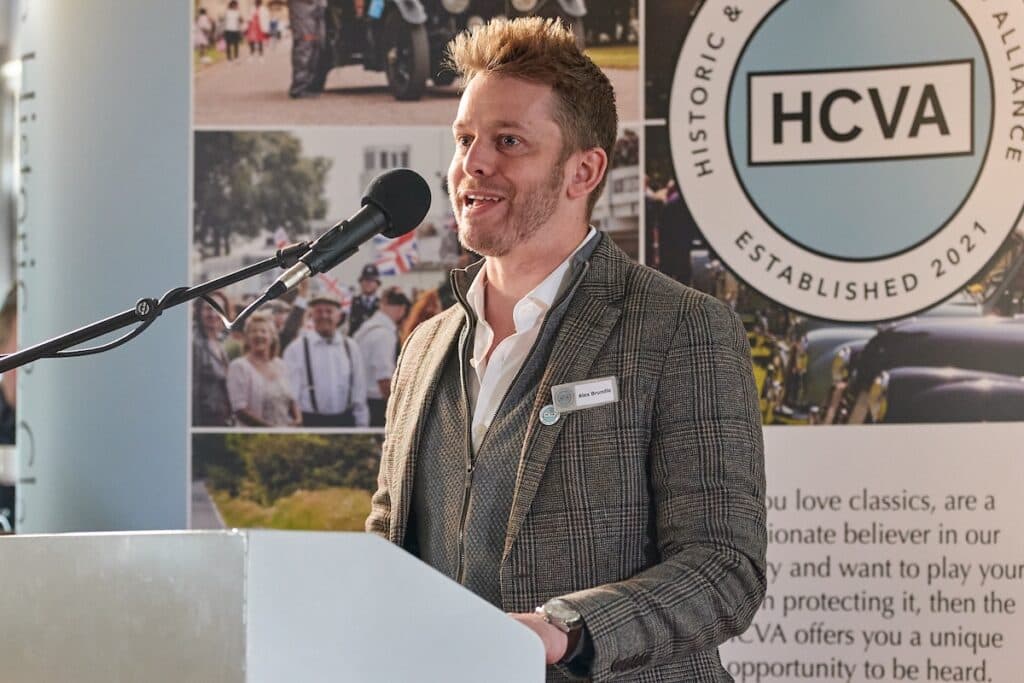
Even keynote speaker Alex Brundle, who came on after an introduction from HCVA chairman Mark Roper and CEO Dale Keller, made an impassioned plea for businesses, race teams and others to give millennials a way in and he pledged that they would reap the rewards. The proud owner of a 1965 Mini said: ‘I believe in absolutely everything that this organisation stands for. Millennials are struggling with a crisis of ownership: their car is leased, their music is streamed, they live their life on a subscription model.
Social media is intolerant and jealous, but is the only piece of real estate that they own so answer that content creator or intern, listen to what they want and help them onto the fist rung on the ladder – the young people need you and we need young people in our industry. Classic cars to save the world seems a slightly grandiose statement, but they might save someone and that’s enough isn’t it?’ The first panel discussion was called Diversifying for Success: Adapting Business to a Changing Market and featured P&A Wood’s Georgina Wood, Julian Barratt of SNG Barratt (now incorporating Rimmer Brothers, Moss and Holden Vintage & Classic), James Mitchell of Pendine Historic Cars and Mike Harding (Harding Autos).
This too quickly veered into how to more actively engage a greater proportion of younger generations into the classic car industry and hobby, focusing on the decade old shift to modern classics, the rise of social media and the docile market, all of which were welcomed as positives for the future. James Mitchell in particular bucked the usual trends by welcoming the market downturn for making a lot more cars affordable to younger people and broadening the ownership base. ‘The value of a lot of stuff has dropped quite dramatically and we have to own that,’ he said.
‘It’s the healthiest thing that could possibly happen to the market in terms of accessibility.’ He also highlighted that youngsters selling off inherited car collections isn’t necessarily a bad thing because it takes away the ‘singularity’ or ownership within a family. The huge value of apprenticeship schemes and the impact they are already having was highlighted by Georgina Wood. After an informative presentation on business rates by Bradley Westlake of RCK Partners, the DVLA’s corporate services manager Dudley Ashford made a brief appearance and reassured delegates that the DVLA holds regular Historic Vehicle User Group meetings and that ‘we really are listening an pushing to try and deliver the improvements in the services that you desire’.
Possibly the most eye-opening statistics of the event came in compere Wayne Scott’s next presentation on the overall number of historic vehicles in the UK which show that, if the 40-year eligibility criterion remains unchanged, a decade-long explosion in historic vehicles is already underway as the far more plentiful 1980s and 1990s classics come on-line. There are more than a million cars registered in the UK from each of those decades, each total more than double the most prolific previous decade. Interestingly, a far greater proposition of 1980s and ’90s cars are already on SORN than older classics with two thirds laid up compared to less than 50% for previous decades.
Although the scale of the influx is unprecedented, the reason is simple, the boom and advancement in motor manufacture. As Wayne Scott pointed out, in the 1950s 10.6m cars were built globally, but by the 1980s that figure had ballooned to 38.6m and, due to more advanced manufacturing and lower attrition a far greater proportion those cars survive. With those cars now coming on stream it is creating a far greater and more diverse national stock of historic cars.
Heritage Skills Academy mastermind John Pitchforth, Stater Motor boss Steve Cootes and Dale Keller then briefed the meeting on the measures being taken to expose youngsters to historic cars, Steve Cootes likening it to ‘panning for gold’ and said that in any given school year group there are 3-5% who ‘have that spark and interest’. He added: ‘The future of this sector is