PETALING JAYA, April 25 — Malaysian actress, television host and wellness entrepreneur Sarah Lian was in her late 30s and still single when she started to think about fertility preservation treatments such as egg freezing.“Like many women today, I didn’t prioritise fertility in my 20s… it is not something you think about at that age. But when you start to feel the window slowly closing, it becomes very real.“I thought, you know what, I’m going to give myself an opportunity so that if and when I meet someone, the possibility of parenthood can still be a reality,” she said during a panel discussion on ‘GenPrime Everlink and The NextGen Journey’ recently, organised by GenPrime Everlink Fertility Centre in conjunction with the launch of its rebranding.
Now in her early 40s and happily married to a film producer, Lian is currently navigating the realities of in vitro fertilisation (IVF), a journey she describes as emotional, uncertain and deeply personal. “IVF is much more than procedures and outcomes. It is uncharted territory and very scary,” she admits.There are moments of hope, but also uncertainty.
Not every embryo develops, not every pregnancy lasts, and not every journey ends the way patients hope.Lian describes her own IVF experience as isolating at times until she realised she was not alone.“I’ve had women reach out to me saying, ‘We’ve seen you at the (fertility) clinic. We’re going through the same thing.’ I found comfort and a sense of community in those connections,” she says. One thing Lian appreciates about her IVF experience is the approach taken by her doctor and care team, who explored different options with her, not just rushing into cycles.
Along the way, she also gained a new appreciation for Malaysia’s capabilities as an attractive destination for fertility treatment, which she is now actively sharing with friends overseas. “I always encourage my friends to seek fertility treatment in Malaysia because we have excellent facilities and treatments, and at affordable prices too,” she adds. Fertility treatment in Malaysia Generally, infertility is defined as the inability to conceive despite 12 months of regular, unprotected sex.
The World Health Organisation estimates that one in six people will experience infertility in their lifetime. Today, fertility centres offer various options for couples struggling to conceive, including IVF, gamete intrafallopian transfer (GIFT), intrauterine insemination (IUI) and intracytoplasmic sperm injection (ICSI).Procedures like ‘egg freezing’ also enable women to preserve their fertility as their ability to conceive significantly declines with age, while techniques like preimplantation genetic testing ensure better chances of a successful pregnancy in women undergoing fertility treatment.Fertility awareness in Malaysia is undergoing a noticeable shift driven by changing lifestyles, delayed marriages and evolving career priorities as more individuals and couples begin to take proactive steps towards understanding their reproductive health.Some fertility centres in this country boast pregnancy rates of close to 80 percent and this is drawing even foreigners to our shores to seek fertility treatments.In fact, Malaysia has become a top destination in the region for couples seeking fertility treatments due in part to these high success rates and the cost, which foreigners find far more affordable than in their home countries.GenPrime Everlink Fertility Centre medical director Dr Mathi Arasu said Malaysia is considered a regional hub for many seeking IVF and other fertility treatments.“I can confidently say that Malaysia is on a par with, if not better than, most top IVF clinics in Europe and other parts of the world.“From integrated lab services to cross-border clinical networks, Malaysia is increasingly positioning itself as a competitive player in fertility treatment,” he said, adding that about 40 percent of the centre’s patients are international.
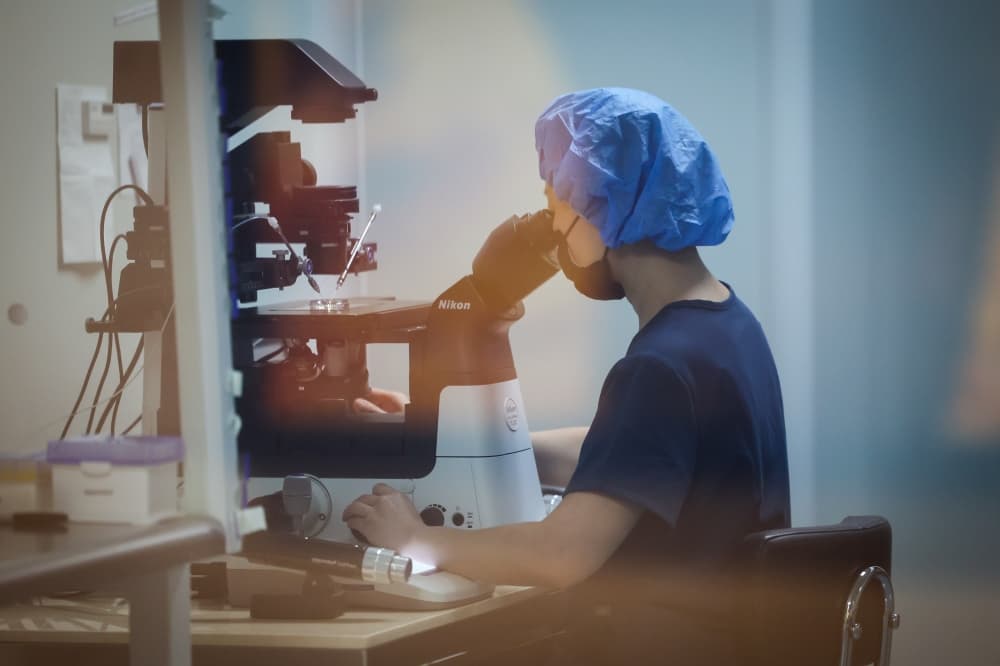
Advanced technology On the success of fertility treatments, Dr Mathi said it is primarily based on the woman’s age, followed by sperm quality and uterine condition. He said eggs, uterus and sperm are the three fundamental factors that determine the likelihood of successful implantation and pregnancy.“Technological advancements serve as adjuncts (not replacements) to these three factors, helping to improve success rates. “These include AI-assisted selection of sperm, eggs and embryos; genetic testing for chromosomal and genetic abnormalities; and emerging techniques aimed at improving egg quality through stem cells, scientific interventions and rejuvenation technologies that are available here in Malaysia,” he said.
He added that the use of these technologies and newer interventions can increase success rates to approximately 70 to 80 percent, compared to 40 to 60 percent without them, although this does not apply to all cases. Dr Mathi also noted that one of the biggest misconceptions about fertility is that it is main