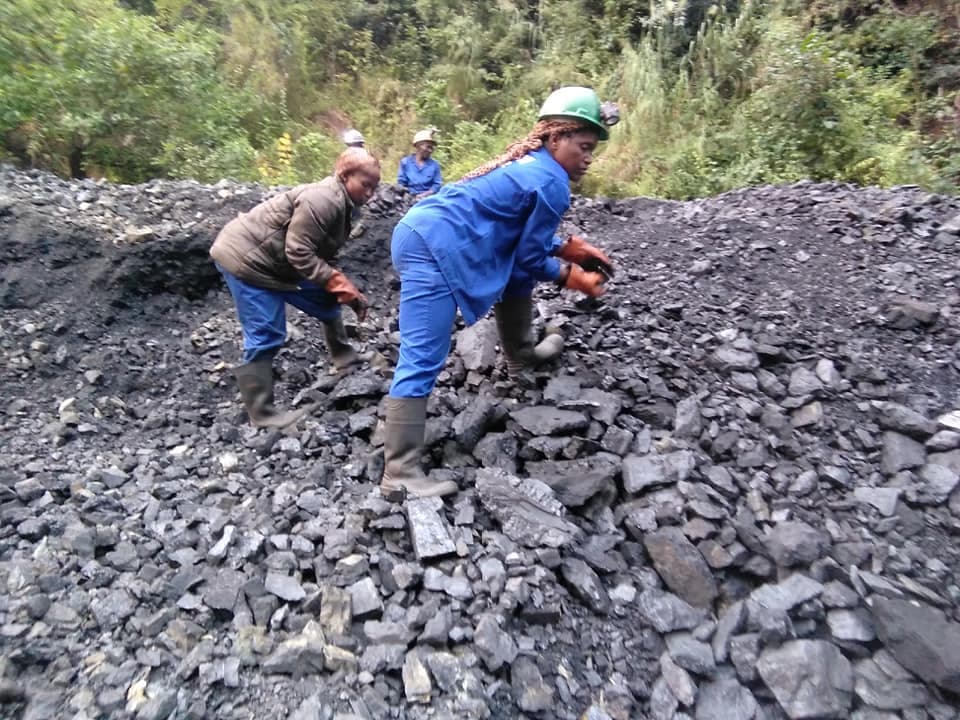
Multilateral development banks (MDBs) say resource-rich developing countries, including Malawi, are not benefiting fully from their critical minerals because value chains remain weak, fragmented and heavily focused on raw extraction. The MDBs include African Development Bank Group, World Bank Group, Asian Development Bank (ADB), European Investment Bank, Inter-American Development Bank Group and European Bank for Reconstruction and Development. Mining coal at Mchenga Coal Mine in Rumphi In a joint statement, the banks argue that many countries remain stuck at the extraction stage, with limited processing and manufacturing capacity, meaning much of the value is captured outside their economies.
The MDBs have since warned that without coordinated intervention, developing countries risk remaining suppliers of raw materials while missing opportunities to develop processing industries, manufacturing hubs and higher-skilled jobs. In a statement, heads of MDBs chairperson and ADB president Masato Kanda said too often, mineral-rich developing countries simply export raw ore, while missing opportunities for value addition, skilled employment, and broad industrial growth. He said: “We must move beyond extraction.
Under the Heads of MDBs Working Group, we are developing a Joint Collaboration Framework to be completed by late 2026. We are embedding shared standards and deepening coordination to deliver tangible lighthouse projects. “The MDB system stands ready to deploy capital and mitigate risk today.
Let us act together to build this resilient future.” The global shift towards renewable energy and electrification has led to a surge in demand for minerals such as graphite, titanium, uranium, and rare earth elements, all of which are found in abundance in Malawi. Despite the government’s continued efforts, the mining and quarrying sector is still nascent, representing just 0.7 percent of GDP in 2023. Currently, Malawi’s mines produce small quantities of coal, limestone for cement manufacturing, iron ore, rock aggregates, dimension stone, precious metals, gemstones, and semi-precious stones.
In October last year, Mutharika issued an Executive Order prohibiting the export of raw and unprocessed minerals from Malawi to ensure that the country’s mineral resources contribute meaningfully to national economic development through local processing and job creation. Effectively, the exports of all raw minerals, including uranium, rare earth elements, niobium, graphite, tantalum, bauxite, coal, limestone, gemstones, heavy mineral sands, vermiculite, phosphate, pyrite-rutile, gold, diamonds and copper were banned. Exempted from the order were minerals that were processed, refined or value-added locally in accordance with Malawi’s mining laws and regulations.
Consequently, mining revenue declined by 89 percent to K70 million in the 2025/26 fiscal year due to the export ban of the precious minerals and raw minerals. Minister of Energy and Mining Jean Mathanga, reaffirmed its position on the temporary ban on exports of raw minerals, saying the policy is aimed at promoting local value addition and boosting the country’s economy. Malawi 2063, the country’s long-term development strategy, prioritises mining as a key driver for economic development to propel the country towards the upper-middle-income status by 2063. Despite its enormous potential, the mining sector currently contributes only one percent to the national income, but before 2014, the sector used to contribute about 10 percent to the economy.