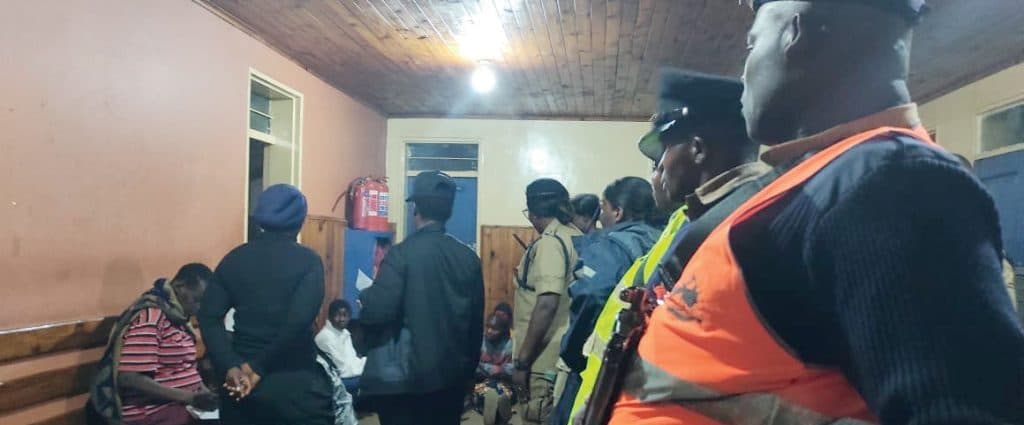
A night-long rescue operation conducted last Friday, saved 18 girls from trafficking and exploitation in Lilongwe, with all victims now placed at Wings of Hope safe home in Area 25. A report on the operation by Eye of the Child said it ran from 9pm to 5am and targeted Pondamali, Best Oil and Chigwiri — areas identified as high-risk zones for child trafficking and exploitation, particularly at night. The operation in progress. | Courtesy of Eye of the Child It said the operation was carried out during the night to ensure the safety of the victims and the rescue team.
The objective of the operation was to identify, rescue and provide immediate protection to children exposed to trafficking and exploitation. “The children were first taken to Area 3 Police Station, where they were briefed on the operation and then moved to the safe home. It said all 18 girls were safely transported to a secure shelter at Area 25 – Wings of Hope.
Care was taken to ensure their safety and comfort throughout the process,” the operation report states. The team faced several challenges. Some victims were initially fearful and hesitant to engage.
Many children lied about their age. Others went into hiding, making it impossible to reach all those at risk. “The presence of young girls in these locations at night highlights ongoing risks of trafficking and exploitation,” the report noted.
Eye of the Child national project officer Tionge Msukwa said by using a victim-centred approach to ensure safety, trust and cooperation, the rescue team identified and removed the girls from exploitative situations across the three locations. She said the raided places were identified through close collaboration with the police. “Before the operation, the police conducted searches and assessments to verify the locations.
The girls were found in difficult and unsafe conditions. “Many of them were staying in crowded and poorly maintained places, with little security. They were exposed to long hours in bars and nightclubs, faced pressure from exploiters, and lacked proper care and support.
These circumstances put their health, safety, and dignity at serious risk,” she said. Msukwa further noted the girls were working in undignified conditions. She said most of them were serving drinks, entertaining customers, spending extended time with men and pressured into sexual intercourse.
“Poverty, lack of opportunities and coercion played a major role in pushing them into this situation. Their choices were heavily influenced by economic vulnerability and manipulation,” said Msukwa. The project officer revealed that the 18 girls were aged between 17 and 25 years old.
She said many of the victims were vulnerable and in urgent need of protection. Msukwa also observed a high number of teenage pregnancies among the girls rescued, with many victims already having children. “Out of the 18, 14 of them have babies,” she said.
Msukwa said the girls will stay at the shelter for at least six months where they receive vocational training such as tailoring, baking and soap‑making. “They also go through mental health and psychosocial support programmes, including skills training and mindset change sessions, to help them rebuild confidence and prepare for a safer future,” she said. Once they graduate, each survivor is provided with start-up capital to begin a small business.
The approach aims to promote financial independence, reduce the risk of returning to unsafe environments, and empower the girls to support themselves and their families. Assistant Commissioner of Police and Lilongwe Police Station Officer Patricia Njawili is on record to have welcomed the partnership between Eye of the Child and Malawi Police Service in rescuing children forced to work in nightclubs. “This partnership will help strengthen the police rescue efforts and reduce the numbers of children subject to commercial sexual exploitation.
But lack of awareness of the law remains the main challenge. We need collaboration and a more coordinated response in handling these cases,” she said.